
This caravan hook-up guide explains everything beginners need to know about safely connecting to electric hook-up on UK caravan sites. Understanding how campsite electricity works is one of the biggest learning curves for new caravanners, but once you’ve done it a few times, it quickly becomes part of your normal touring setup routine.
Whether you’re preparing for your first trip or simply want more confidence on-site, this beginner-friendly caravan hook-up guide covers the basics, common mistakes, safety tips, and everything you need before plugging in.
If you’re completely new to touring, our First Caravan Trip Checklist is also worth reading before your first adventure.
Understanding Electric Hook-Up
Electric hook-up allows your caravan to connect directly to the campsite’s power supply.
Once connected, you can safely use things like:
- Heating
- Lights
- Plug sockets
- Fridges
- TVs
- Chargers
- Kitchen appliances
Most UK caravan parks now provide electric hook-up as standard, especially modern touring sites.
Understanding site facilities before booking can make a huge difference to your overall stay. Our guide to Best Caravan Site Facilities Explained covers some of the most important things worth checking before your trip.
Caravan Hook-Up Guide: What Equipment Do You Need?
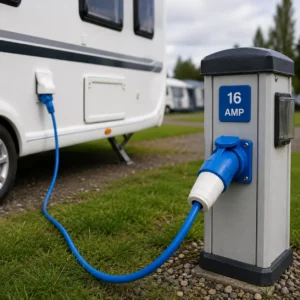
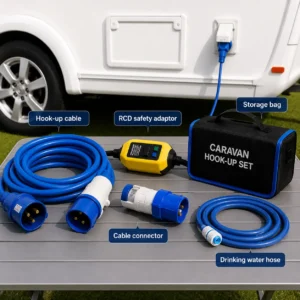
Most UK caravan parks require a standard blue 230V electric hook-up cable.
The recommended setup is usually:
- 25 metre hook-up cable
- 16 amp connection
- Weatherproof outdoor cable
A 25 metre cable is ideal because some campsite bollards are positioned further away from the pitch.
Never use a standard household extension lead for campsite electricity.
Beginners reading this caravan hook-up guide should also make sure they pack essentials like adapters, wheel chocks, and levelling equipment before travelling. Our What to Pack for a Caravan Holiday guide covers useful touring essentials many caravanners forget.
For additional touring advice and beginner resources, it’s also worth browsing The Caravan and Motorhome Club.
Connecting Safely On Site
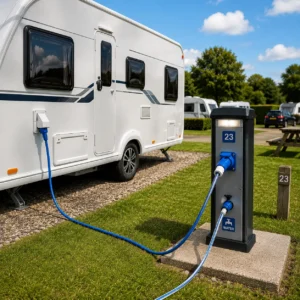
Using campsite electrics safely is extremely important.
The safest method is:
- Switch off appliances inside the caravan.
- Connect the hook-up cable to the caravan first.
- Plug the opposite end into the campsite bollard.
- Turn on the power supply at the bollard.
When leaving the site, reverse the process:
- Switch off the bollard
- Disconnect from the bollard first
- Disconnect from the caravan last
Following a proper caravan hook-up guide like this helps reduce the risk of electrical faults or damage.
Caravan Hook-Up Guide: Common Beginner Mistakes
New caravanners often make the same mistakes during their first few trips.
The most common include:
- Forgetting to fully unwind the cable
- Overloading the electric supply
- Using damaged cables
- Driving away while still connected
- Allowing cables to sit in standing water
Fully unwinding the cable is especially important because tightly coiled cables can overheat.
Choosing the correct pitch type can also make setup much easier, especially during wet weather. We compared the pros and cons in our guide to Hardstanding vs Grass Pitch – Which Is Better?.
Why Amp Supply Matters
Different caravan parks provide different electrical supplies.
Most UK caravan sites offer either:
- 10 amp
- 16 amp
Higher amp supplies allow you to safely run more appliances at once.
Older sites may struggle if several caravans are using heaters, kettles, and air fryers simultaneously.
When researching campsites, it’s always worth checking what electrical facilities are available before booking. Our guide on How to Choose the Right Caravan Site explains what to look for before reserving a pitch.
What Happens If The Electric Trips?
If you overload the electrical supply, the campsite bollard may trip.
This is normally very simple to fix:
- Turn off some appliances
- Reset the bollard switch
- Restart caravan electrics if needed
High-powered appliances like kettles and heaters are usually the main cause.
Most beginners using this caravan hook-up guide experience this at least once while learning how much power they can safely use.
Staying Safe On Site
Good electrical habits are extremely important when touring.
Key safety tips include:
- Check cables for damage
- Keep plugs dry
- Fully unwind cables
- Avoid overloading sockets
- Disconnect safely before towing away
- Store cables correctly after use
Electric hook-up is very safe when used properly, but careless mistakes can create unnecessary risks.
For additional outdoor electrical safety guidance, it’s also worth reading advice available through Electrical Safety First.
Do All Caravan Sites Offer Hook-Up?
Not every caravan site provides electric hook-up.
Some smaller or off-grid sites may offer:
- Non-electric pitches
- Limited power supply
- Generator-only facilities
Always check the pitch details before booking.
Using this caravan hook-up guide before travelling helps avoid surprises when arriving on-site for the first time.
Is Caravan Electric Hook-Up Difficult?
Most beginners worry about campsite electricity before their first trip, but it’s actually very simple once you’ve done it a few times.
After a couple of stays, connecting your caravan becomes part of the normal arrival routine.
The key is understanding the basics, using the correct equipment, and following safe setup procedures every time.
With the right preparation, caravan electric hook-up quickly becomes one of the easiest parts of touring.