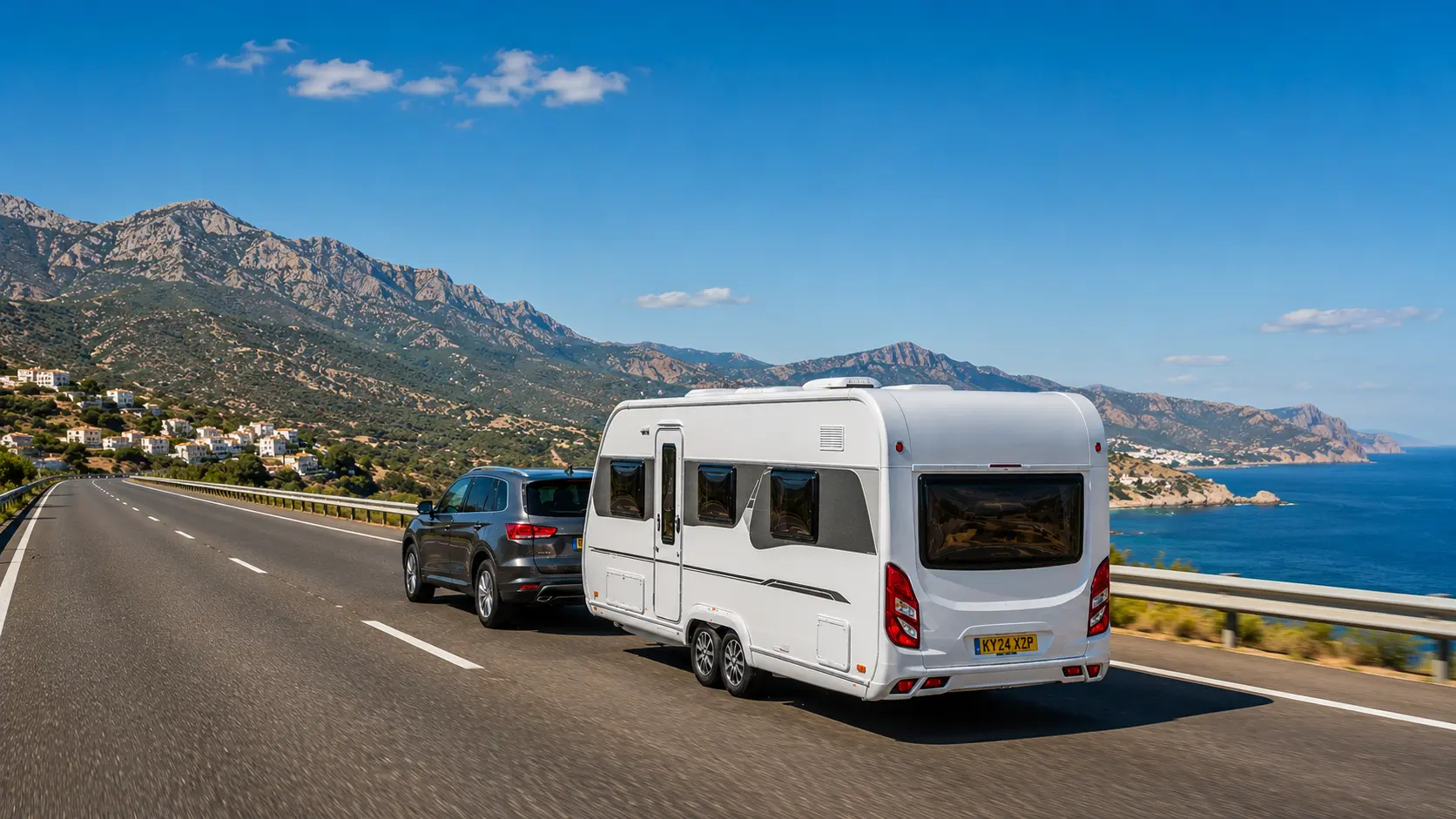
Driving in Spain with a caravan can be one of the best touring adventures in Europe, but it does need a little planning before you set off from the UK.
Spain has brilliant roads, fantastic campsites, warm weather and some incredible coastal and mountain routes. However, the rules are not always the same as the UK. Speed limits, towing requirements, emergency equipment, low emission zones and documentation all need checking before you travel.
This guide is written for UK caravanners planning to tow in Spain, whether you are heading through France, using a ferry to northern Spain, or planning a longer European touring holiday.
Before travelling, always check the latest Spanish driving regulations and emergency equipment requirements on the UK Government’s Foreign Travel Advice for Spain.
Documents You Should Take When Driving in Spain
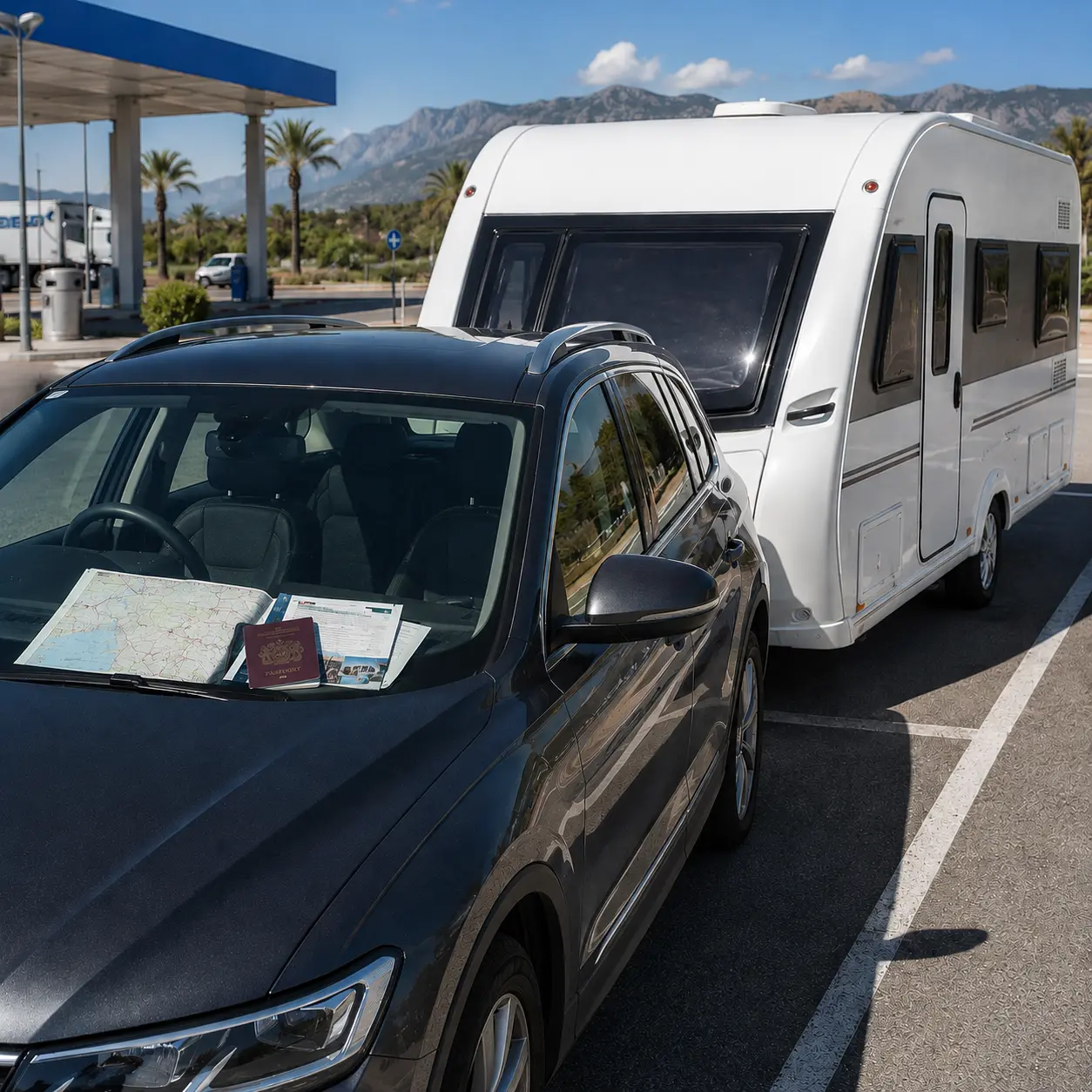
Before leaving the UK, make sure you have all the documents you may need for both your car and caravan.
- Full UK driving licence
- Passport
- Vehicle V5C logbook
- Caravan CRiS registration documents if available
- Proof of car insurance
- European breakdown cover documents
- Travel insurance documents
- Ferry or tunnel booking details
- Campsite booking confirmations
If your caravan is over 750kg, it is also worth checking current trailer registration rules before travelling abroad. Some UK trailers and caravans need to be registered before being used in certain European countries.
You should also check that your car insurance covers driving in Spain and that your breakdown cover includes recovery for both your car and caravan. A standard UK breakdown policy may not be enough once you are overseas.
UK Stickers and Number Plates
UK vehicles driven in Spain need to show the correct UK identifier. If your number plate already includes the UK identifier with the Union flag, that is usually accepted in Spain.
If it does not, you should display a separate UK sticker on the rear of the car and, where visible, the rear of the caravan. Do not use an old GB sticker, as this has been replaced by the UK identifier.
Spanish Speed Limits When Towing a Caravan
Speed limits in Spain are different when towing a caravan. Always follow posted signs, but as a general guide:
- Motorways and dual carriageways: 90 km/h when towing
- Other roads: 80 km/h when towing
- Built-up areas: often 20, 30 or 50 km/h depending on the road layout
Spanish roads are generally very good, especially on main routes. However, towing at a steady pace is much more relaxing than trying to rush. Spain is a big country, and long distances can feel even longer in high summer heat.
Towing Mirrors in Spain
You should use proper towing mirrors whenever your caravan is wider than your tow car. This is not just about avoiding fines. It also makes overtaking, lane changes and motorway driving much safer.
Before setting off, check that both mirrors are secure and give you a clear view down both sides of the caravan. Spanish motorways can involve long stretches with faster-moving traffic, so good visibility matters.
Emergency Equipment for Driving in Spain
Spain has strict rules around emergency equipment. You should carry reflective high visibility jackets for the driver and passengers, and they should be kept inside the vehicle rather than buried in the boot.
Spain has also moved towards V16 emergency beacons as a replacement for traditional warning triangles. Rules around foreign vehicles can be confusing, so the safest approach is to check the latest DGT guidance before travel and carry approved emergency equipment that meets current Spanish requirements.
It is also sensible to carry:
- First aid kit
- Spare bulbs if suitable for your vehicle
- Headlamp beam converters if required
- Fire extinguisher
- Basic tools
- Tyre pressure gauge
- Spare fuses
Low Emission Zones in Spain
Many Spanish towns and cities now have low emission zones, known as ZBE areas. These are especially important if you plan to drive into cities such as Madrid, Barcelona, Valencia, Seville or other large urban areas.
Foreign vehicles may not always be able to use the same Spanish environmental sticker system as Spanish-registered vehicles. Some cities use camera enforcement, and rules can vary by location.
If you are towing a caravan, the simplest option is often to avoid driving into city centres altogether. Stay on a campsite outside the city and use public transport, taxis, bikes or campsite shuttle options where available.
Driving Through France to Spain
Many UK caravanners reach Spain by travelling through France. This can work very well, but it is worth breaking the journey into sensible stages.
Popular routes include crossing from Dover to Calais, using the Eurotunnel, or taking a ferry to western France before heading south. Another option is a ferry from the UK to northern Spain, which reduces driving time but can cost more.
If you are towing from the UK to the Spanish coast, do not underestimate the distances. Plan overnight stops, check campsite arrival times and avoid making each driving day too long.
Ferries to Spain with a Caravan
For many caravanners, the ferry to Spain is a brilliant option. Routes to Santander or Bilbao can save a huge amount of driving through France.
The main benefit is that you arrive in northern Spain already well into your holiday. The downside is usually cost, crossing time and availability during busy periods.
If using a ferry, book early and check all measurements carefully. You will normally need the combined length of your car and caravan, plus height and width details.
Travelling to Spain with LeShuttle
Many UK caravanners choose to start their journey to Spain by taking LeShuttle from Folkestone to Calais. The crossing takes around 35 minutes, making it one of the quickest ways to reach mainland Europe with a car and caravan.
Once you arrive in Calais, it’s a straightforward drive through France before crossing into Spain. Many caravanners break the journey over two or three days, staying at overnight campsites along the way rather than attempting the entire drive in one go.
LeShuttle is popular with caravanners because you remain in your own vehicle throughout the crossing. There is no need to unhitch your caravan, and boarding is usually quick and well organised.
When booking, make sure you enter the correct overall length and height of your car and caravan combination. Arriving at the terminal with accurate vehicle measurements helps ensure a smooth check-in process.
If you’re travelling during school holidays or peak summer months, it’s worth booking well in advance, as the most popular crossing times can sell out quickly.
For many UK caravanners, LeShuttle offers one of the easiest and least stressful ways to begin a European touring adventure before heading south towards Spain.
Toll Roads in Spain
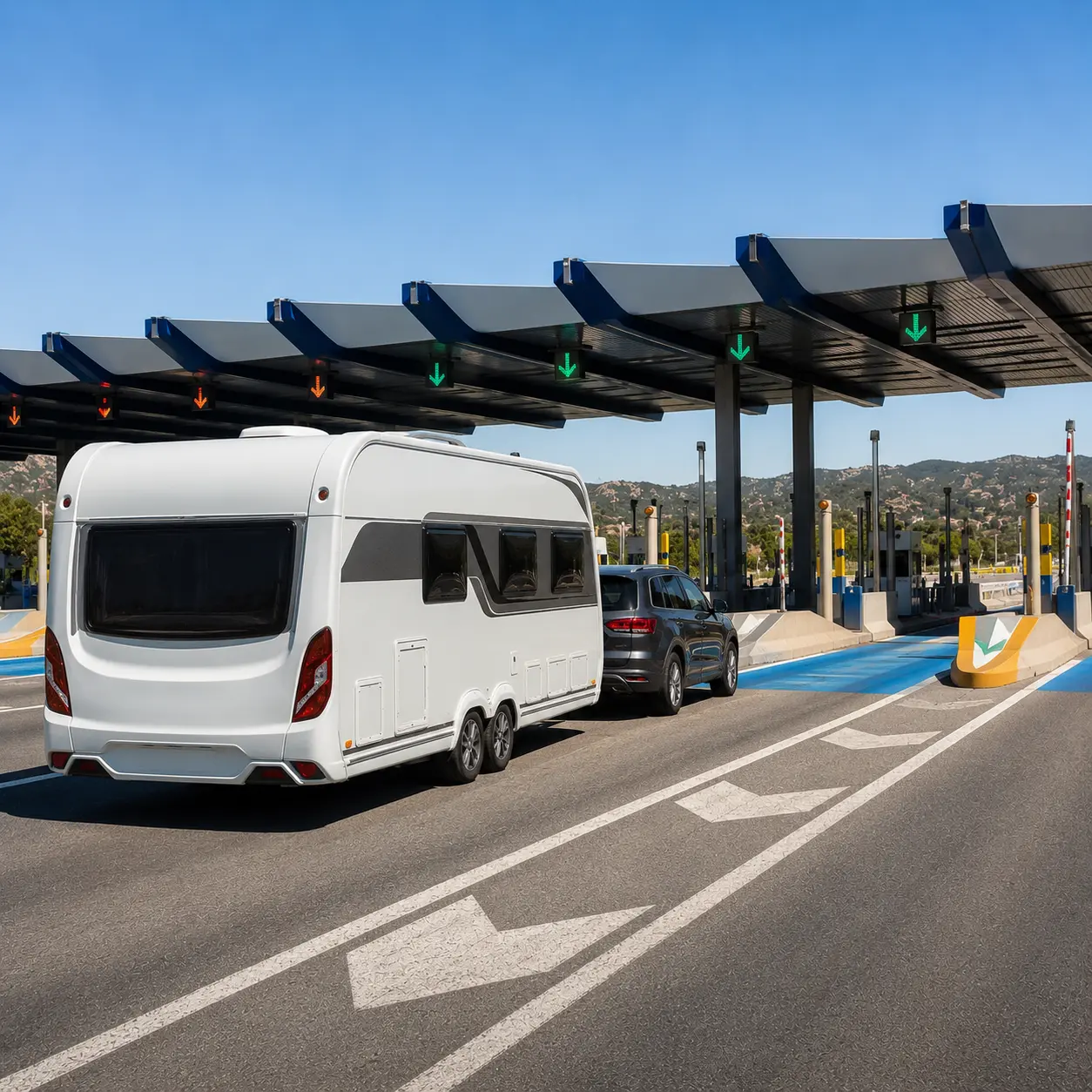
Spain has some toll roads, although many routes are now free compared with previous years. Toll roads can still be useful when towing because they are often quieter, smoother and easier than smaller roads.
Before travel, check your planned route and decide whether you want to avoid tolls or use them for convenience. In some cases, paying a toll can make the journey far less stressful.
Fuel, Service Areas and Rest Stops
Fuel stations on Spanish motorways are usually easy to access, but it is still worth planning ahead when towing. Some smaller stations can be tight with a caravan attached.
Try to refuel before you get too low, especially in rural areas. In summer, it is also worth keeping plenty of water in the car for everyone travelling.
Spanish motorway service areas can be good, but not every stop is ideal for a car and caravan outfit. Look for larger service areas with spacious entrances and exits where possible.
Mountain Roads and Coastal Routes
Spain has some spectacular mountain and coastal routes. However, not every scenic road is suitable for towing a caravan.
Before following sat nav blindly, check the route on a map. Look for steep gradients, tight bends, narrow village streets and height restrictions.
A caravan-friendly route may be slightly longer, but it is usually far less stressful. This is especially true in northern Spain, the Pyrenees and older coastal towns.
Parking with a Caravan in Spain
Parking a car and caravan combination can be difficult in towns, beach resorts and tourist areas. It is usually better to unhitch at the campsite before exploring.
Large supermarket car parks can sometimes work for short stops, but always check signs and avoid taking up unsuitable spaces. Never block access roads, service bays or residential areas.
Campsites in Spain
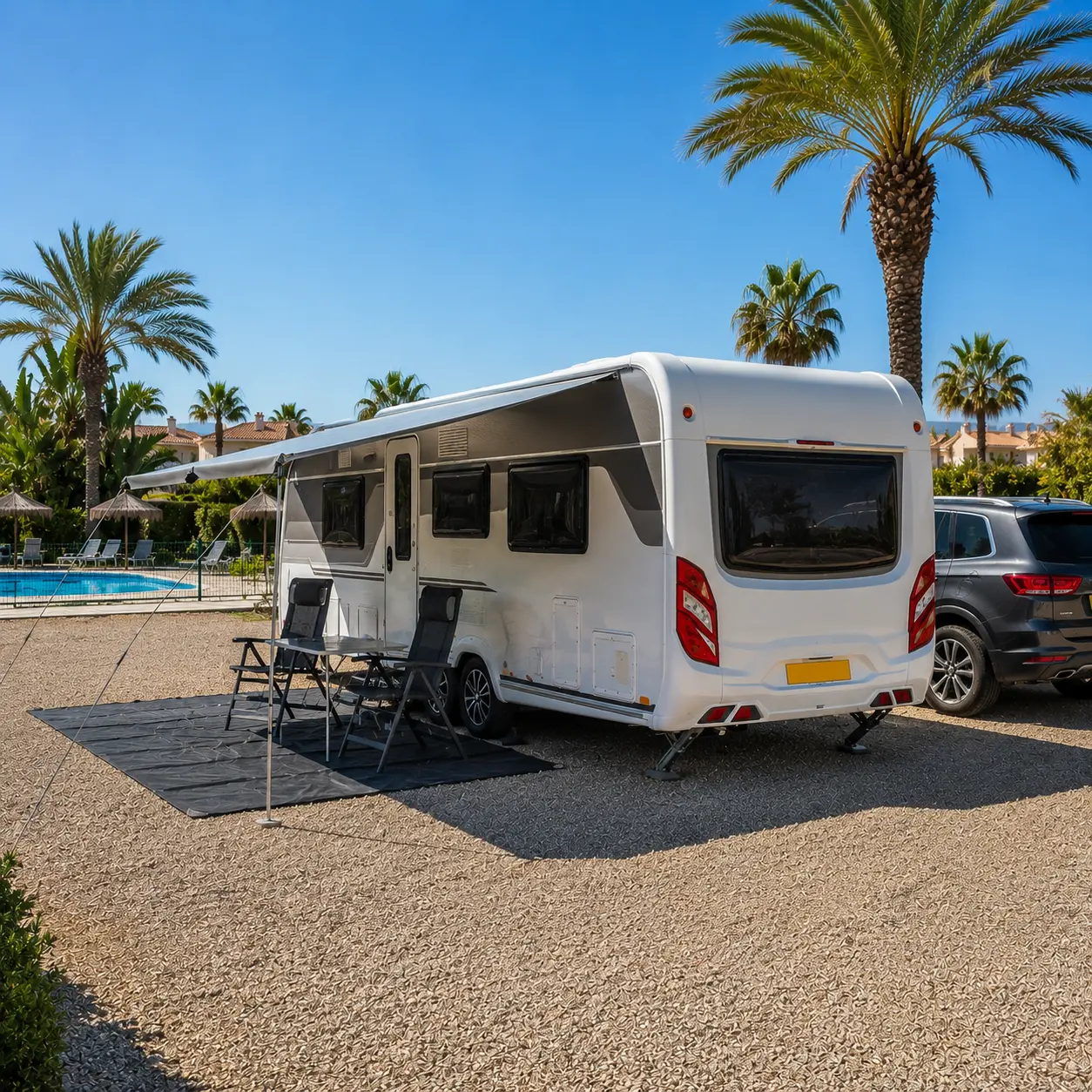
Spain has a huge choice of campsites, from simple touring sites to large holiday parks with pools, restaurants and entertainment.
When booking, check the pitch size carefully. Some Spanish pitches can feel tighter than UK tourers may expect, especially on older coastal sites.
Look for details such as:
- Pitch length and width
- Access roads
- Electric hook-up amperage
- Water and drainage
- Shade
- Distance to beach or town
- Pool and restaurant opening dates
If you are travelling in peak summer, air conditioning, shade and pool access can make a big difference.
Driving Etiquette in Spain
Spanish drivers can be confident and quick, especially on motorways and around cities. Keep calm, stay right unless overtaking, and leave plenty of space.
Roundabouts can also feel different. Watch lane markings carefully and do not assume every driver will use indicators in the way you expect.
When towing, it is better to drive predictably and steadily. Avoid sudden braking, late lane changes and rushing through junctions.
Caravan Checks Before Driving in Spain
Before any long European journey, give your caravan a proper check.
- Check caravan tyres, age and pressures
- Check wheel nuts
- Test road lights
- Check breakaway cable
- Check hitch lock and stabiliser
- Secure internal cupboards
- Empty unnecessary water weight
- Check noseweight
- Make sure mirrors are secure
Spain can be hot, and tyre condition is especially important. Old caravan tyres may look fine but still be unsafe for long motorway journeys in high temperatures.
Is Driving in Spain with a Caravan Difficult?
Driving in Spain with a caravan is not difficult if you prepare properly. The main roads are generally excellent, campsites are well used to touring visitors, and the weather can be fantastic.
The biggest challenges are distance, heat, city restrictions and choosing the right route. Plan carefully, avoid rushing and give yourself time to enjoy the journey.
For many UK caravanners, Spain is one of the most rewarding touring destinations in Europe.
Final Thoughts
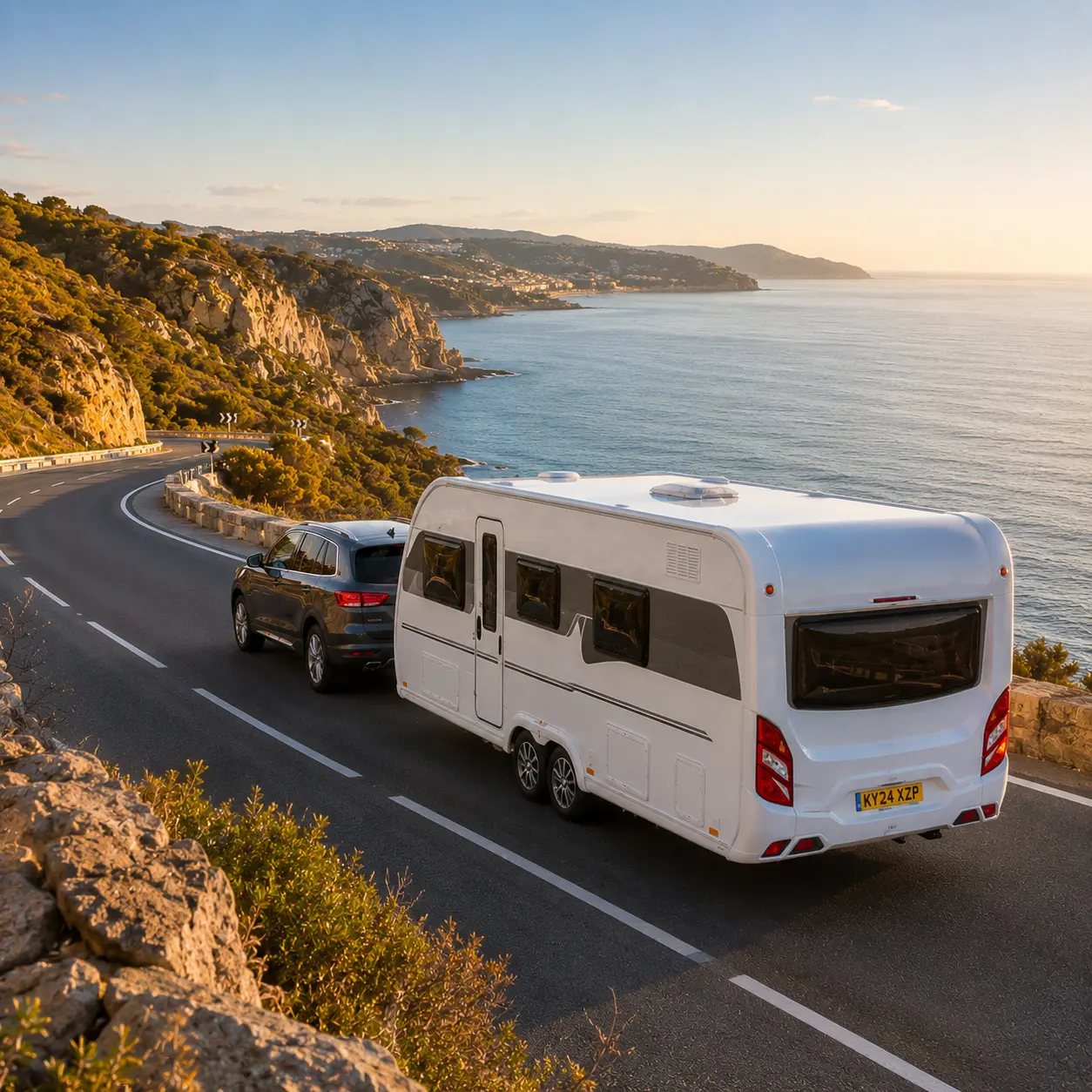
Driving in Spain with a caravan is a brilliant way to explore more of Europe. From northern Spain to the Mediterranean coast, there are endless places to discover.
Before you go, check your documents, understand the towing speed limits, prepare your emergency equipment and plan your route properly. A little preparation makes the whole trip smoother, safer and far more enjoyable.
Spain is a big adventure, but that is exactly what makes it so exciting.
Discover More from Caravan Adventuring
Whether you’re searching for campsite reviews, travel diaries, touring advice or caravan setup guides, we’ve got plenty more content to help you plan your next adventure.
Browse Our Full Content Library
Related Guides
- Towing a Caravan for Beginners
- Caravan Tyre Pressure Guide
- Caravan Gas Bottles Explained
- Caravan Fridge Guide for Beginners
- Caravan Storage Tips for Winter
Suggest Our Next Campsite Review
We’re always looking for great campsites to visit and review.
If you’ve found a hidden gem or a campsite you think deserves more attention, let us know.