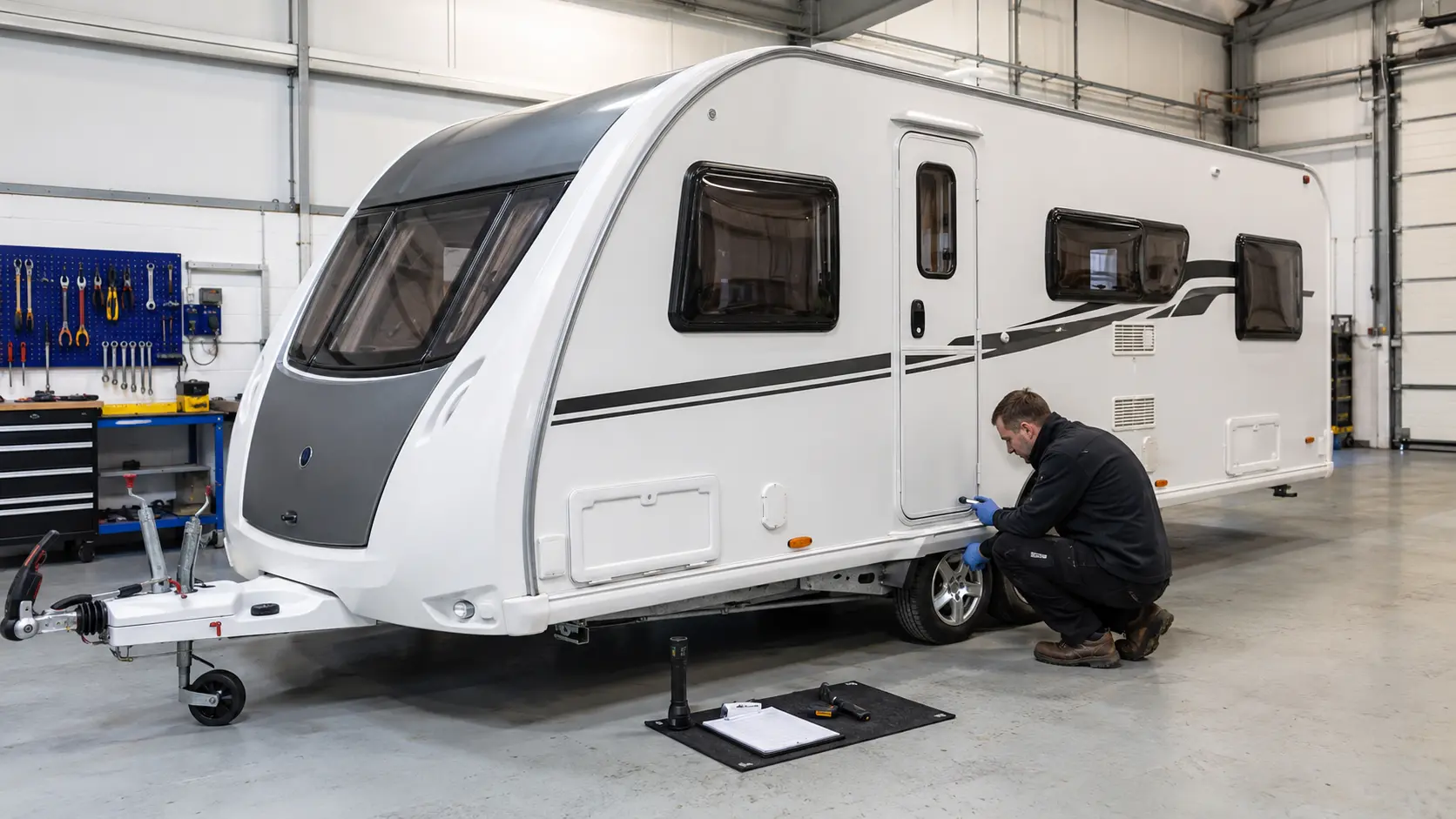
Understanding caravan servicing intervals is an important part of owning a touring caravan. Regular servicing helps keep the brakes, tyres, gas system, electrics and other essential components working safely. It can also protect your manufacturer’s warranty and reveal developing problems before they become expensive repairs.
Most touring caravans should receive a full service every 12 months. However, the exact deadline can depend on the manufacturer, the caravan’s age and its warranty conditions. Some warranties require servicing within a particular window around the anniversary of purchase, so you should always check the handbook supplied with your caravan.
How Often Should a Caravan Be Serviced?
For most touring caravans, the standard servicing interval is once every 12 months. This applies even when the caravan has only been used for a few short breaks during the year.
A caravan can still deteriorate while it is parked or stored. Brakes can seize, tyres can age, seals can fail and damp can develop without obvious warning. Gas and electrical components can also suffer from corrosion, loose connections or lack of use.
You may need an earlier inspection when:
- The caravan has been unused for a long period.
- You have recently bought it without a reliable service history.
- It has covered unusually high mileage.
- You have noticed changes to braking or towing behaviour.
- There are signs of water ingress or damp.
- A gas or electrical appliance is not operating correctly.
- The caravan has suffered accidental damage.
An annual service should be treated as the maximum normal interval, rather than a reason to ignore problems until the next appointment.
Follow the Manufacturer’s Service Schedule
The manufacturer’s handbook should always be your starting point. It explains when the caravan must be serviced, which checks are required and who may complete the work.
This is particularly important while the caravan remains under warranty. A manufacturer may require the annual service to be completed within a defined period around the purchase anniversary. Missing that window could affect future warranty claims.
Do not assume that every manufacturer allows the same amount of flexibility. Check the service and warranty handbook for your individual caravan and keep a record of the deadline.
Booking early is sensible because approved workshops can become extremely busy before the main touring season. Making the appointment several months in advance can help you secure a suitable date within the permitted warranty period.
What Does a Full Caravan Service Include?
A full touring caravan service normally covers the running gear, body, gas installation, electrical systems, water system and fitted safety equipment. The precise checklist can vary according to the caravan and workshop.
Chassis and Running Gear
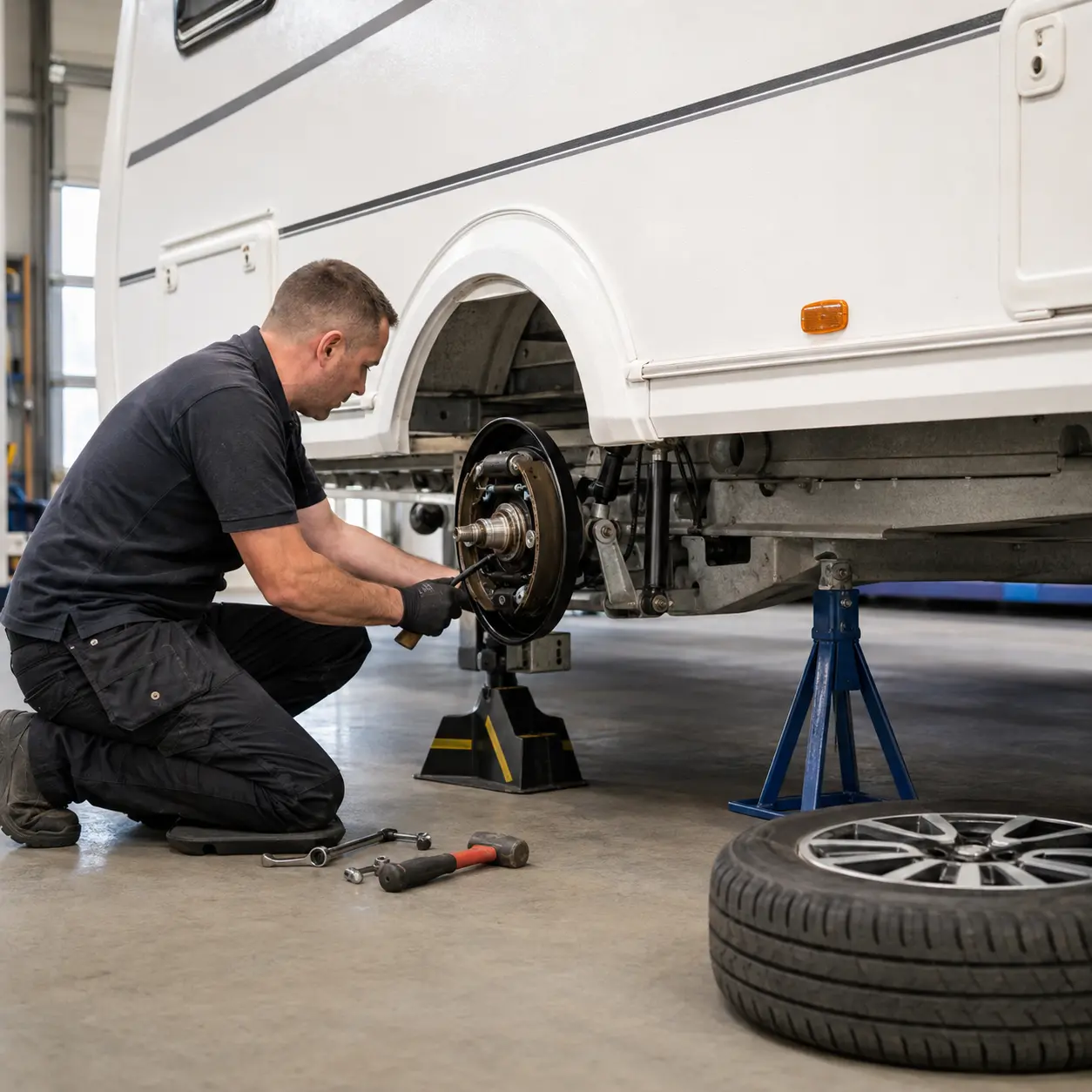
The running gear is one of the most important parts of the annual service because it directly affects towing safety. Typical checks include:
- Brakes and brake adjustment
- Brake drums and internal components
- Wheel bearings
- Tyres, valves and pressures
- Wheel condition and wheel-bolt torque
- Suspension and axle
- Towing hitch and coupling head
- Overrun mechanism
- Breakaway cable
- Jockey wheel
- Corner steadies
- Chassis condition
The service technician should identify worn, damaged or incorrectly adjusted components. Repairs and replacement parts are usually charged separately and should be agreed before additional work begins.
External Body and Water Ingress
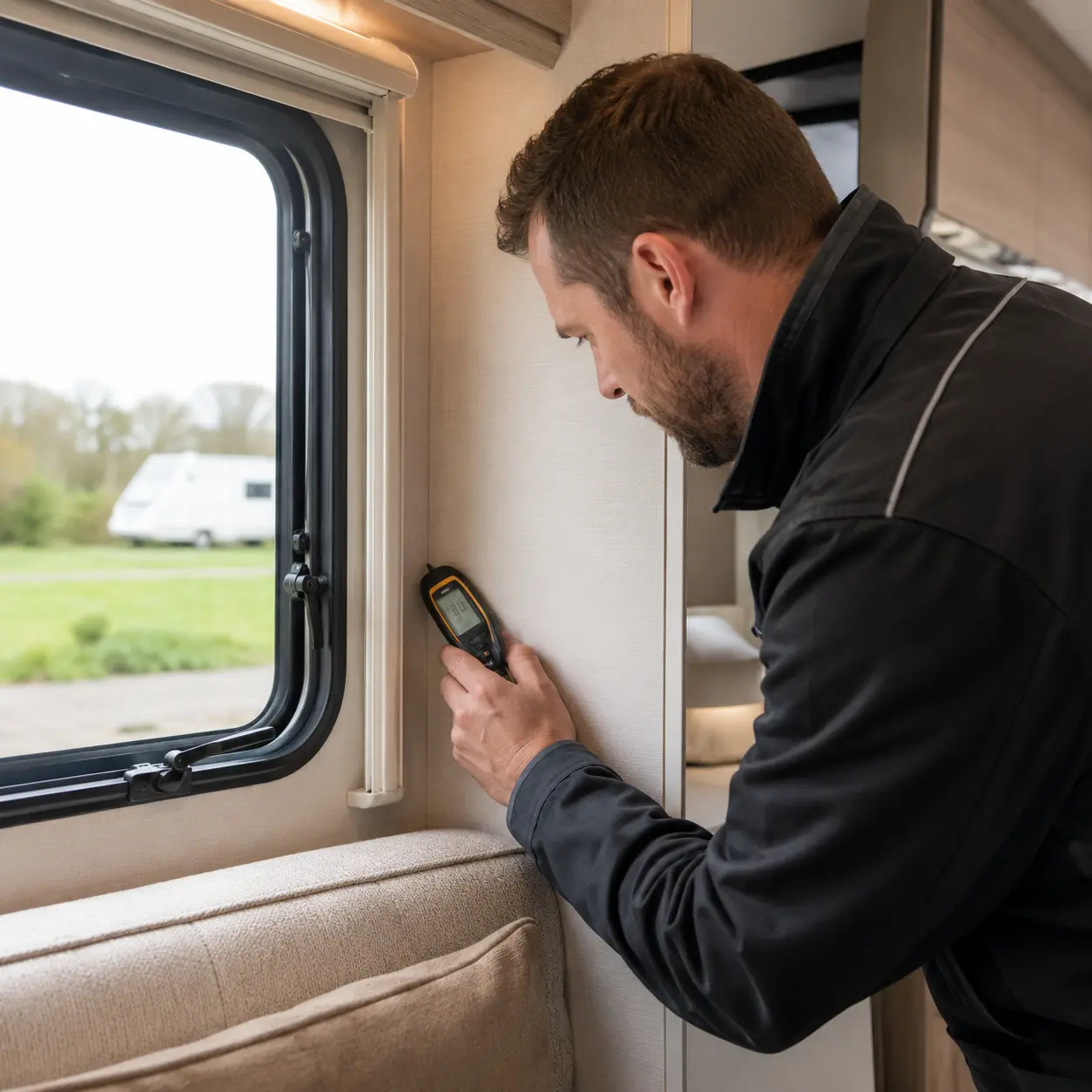
The external inspection looks for damage, deterioration and possible routes through which water could enter the caravan. This may include:
- Body panels and exterior mouldings
- Windows, roof lights and doors
- Sealant around joints and fittings
- Grab handles and external lockers
- Ventilation openings
- Roof-mounted fittings where accessible
- Floor condition
- Signs of water ingress
A damp inspection normally forms an important part of the service. The technician takes moisture readings at selected points inside the caravan and records the results.
Early detection can make water ingress easier and less expensive to repair. It may also be essential for maintaining a manufacturer’s water-ingress warranty.
Gas System
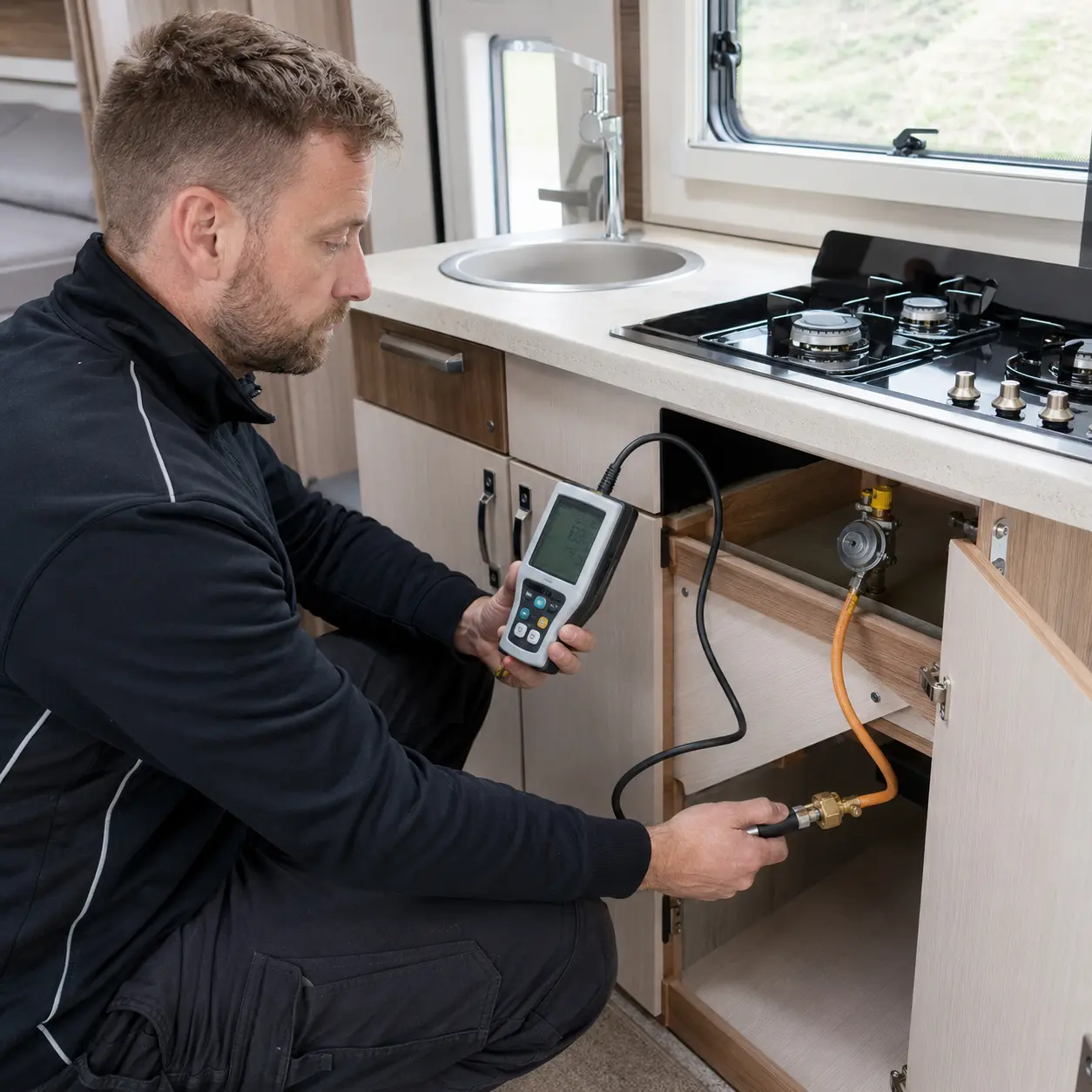
A caravan service normally includes safety checks on the LPG installation. These can cover:
- Gas regulator and hoses
- Gas cylinder security
- Pipework and connections
- Gas isolation valves
- Drop-out vents
- Gas tightness testing
- Operation of fitted gas appliances
- Flame-failure safety devices
A safety check is not necessarily the same as fully servicing every individual gas appliance. For example, detailed servicing of the boiler, fridge or cooker may cost extra. Ask the workshop exactly what is included before booking.
Gas repairs should only be completed by somebody with the appropriate training and competence for LPG systems in leisure accommodation vehicles.
Electrical Systems
The technician should inspect and test the caravan’s 230V mains installation and 12V system. Checks may include:
- Consumer unit
- Residual current device
- Mains sockets
- Internal and external lights
- Battery condition and charging voltage
- Road lights and towing connection
- Wiring and visible connections
- Fitted electrical appliances
Some workshops may recommend additional electrical testing at particular intervals. Ask whether this is included in the standard service or provided as a separate inspection.
Water System and Appliances
The water system is normally inspected for leaks, damage and correct operation. The technician may check:
- Water pump
- Taps and shower
- Internal pipework
- Water heater
- Drainage outlets
- Toilet operation
- Fitted appliances
You may be asked to bring the water pump, battery, keys and other removable equipment to the appointment. Confirm the workshop’s requirements beforehand.
Safety Equipment
The service should also consider fitted safety equipment and ventilation. This can include:
- Smoke alarm operation
- Carbon monoxide alarm operation
- Fire extinguisher condition
- Fire blanket condition
- Permanent ventilation openings
- Emergency window operation
Alarm sensors and fire extinguishers have limited service lives. Replace them according to their printed expiry dates and manufacturer instructions.
Is a Caravan Service the Same as a Habitation Check?
No. The terms are sometimes used interchangeably, but they do not always describe the same level of inspection.
A full touring caravan service includes the chassis and running gear as well as the living area. A habitation check concentrates mainly on the systems and safety inside the accommodation.
A habitation inspection may cover gas, electrics, water, ventilation, appliances and damp. However, it may not include dismantling and inspecting the brakes, checking wheel bearings or servicing the towing mechanism.
For a touring caravan, a habitation check alone should not automatically be treated as a replacement for the complete annual service. Confirm exactly which checklist the workshop will follow.
Do Older Caravans Still Need Annual Servicing?
Older caravans should continue to receive annual servicing even after the manufacturer’s warranty has expired. In fact, regular inspections can become more important as components, seals and systems age.
An annual service can identify:
- Deteriorating tyres
- Worn brake components
- Corroded electrical connections
- Ageing gas hoses and regulators
- Cracked sealant
- Developing damp
- Loose fixtures and fittings
A complete service history can also reassure future buyers that the caravan has been maintained properly. Keep invoices, checklists, damp reports and evidence of any completed repairs.
Should a Caravan Be Serviced Before the First Trip of the Year?
There is no requirement for every caravan to be serviced immediately before its first seasonal trip. The most important point is to keep to the correct annual interval.
However, scheduling the service before your main touring season can be convenient. It gives you time to arrange repairs before a long journey or holiday.
A pre-season service is especially worthwhile when the caravan has:
- Been stored throughout winter
- Not moved for several months
- Missed its previous service
- Developed visible damage
- Been bought without recent documentation
You should still complete your own checks before every journey, regardless of when the annual service took place.
Checks to Complete Between Annual Services
An annual service does not replace routine owner maintenance. Several items should be checked before each journey or regularly throughout the touring season.
Your routine should include:
- Checking tyre pressures when the tyres are cold
- Inspecting tyres for cracking, bulges and damage
- Checking wheel-bolt torque according to the handbook
- Testing road lights
- Inspecting the breakaway cable
- Checking the hitch and stabiliser
- Testing smoke and carbon monoxide alarms
- Looking for water leaks or damp smells
- Checking visible gas hoses and connections
- Making sure ventilation openings remain clear
- Confirming windows, roof lights and lockers close securely
If something appears unsafe, stop using the affected system and arrange a professional inspection. Do not wait for the next annual service.
Can You Service a Caravan Yourself?
Owners can complete basic maintenance, cleaning and visual inspections. However, a full caravan service requires specialist knowledge, tools and testing equipment.
Brake servicing, gas tightness testing and electrical safety checks should be left to appropriately trained technicians. DIY work may also fail to meet the conditions of an active manufacturer’s warranty.
For warranty servicing, confirm that the workshop is accepted by your caravan manufacturer. The Approved Workshop Scheme provides a searchable directory of fixed and mobile workshops across the UK.
Mobile Caravan Servicing vs Workshop Servicing
Both mobile and fixed workshops can provide professional caravan servicing. The right option depends on your caravan, storage arrangements and the work required.
Mobile Servicing
A mobile technician can service the caravan at home, in storage or at another suitable location. This avoids towing the caravan to a workshop and can be particularly helpful when it is stored for winter.
The technician will need enough safe working space around the caravan. They may also require access to water, electricity or a firm and level surface.
Fixed Workshop Servicing
A fixed workshop may have better access to lifting equipment, specialist tools and replacement parts. It can therefore be more suitable when the caravan requires extensive repairs.
Whichever option you choose, confirm that the technician can complete the correct manufacturer-approved service and provide the necessary paperwork.
What Paperwork Should You Receive?
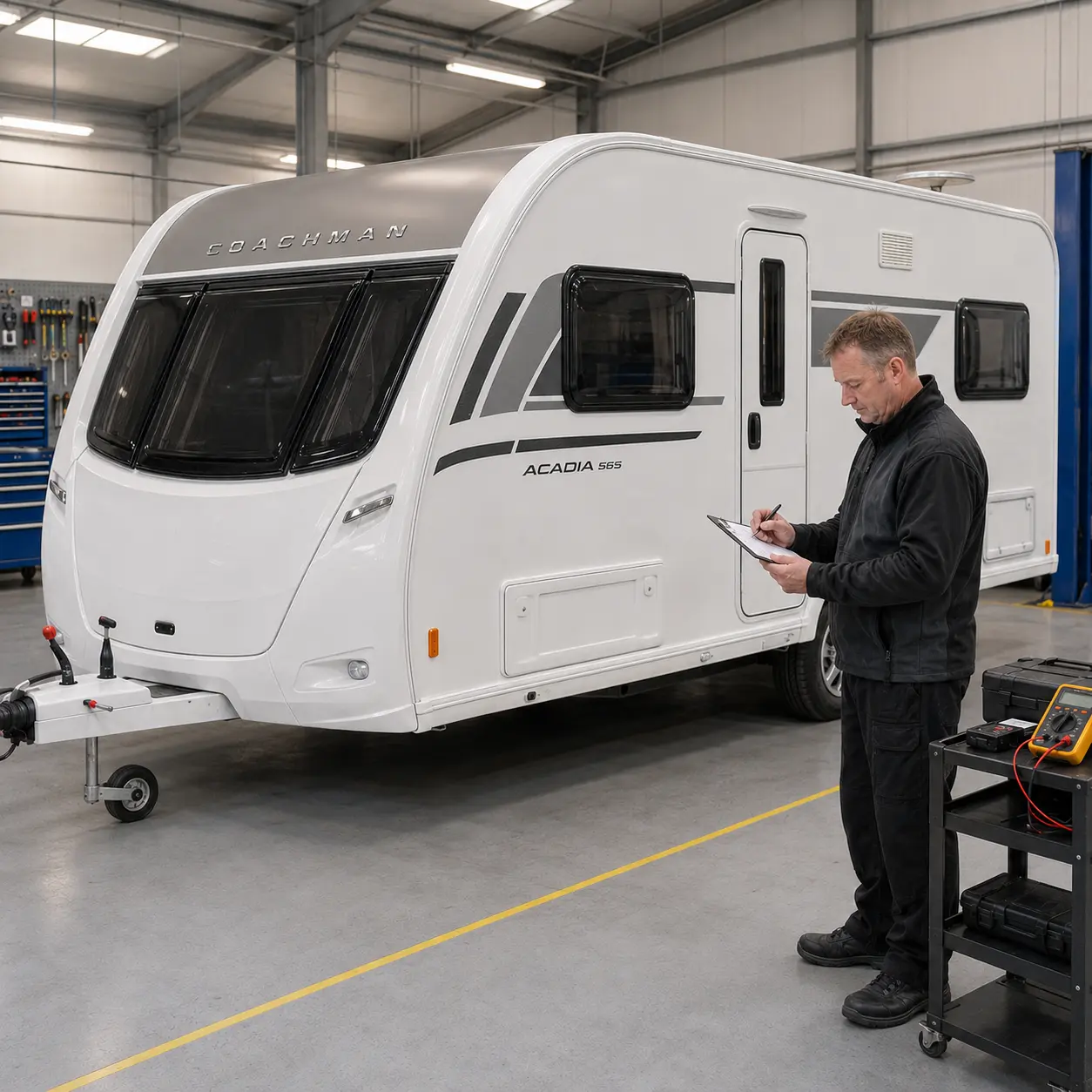
After the service, you should normally receive a completed checklist showing which items passed, failed or require attention. You may also receive a damp report and a list of recommended repairs.
Before leaving or paying the final invoice, check that:
- The service record has been completed correctly.
- The damp readings have been recorded.
- Any faults are explained clearly.
- Urgent and advisory repairs are distinguished.
- The invoice identifies the caravan and service date.
- Any warranty reporting requirement has been completed.
Keep the original invoice and service documents safely. Some manufacturers require this evidence before accepting a warranty claim.
Common Caravan Servicing Mistakes
The most common mistakes include:
- Assuming “once a year” means any date during the year
- Missing the manufacturer’s permitted warranty window
- Booking too late to obtain an appointment
- Using a workshop that is not accepted for warranty servicing
- Confusing a habitation check with a full touring caravan service
- Assuming appliance servicing is automatically included
- Failing to retain invoices and damp reports
- Ignoring faults until the next annual service
A simple calendar reminder can prevent many of these problems. Set it several months before the service deadline rather than waiting until the anniversary date.
Frequently Asked Questions
How often does a touring caravan need servicing?
Most touring caravans should receive a full service every 12 months. Always check the manufacturer’s handbook because warranty servicing may need to be completed within a specific date window.
Does a caravan need servicing if it has barely been used?
Yes. Components can deteriorate while the caravan is parked or stored. Brakes may seize, tyres continue to age and water ingress can develop regardless of mileage.
Will missing a service invalidate my caravan warranty?
Missing a required service or completing it outside the permitted period may affect warranty cover. The exact consequences depend on the manufacturer’s warranty conditions.
Does an annual caravan service include a damp check?
A recorded damp inspection is normally included in a full caravan service. Confirm this when booking, especially when the caravan has a separate water-ingress warranty.
Are repairs included in the service price?
The standard price normally covers inspection, testing and routine servicing work. Replacement parts and repairs are usually additional and should be authorised before the workshop proceeds.
**Is a habitation check enough for a touring caravan?
Not necessarily. A habitation check may exclude the chassis, brakes, wheel bearings and towing equipment. Ask for a full touring caravan service if the entire caravan needs inspecting.
Can a mobile technician maintain the caravan’s warranty?
Potentially, provided the technician is accepted by the manufacturer and follows the required service schedule. Confirm this with both the technician and manufacturer before booking.
Final Thoughts
For most owners, the correct caravan servicing interval is once every 12 months. However, the manufacturer’s individual warranty deadline must always take priority.
A full annual service helps maintain the brakes, tyres, hitch, gas system, electrics, water system and caravan body. It also provides an opportunity to detect damp and other developing faults before they become more serious.
Book well in advance, use an appropriately qualified workshop and keep every service checklist, damp report and invoice. Most importantly, never ignore a fault simply because the next annual service is still several months away.
Discover More from Caravan Adventuring
Whether you’re searching for campsite reviews, travel diaries, touring advice or practical caravan guides, you’ll find plenty more content to help you plan your next adventure.
Browse Our Full Content Library →
Related Guides
- Caravan Habitation Checks Explained
- Caravan Tyre Pressure Guide for Beginners
- Load a Caravan Safely Before Towing
- Caravan Water System Explained for Beginners
- Are Caravan Movers Worth It?
Suggest a Campsite for Review
Have you stayed at a campsite that deserves more attention? Share your experience and help other caravan and motorhome owners discover somewhere new.
Suggest a Campsite for Review →