If you want a safer and more enjoyable towing experience, you need to load a caravan safely before every journey. While many caravanners focus on route planning or tow car specifications, loading mistakes are one of the most common causes of poor towing stability.
Fortunately, loading a caravan correctly is not complicated. By understanding weight limits, nose weight and proper weight distribution, you can improve safety and enjoy a more relaxed journey.
If you’re new to touring, our Caravan Tips & Guides hub contains practical advice covering everything from towing to campsite setup.
Why It Is Important to Load a Caravan Safely
Incorrect loading can have a major impact on how your caravan behaves on the road. For example, too much weight at the rear can increase the risk of snaking. Meanwhile, excessive weight at the front can place unnecessary strain on your tow vehicle.
When you load a caravan safely, you can:
- Improve towing stability
- Reduce the risk of snaking
- Improve braking performance
- Reduce tyre wear
- Stay within legal weight limits
- Make towing less stressful
Therefore, taking the time to load correctly before every trip is essential.
Know Your Caravan Weight Limits
Before loading any equipment, you should understand your caravan’s weight limits.
The most important figures include:
- MIRO (Mass in Running Order) – The weight of the caravan as supplied by the manufacturer.
- Payload – The amount of additional weight you can carry.
- MTPLM (Maximum Technically Permissible Laden Mass) – The maximum legal weight of the fully loaded caravan.
Exceeding these limits can affect both safety and legality.
For a more detailed explanation, read our Caravan Weight Limits Explained: A Beginner’s Guide.
Load Heavy Items Close to the Axle

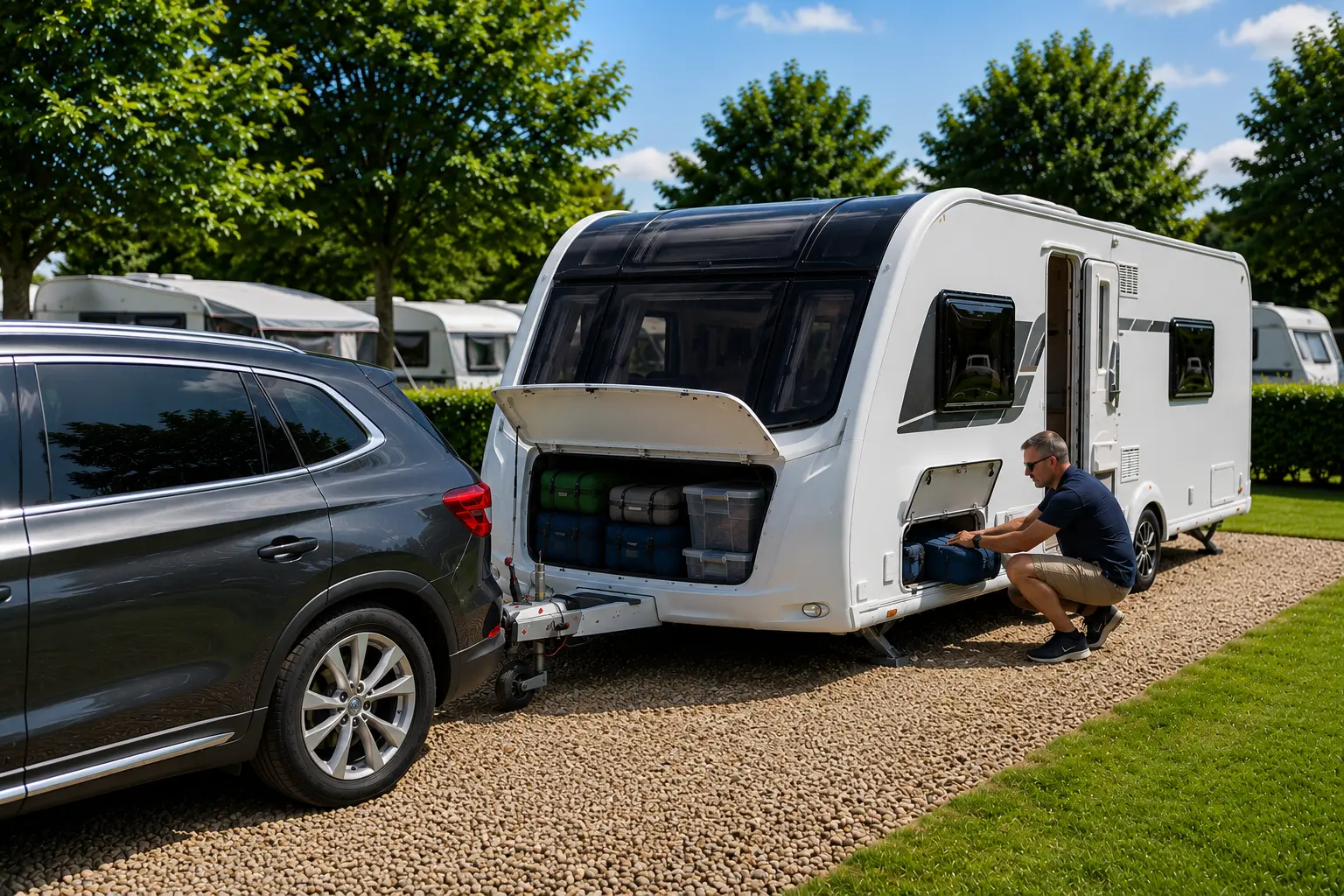
One of the easiest ways to load a caravan safely is to position heavier items low down and as close to the axle as possible.
Examples include:
- Awning bags
- Tool kits
- Spare parts
- Towing accessories
- Heavy cooking equipment
Placing heavy items near the axle helps maintain stability while reducing unwanted movement during travel.
In contrast, storing heavy equipment in overhead lockers can negatively affect handling and balance.
Avoid Overloading Rear Lockers
Rear lockers are useful storage spaces. However, loading too much weight at the back of the caravan can reduce nose weight and increase instability.
Avoid storing excessive amounts of weight in rear storage areas, including:
- Heavy awning equipment
- Tool boxes
- Generators
- Large storage crates
- Water containers
Instead, keep heavier items closer to the axle whenever possible.
Check Your Nose Weight

Nose weight is the downward force the caravan applies to the towball. It is one of the most important factors affecting towing stability.
To load a caravan safely, always check your nose weight after loading.
Most caravanners aim to get close to the maximum permitted nose weight without exceeding either the caravan or vehicle manufacturer’s limits.
- Load the caravan fully.
- Park on level ground.
- Use a nose weight gauge.
- Adjust item placement if required.
- Recheck the reading.
Balance Weight Across the Caravan
Weight should be balanced from side to side as well as front to back.
For example, if you place a heavy item on one side of the caravan, try to balance it with a similar weight on the opposite side.
As a result, the caravan will sit more evenly and place less strain on the suspension and tyres.
Travel with Empty Water Containers
Water is surprisingly heavy. In fact, one litre of water weighs approximately one kilogram.
Therefore, it is usually best to travel with:
- Empty Aquarolls
- Empty Wastemasters
- Fresh water tanks drained where appropriate
- Waste tanks emptied
Once you arrive on site, you can refill your water containers. Consequently, your caravan will be lighter and easier to tow.
Secure Loose Items Before Departure

Even if you load a caravan safely, loose items inside can still move around during travel.
Before setting off:
- Lock cupboards and drawers
- Secure the fridge door
- Store kitchen equipment safely
- Remove items from worktops
- Secure televisions and appliances
- Close shower screens and bathroom doors
These simple checks can prevent damage while travelling.
Inspect External Lockers
External lockers often become storage areas for equipment that is rarely used. Over time, unnecessary items can accumulate and increase overall weight.
Before each trip:
- Remove equipment you do not need
- Check overall weight distribution
- Keep heavy items near the axle
- Avoid excessive rear loading
Regularly reviewing your storage helps keep your payload under control.
Complete a Final Safety Check
Before leaving, carry out a final walk-around inspection.
- Nose weight checked
- All lockers locked
- Windows secured
- Roof lights closed
- Loose items stored safely
- Corner steadies raised
- Tyres correctly inflated
- Hitch securely attached
Although these checks only take a few minutes, they can prevent costly mistakes and improve safety on the road.
Common Caravan Loading Mistakes
Even experienced caravanners occasionally make loading errors.
Common mistakes include:
- Exceeding the caravan payload
- Ignoring nose weight limits
- Overloading rear lockers
- Travelling with full water containers
- Storing heavy items in overhead lockers
- Failing to secure loose equipment
- Creating uneven weight distribution
The GOV.UK towing guidance provides additional information about towing safely and legally in the UK.
Planning Your Next Touring Adventure
Once your caravan is loaded correctly, the next step is choosing where to go. Our guide to the Best Caravan Sites UK can help you discover highly rated destinations for your next trip.
Final Thoughts

Learning how to load a caravan safely is one of the simplest ways to improve towing safety. By placing heavy items close to the axle, balancing weight correctly, monitoring nose weight and staying within your caravan’s limits, you can enjoy a safer and more comfortable journey.
Most importantly, good loading habits quickly become routine. Therefore, taking a few extra minutes before every trip can make a significant difference once you are on the road.
Related Guides
- Caravan Weight Limits Explained: A Beginner’s Guide
- Caravan Water System Explained for Beginners
- What Is a Fully Serviced Pitch? A Beginner’s Guide
- Caravan Touring Tips for Beginners
- First Caravan Trip Checklist: Everything You Need to Know
Discover More from Caravan Adventuring
Whether you’re searching for campsite reviews, travel diaries, touring advice or caravan setup guides, we’ve got plenty more content to help you plan your next adventure.
Browse Our Full Content Library
Suggest a Campsite for Review
Have you stayed at a campsite that deserves more attention?
We’re always looking for new campsites to feature on Caravan Adventuring. Whether it’s a hidden gem, a family favourite, or a site with outstanding facilities, we’d love to hear about it.