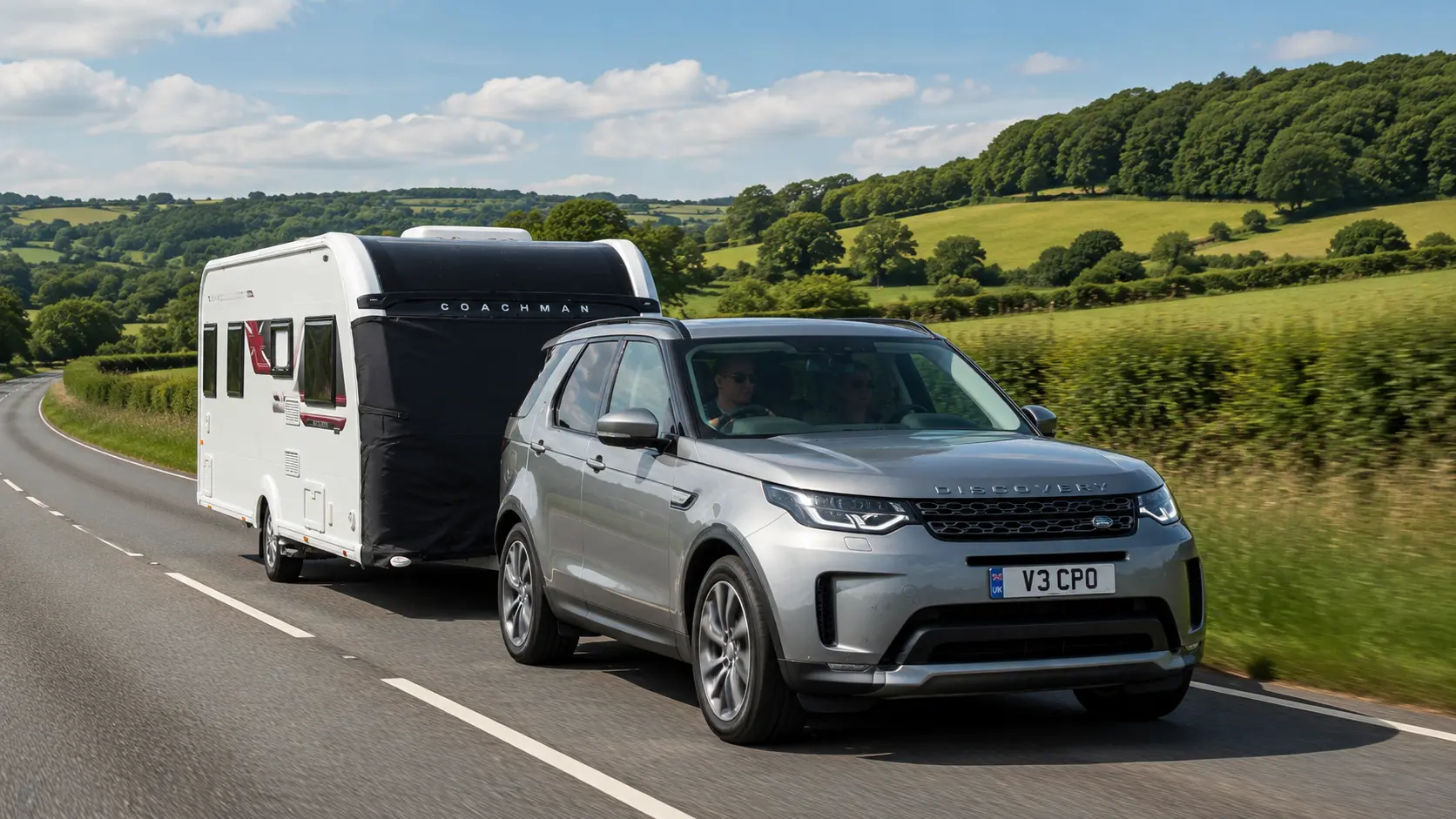
Matching a caravan with the right tow car is one of the most important decisions you will make before you start towing. Get the combination right and you can enjoy a more stable, comfortable and confident towing experience. Get it wrong and you could end up with an outfit that is difficult to control, overloaded or potentially illegal.
For beginners, the terminology can make caravan and tow car matching seem more complicated than it really is. Kerbweight, MTPLM, towing capacity, gross train weight and noseweight are all important, but once you understand what each figure means, checking whether a car and caravan are suitable for each other becomes much easier.
In this guide, we explain how to match a caravan with a tow car, which weights matter, how the 85% guideline works and what else you should consider before deciding whether a particular combination is right for you.
Why Is Caravan and Tow Car Matching Important?
A tow car needs to be capable of safely and legally pulling your caravan. However, simply checking that the caravan weighs less than the car’s maximum towing capacity is not enough.
A good tow car and caravan match should take several factors into account, including:
- The kerbweight of the tow car.
- The MTPLM of the caravan.
- The car manufacturer’s maximum towing capacity.
- The maximum permitted noseweight.
- The gross train weight of the complete outfit.
- The actual weight of passengers, luggage and equipment.
- The experience of the driver.
The weight relationship between the tow car and caravan can have a significant effect on stability. A heavier tow car generally has greater authority over the caravan, particularly in strong winds, when overtaking large vehicles or during sudden steering manoeuvres.
What Is the Kerbweight of a Tow Car?
The kerbweight is essentially the weight of the car in a ready-to-drive condition, although the exact definition can vary between manufacturers. Depending on the definition being used, it may include fluids, fuel and a nominal allowance for the driver.
This is why you should always check the specific figures supplied by the vehicle manufacturer rather than relying entirely on a generic online database.
Kerbweight is particularly important because it is used when calculating the caravan-to-car weight ratio.
What Is a Caravan’s MTPLM?
MTPLM stands for Maximum Technically Permissible Laden Mass. This is the maximum permitted weight of the caravan when fully loaded.
The MTPLM includes:
- The caravan itself.
- Gas bottles.
- Leisure batteries.
- Water carried on board.
- Clothing and personal belongings.
- Food and kitchen equipment.
- Caravan accessories and optional extras.
You should never load the caravan beyond its stated MTPLM. It is also important to remember that accessories fitted after manufacture can reduce the remaining payload available for everything else you want to carry.
If you are unsure how caravan weights and payload work, our caravan weights explained guide covers the subject in more detail.
What Is the 85% Towing Guideline?
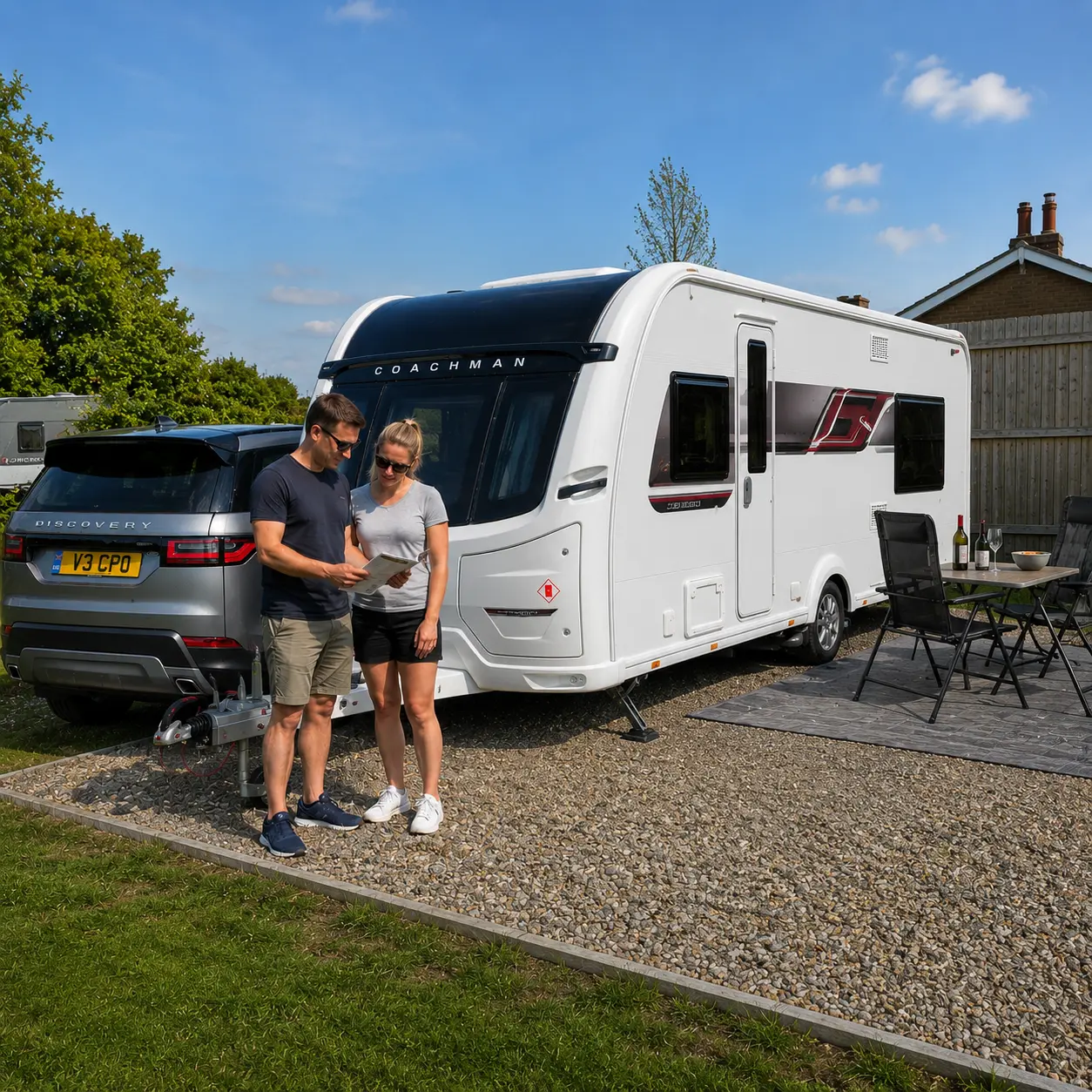
The 85% guideline is a widely recognised recommendation for people who are new to towing. It suggests that the caravan’s actual laden weight should ideally not exceed 85% of the tow car’s kerbweight.
For example, if your tow car has a kerbweight of 1,800kg:
1,800kg × 0.85 = 1,530kg
Under the 85% guideline, a caravan with an actual laden weight of up to approximately 1,530kg would generally be considered a sensible match for a beginner, provided all other manufacturer limits and legal requirements are also met.
It is important to understand that the 85% figure is a guideline rather than a legal limit. Experienced drivers may tow at higher ratios, but the caravan must never exceed the car manufacturer’s permitted towing limits or any other applicable weight restrictions.
Can You Tow a Caravan That Weighs More Than 85% of the Car?
Potentially, yes. The 85% guideline is not law, so exceeding it does not automatically make a combination illegal.
However, a higher towing ratio means the caravan represents a greater proportion of the tow car’s weight. This can reduce the tow car’s ability to control the caravan if instability develops.
For drivers with limited towing experience, keeping the actual laden caravan weight at or below approximately 85% of the tow car’s kerbweight remains a sensible starting point.
Even experienced caravanners should carefully consider the complete outfit rather than assuming that staying below the car’s maximum towing capacity automatically means the combination is ideal.
What Is Maximum Towing Capacity?
The maximum towing capacity is the greatest trailer weight that the vehicle manufacturer permits the car to tow.
For example, a car may have:
- A kerbweight of 1,800kg.
- A maximum braked towing capacity of 2,000kg.
That does not necessarily mean that towing a 2,000kg caravan would be a sensible match. The maximum towing capacity is an engineering limit, not a recommendation that every caravan up to that weight will provide an ideal or comfortable towing combination.
You should check the vehicle handbook, manufacturer’s technical information and the vehicle’s weight plate for the relevant limits.
The official UK Government guidance on towing with a car provides further information about towing rules, licence requirements and weight limits.
What Is Gross Train Weight?
Gross train weight, sometimes abbreviated to GTW, is the maximum permitted combined weight of the loaded tow car and loaded trailer or caravan.
This figure is extremely important because it considers the complete outfit rather than the caravan alone.
Your car might technically be capable of towing a caravan of a certain weight, but once passengers, luggage, bikes, equipment and other items are added to the car, the complete combination could exceed the permitted gross train weight.
The relevant weight limits can usually be found on the vehicle’s weight plate. Never assume that maximum vehicle weight plus maximum towing capacity can automatically be used at the same time, as vehicle-specific restrictions may apply.
What Is Noseweight?

Noseweight is the downward force that the caravan coupling places on the towball.
Correct noseweight is important for towing stability. Too little noseweight can contribute to an unstable caravan, while excessive noseweight can overload the towbar or the rear axle of the car.
You need to consider the lowest applicable limit among:
- The car manufacturer’s maximum permitted noseweight.
- The towbar manufacturer’s maximum permitted vertical load.
- The caravan coupling manufacturer’s limit.
The lowest permitted figure is the one you must not exceed.
Noseweight should be checked with the caravan loaded as it will be for travel and positioned on level ground. Moving heavy items around inside the caravan can significantly change the noseweight.
Why Payload Matters When Matching a Car and Caravan
Payload is often overlooked when people compare tow cars and caravans. You may find a combination that appears suitable on paper, but the real-world weights can change considerably once everything is loaded.
In the caravan, payload might include clothing, food, bedding, outdoor furniture, kitchen equipment and accessories. In the tow car, you also need to account for passengers, luggage, dogs, bikes and anything else being carried.
A caravan with an MTPLM of 1,500kg may not actually weigh 1,500kg on every journey, but for simple and cautious matching calculations, using the MTPLM provides a useful worst-case figure because it assumes the caravan is loaded to its permitted maximum.
For greater accuracy, visiting a public weighbridge with your outfit loaded for a typical trip can help you understand the actual weights involved.
Does Engine Power Matter for Towing a Caravan?
Yes, but power alone does not determine whether a car is a good tow car.
Torque is particularly useful when pulling away, climbing hills and maintaining progress with a heavy caravan attached. However, you should also consider:
- Vehicle weight.
- Engine power and torque.
- Gearbox type and ratios.
- Drivetrain.
- Braking capability.
- Cooling system capacity.
- Manufacturer towing limits.
A powerful engine in a relatively light vehicle does not necessarily make it a better towing match than a heavier vehicle with slightly less power.
Diesel, Petrol, Hybrid or Electric Tow Car?
There is no single best type of tow car for every caravanner.
Diesel cars have traditionally been popular for towing because of their strong low-down torque and often good fuel economy on longer journeys.
Petrol cars can also be excellent tow cars, particularly larger turbocharged models, although fuel consumption while towing may be higher.
Hybrid vehicles vary considerably. Some offer impressive towing capability, while others have low towing limits or are not approved for towing at all.
Electric vehicles can provide excellent torque and substantial kerbweights, making some models very capable tow cars. However, towing can significantly reduce driving range, and charging with a caravan attached may require additional planning.
The right choice depends on your caravan weight, annual mileage, typical journey length, budget and how you use the vehicle when you are not towing.
Does Four-Wheel Drive Make a Better Tow Car?
Four-wheel drive can be useful, particularly when pulling a caravan from wet grass, muddy pitches or steep surfaces. It can also provide additional traction in difficult weather conditions.
However, four-wheel drive is not essential for towing a caravan. Many front-wheel-drive and rear-wheel-drive vehicles make very capable tow cars.
The overall weight, manufacturer limits, stability, engine performance and suitability of the complete combination are more important than simply choosing a vehicle because it has four-wheel drive.
How Do You Calculate the Caravan-to-Car Weight Ratio?
A commonly used calculation is:
Caravan laden weight ÷ Tow car kerbweight × 100
For example:
1,500kg caravan ÷ 1,800kg tow car × 100 = 83.3%
This would put the combination below the commonly referenced 85% guideline.
Another example:
1,700kg caravan ÷ 1,800kg tow car × 100 = 94.4%
This is a much higher ratio and may be less suitable for an inexperienced towing driver, even if the car is legally and technically permitted to tow the caravan.
Should You Use the Caravan’s MIRO or MTPLM for Matching?
For a cautious initial comparison, using the caravan’s MTPLM is generally the simpler approach because it represents the maximum weight the caravan is permitted to reach when loaded.
MIRO stands for Mass in Running Order and represents the caravan’s weight in a defined condition before its user payload is added. The precise inclusions can depend on the manufacturer and applicable standards.
Using MIRO alone for matching could give a misleading impression because the caravan will usually become heavier once personal belongings, equipment and accessories are added.
Where Can You Find the Correct Weight Figures?

Depending on the figure you need, check:
- The vehicle handbook.
- The vehicle manufacturer’s official technical specifications.
- The vehicle weight plate.
- The caravan weight plate.
- The caravan handbook.
- The towbar identification plate or documentation.
Be careful when using third-party towing databases. They can be useful for initial research, but specifications can vary by model year, engine, gearbox, trim level and optional equipment. Always verify important figures against official information for the exact car and caravan you are considering.
Common Caravan and Tow Car Matching Mistakes
Some of the most common mistakes include:
- Looking only at the car’s maximum towing capacity.
- Using the caravan’s empty weight instead of considering its loaded weight.
- Ignoring the 85% guideline when completely new to towing.
- Forgetting about noseweight limits.
- Failing to account for passengers and luggage in the tow car.
- Assuming every version of the same car model has identical towing limits.
- Ignoring gross train weight.
- Relying entirely on an online matching tool without verifying official figures.
The safest approach is to check every relevant figure individually and make sure the complete outfit remains within all applicable limits.
Is a Heavier Tow Car Always Better?
Generally, having a tow car that is significantly heavier than the caravan can improve the weight relationship between the two vehicles. However, weight alone does not guarantee a good towing experience.
A suitable tow car also needs appropriate manufacturer-approved towing capacity, sufficient performance, adequate brakes and suspension, and the ability to cope with the actual load being carried.
A very heavy car with inadequate towing capacity is not automatically suitable, just as a powerful but lightweight car may not be the ideal match for a large caravan.
What Else Affects Towing Stability?
Even a well-matched car and caravan can become unstable if it is badly loaded or driven inappropriately.
Factors that can affect stability include:
- Incorrect noseweight.
- Heavy items loaded too far towards the rear of the caravan.
- Excessive speed.
- Strong crosswinds.
- Passing or being passed by large vehicles.
- Incorrect tyre pressures.
- Worn tyres or suspension components.
- Sudden steering inputs.
If you experience caravan instability, our guide on how to stop caravan snaking explains the causes, warning signs and what to do if a caravan begins to snake.
Does Your Driving Licence Affect What You Can Tow?
Yes. Your driving licence entitlement and the weight of your outfit both matter.
UK towing licence rules have changed over the years, so you should always check your current licence entitlement and the latest official guidance rather than relying on outdated advice.
Our guide to what licence you need to tow a caravan explains the key points for UK drivers.
Should Beginners Choose a Lighter Caravan?
A lighter caravan can be easier for a beginner to tow, particularly when paired with a substantially heavier tow car. However, the right choice depends on the complete combination rather than caravan weight alone.
For someone new to towing, a sensible approach is to:
- Aim for a comfortable weight ratio.
- Stay within every manufacturer and legal limit.
- Load the caravan carefully.
- Check noseweight before travelling.
- Allow more time and space when driving.
- Consider professional towing tuition if you lack confidence.
Caravan and Tow Car Matching Checklist
Before deciding whether a car and caravan are a suitable match, check the following:
- Tow car kerbweight: Confirm the correct figure for the exact model and specification.
- Caravan MTPLM: Know the caravan’s maximum permitted laden weight.
- Towing ratio: Calculate the relationship between caravan weight and tow car kerbweight.
- Maximum towing capacity: Never exceed the manufacturer’s permitted limit.
- Gross train weight: Ensure the complete loaded outfit remains within the permitted maximum.
- Noseweight: Stay within the lowest applicable limit for the car, towbar and caravan coupling.
- Payload: Account for passengers, luggage, accessories and equipment.
- Driving licence: Make sure you have the correct entitlement for the outfit.
- Real-world suitability: Consider hills, motorway driving, wet pitches and the types of journeys you actually make.
Final Thoughts
Caravan and tow car matching is about much more than finding a vehicle with a towing capacity greater than the weight of your caravan. A good match considers the relationship between the two vehicles, every relevant manufacturer limit, the way the outfit is loaded and the experience of the person behind the wheel.
For beginners, the 85% guideline provides a useful starting point, but it should never replace checking the actual limits for your exact car and caravan. Kerbweight, MTPLM, towing capacity, gross train weight and noseweight all need to be considered together.
Taking the time to understand these figures before buying or towing can help you choose a more suitable combination and enjoy a safer, more stable and more confident experience on the road.