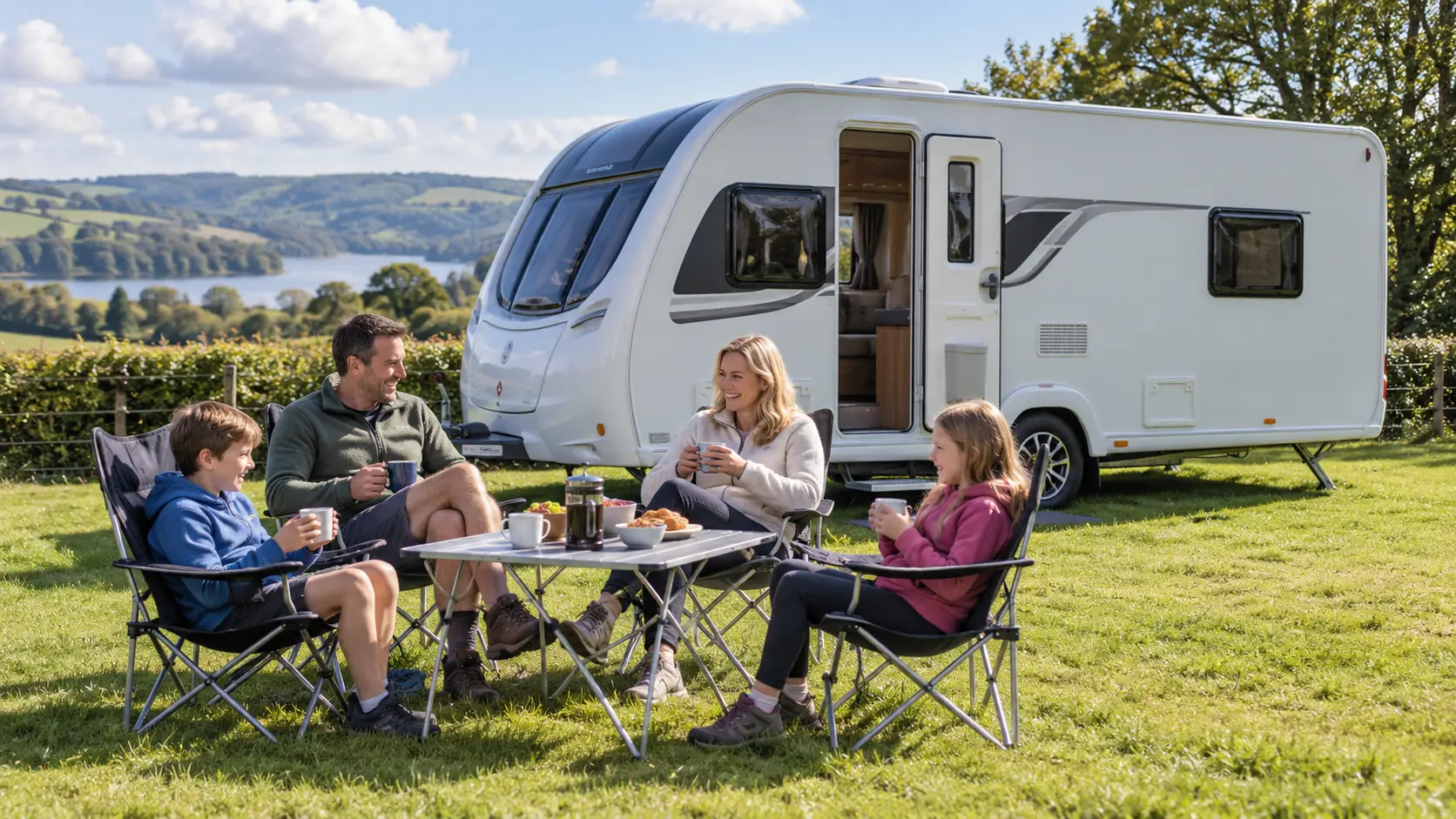
Planning a holiday with children in a caravan is easier when you get the basics right. A suitable campsite, manageable journey and comfortable sleeping arrangements can make a big difference to how everyone enjoys the trip.
Caravan holidays give families a familiar base while they explore somewhere new. There is room for favourite books, simple meals and a bedtime routine, alongside plenty of opportunities to get outdoors.
This guide covers choosing a site, packing sensibly and settling in safely. For help with the wider preparations, start with our first caravan trip checklist.
Choose a Campsite That Suits Your Family
A family-friendly campsite does not have to be a large holiday park. Some families enjoy pools and organised activities. Others prefer a smaller site with space to relax and easy access to walks.
Before booking, check that children are welcome and that the facilities suit their ages. A playground may appeal to younger children, while teenagers might be more interested in nearby activities or somewhere to meet friends.
- Check for family bathrooms, baby-changing facilities and suitable showers.
- Find out how far the pitches are from toilets and play areas.
- Ask about laundry facilities if you are staying for more than a few nights.
- Check whether pools and organised activities require booking or cost extra.
- Look at internal roads, water hazards and the layout of the site.
- Confirm seasonal opening dates for the facilities you plan to use.
Use our Interactive UK Campsite Map to explore locations, then confirm important family facilities directly with the campsite. A pitch near the toilets can be useful, but one beside a busy entrance may be less relaxing.
Keep Your First Family Trip Manageable
For a first trip, choose somewhere within a comfortable towing distance and consider staying on one site. This gives everyone time to settle in without repeatedly packing up and moving.
A short practice stay can reveal things that are easy to miss at home. You might discover that the bedtime layout needs changing, the wash bags are difficult to reach or everyone needs a separate place for muddy shoes.
Try setting up the beds before you leave. Check that your sleeping arrangements leave a clear route to the door and that any equipment fits without blocking ventilation.
Plan Towing Days Around Breaks
Allow more time than your navigation app suggests. Towing, traffic, toilet stops and feeding breaks can all make a journey longer, especially with younger children.
Plan stops where you can park the complete outfit safely. Check the campsite’s arrival window and follow its recommended approach route, rather than relying on a shortcut down narrow lanes.
Keep spare clothes, wipes, drinks and a few familiar activities accessible in the car. Download audio stories or entertainment before leaving, and save meals for a proper stop when everyone can take a break.
If you are travelling with a baby, build in frequent stops to take them out of their car seat. Follow the seat manufacturer’s advice and any individual guidance from your healthcare professional.
Everyone Travels in the Tow Car
Children and adults must never travel inside a touring caravan while it is being towed. Everyone travels in the tow car, using the appropriate restraint. The police guidance on towing caravans confirms that carrying passengers in a towed caravan is against the law.
In the UK, children normally need a suitable child car seat until their 12th birthday or until they reach 135cm tall, whichever comes first. After that, they must use a seat belt. Check that each seat fits your child and vehicle, and follow its fitting instructions.
Never place a rear-facing child seat in front of an active frontal airbag. For the full requirements and exceptions, read the GOV.UK child car seat rules.
Pack for Children in a Caravan Without Overloading
Family equipment adds up quickly. Pushchairs, bikes, bedding and extra clothes all affect the load, so make a packing list before filling every cupboard.
Keep both the car and caravan within their weight limits, including axle and combined outfit limits. Remember that passengers, luggage and the load on the towball affect the car’s available capacity.
Check the car’s towing limit and the caravan’s payload. Stay within the lowest applicable noseweight limit for the car, towbar and caravan coupling, and secure everything for travel.
- Pack layers, waterproofs and footwear for the forecast.
- Bring familiar bedding and a favourite bedtime book.
- Keep spare clothes and a wash bag easy to reach on arrival.
- Carry necessary medicines, a first aid kit and any care instructions.
- Take sun protection and suitable outdoor clothing.
- Choose a small selection of toys rather than several bulky boxes.
- Include a bag for wet clothes and muddy footwear.
- Plan the first evening’s meal before you leave.
For the outfit itself, work through our essential caravan safety checks before every trip.
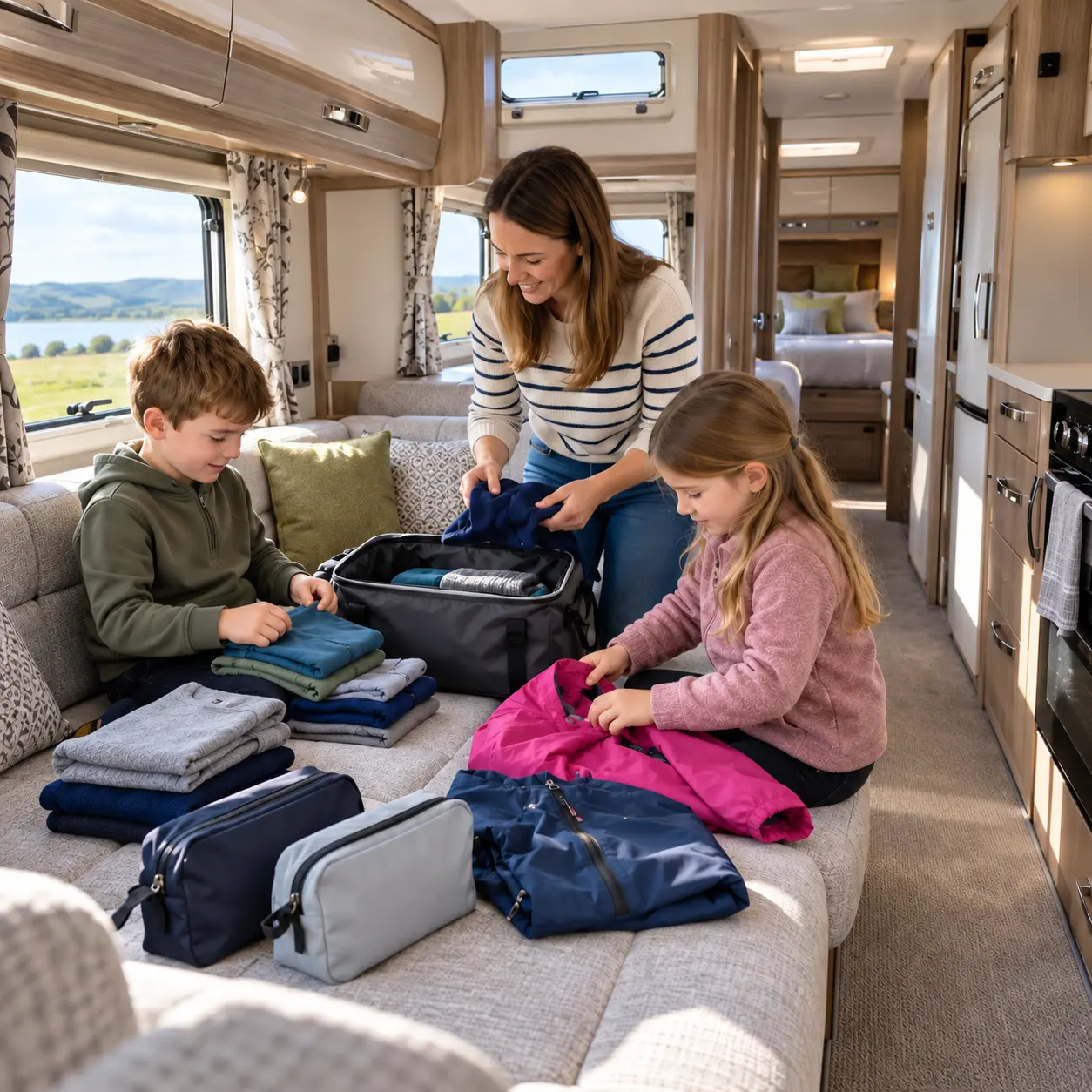
Plan Sleeping Arrangements for Children in a Caravan
Decide where everyone will sleep before you arrive. Fixed bunks can save preparation time, while a lounge bed may need making up each evening. Think about bedtime, night-time toilet trips and where adults will sit afterwards.
For bunk beds, check the caravan handbook for age suitability, weight limits and how guards or safety nets must be used. Do not assume that every upper bunk suits a younger child. Avoid improvised barriers that could create trapping hazards or obstruct an exit.
Babies need their own suitable sleep space with a firm, flat mattress. Place them on their back, keep the sleep space clear and have them in the same room as you for at least the first six months. Do not use the caravan sofa or a car seat as an indoor sleep space.
If you bring a travel cot, follow its instructions and do not add extra padding. Check that it fits without blocking an exit or heater. The Lullaby Trust’s safer sleep on holiday advice explains how to keep arrangements suitable away from home.
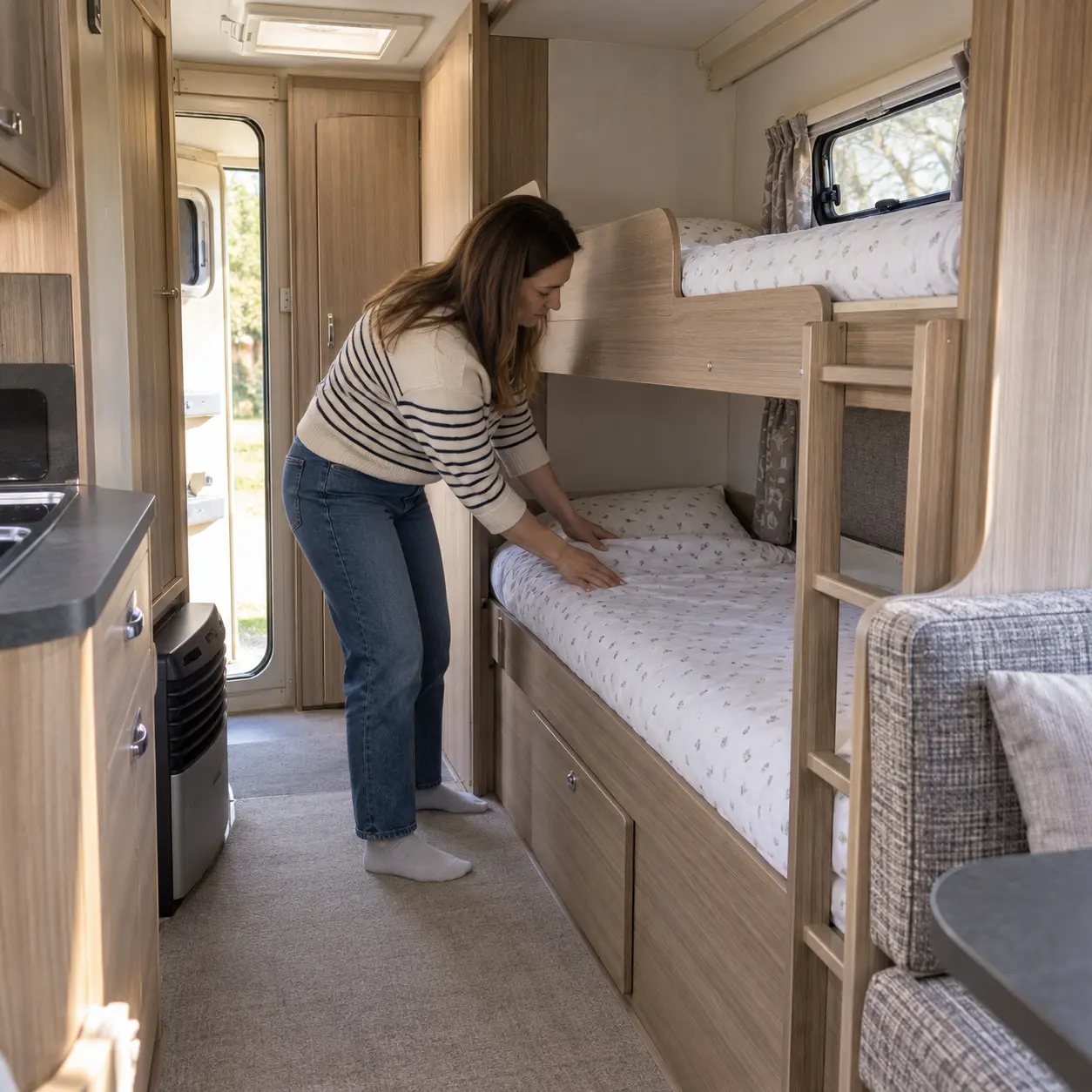
Make Arrival and Setup Calm
Before unhitching or manoeuvring, agree how the children will stay safely supervised. Keep them clear of the car, caravan, hitch and motor mover while the outfit is being positioned.
With two adults, it can help for one to supervise the children while the other handles setup. If you are the only adult, plan a safe supervised arrangement before starting and ask the site team about assistance if needed.
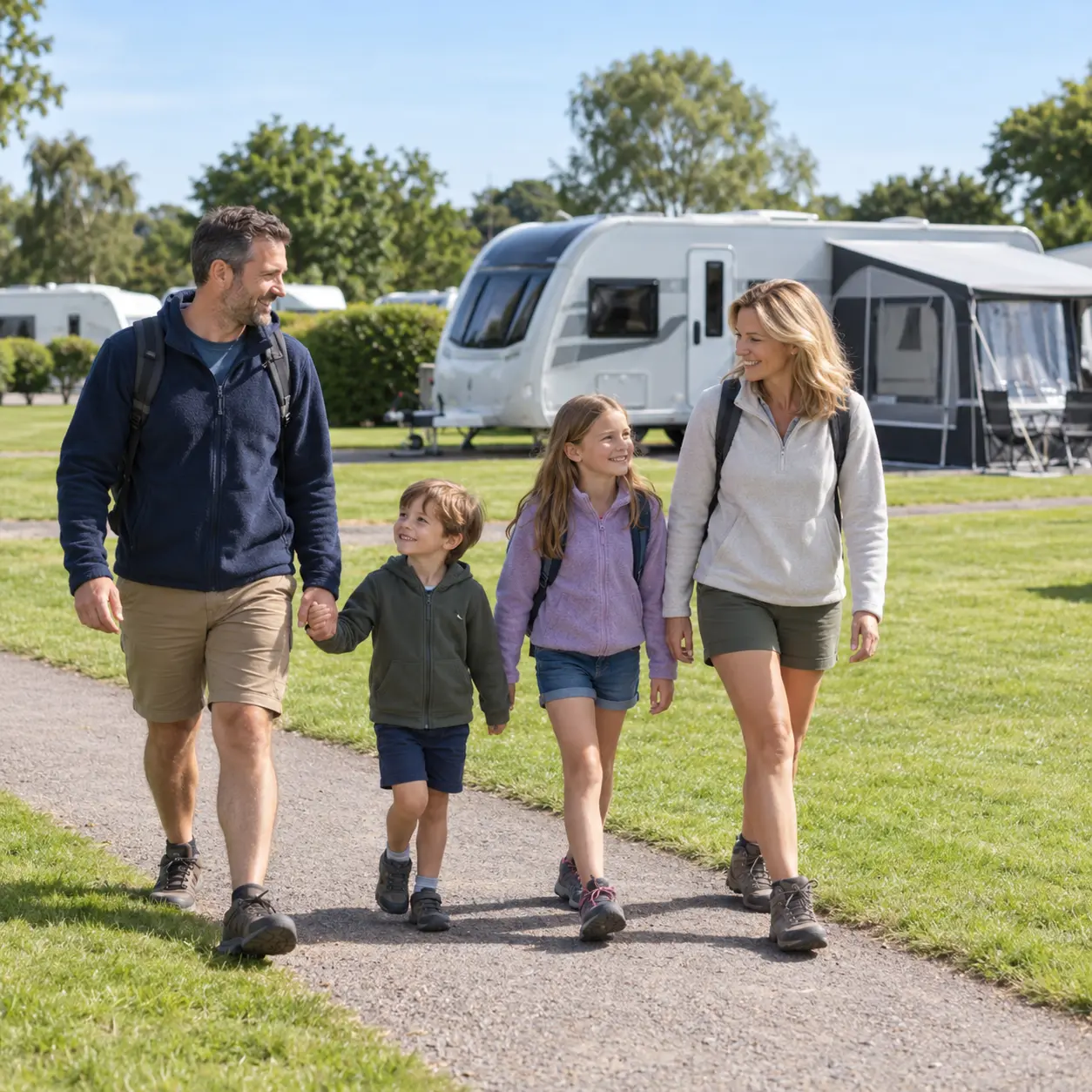
Once the caravan is safely positioned, take a short walk together. Show children your pitch, the toilets and where they can play. Agree what they should do if they cannot find you, using a clear meeting point and the campsite’s arrangements.
Older children can help with small tasks once the outfit is secure. Putting away their clothes or setting the table gives them a useful role without involving them in towing equipment or gas and electrical connections.
Set Clear Campsite Safety Rules
Explain the boundaries in a way your children understand. Decide where they can go, when they need an adult and how they should check in. Base those decisions on their age and the actual site layout.
Keep younger children close around moving vehicles. Supervise children directly near pools, ponds, rivers and other water. A fenced play area or a quiet-looking road does not remove the need for supervision.
- Walk around the outfit instead of passing beneath the towbar or over the hitch.
- Keep away from other people’s pitches and equipment.
- Follow the site’s rules for bikes, scooters and ball games.
- Ask before visiting another caravan or leaving the agreed play area.
- Respect quiet hours and keep paths clear.
Inside, keep medicines, cleaning products, matches and lighters out of children’s reach. Keep them away from hot pans and heaters, and leave exits and ventilation clear. Test the smoke and carbon monoxide alarms according to their instructions.
Do not leave children alone in the caravan. Make sure everyone knows how to get out and where to meet if there is a fire. Get everyone out, stay out and call 999. Read the fire service’s caravan safety advice before travelling.
Use barbecues only outdoors in a safe area permitted by the site. Keep them away from children, the caravan and awning, and never bring one inside, even after cooking.
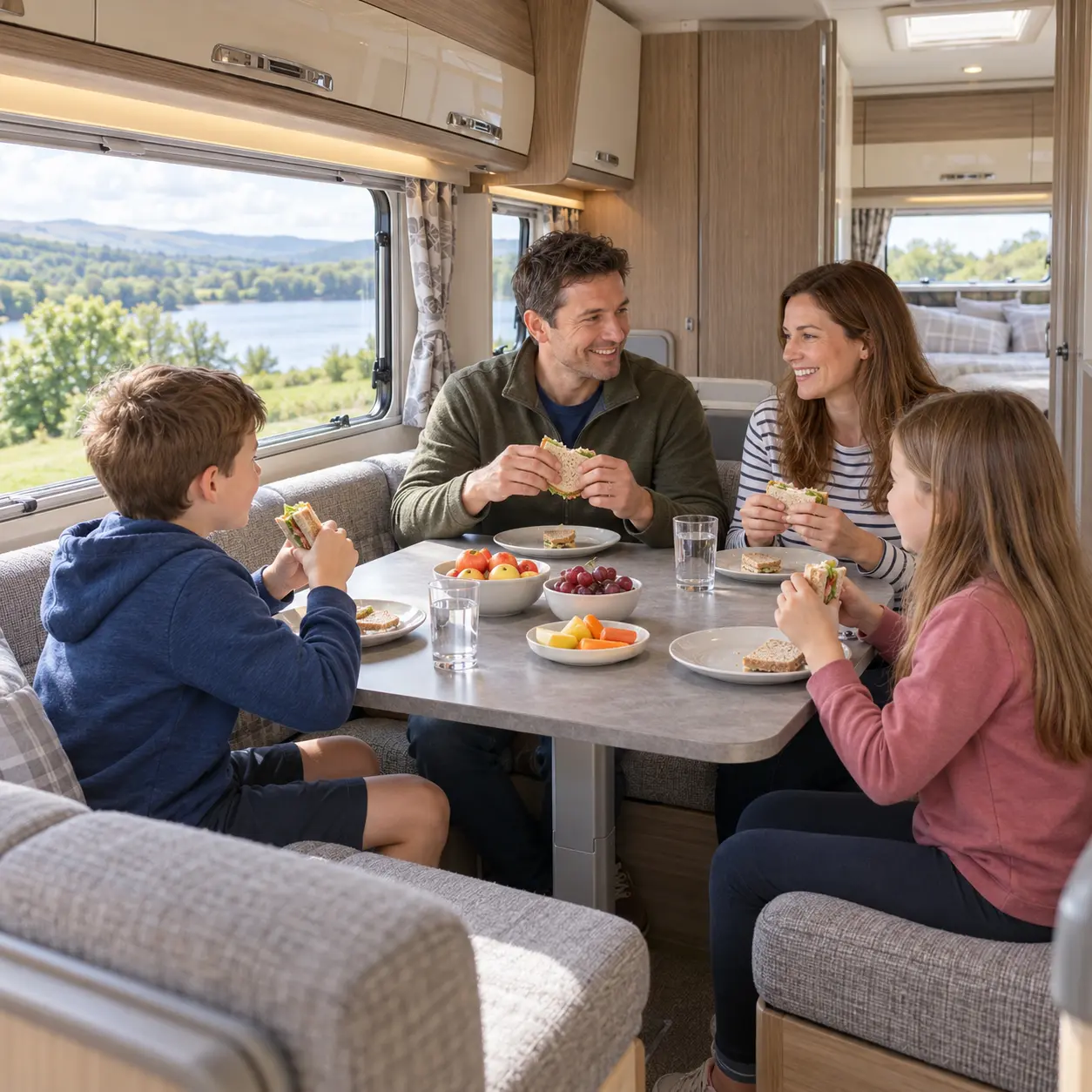
Keep Meals, Bedtime and Outings Simple
A few familiar routines can make a new place feel easier. Keep mealtimes reasonably predictable, carry useful snacks for outings and give everyone time to wind down before bed.
Choose simple meals that suit your kitchen space. Cooking several pans at once can be awkward in a small caravan, particularly when children need help at the same time.
For days out, choose one main activity and leave some breathing room. A short walk, time on the play area or a relaxed afternoon on site can be enough without filling every hour.
Have a small indoor activity bag for wet weather. Books, cards and colouring take little space, while older children may enjoy choosing an outing or helping plan a walk. Ask what each child would like from the holiday, including time to do very little.
A Quick Family Caravan Checklist
- The campsite welcomes children and its facilities suit your family.
- Everyone has a suitable seat and restraint in the tow car.
- The route, stops and arrival time allow for a relaxed journey.
- The loaded outfit stays within all relevant weight limits.
- The beds are suitable and exits remain clear when they are made up.
- Children will be supervised during setup and around site hazards.
- First-night food, wash bags and spare clothes are easy to reach.
- Everyone understands the main campsite rules and emergency plan.
Can You Take a Baby on a Caravan Holiday?
Yes, but plan suitable feeding, washing and sleeping arrangements before travelling. Check that essential equipment fits safely and allow for regular breaks. If your baby has additional health needs, discuss your travel plans with their healthcare professional.
Do You Need a Large Caravan for a Family?
You need enough suitable sleeping places and a workable layout. More berths do not automatically mean more usable space or payload. Check the actual bed sizes, storage and daily living arrangements alongside what your car can safely tow.
Give Your Family Time to Settle In
Touring with children in a caravan becomes easier when you learn what works for your family. Start with manageable plans, keep the essentials organised and adjust your routine after each trip.
There is no need to fit everything into one holiday. A comfortable base and time together can make a simple break feel special. Explore our Caravan Tips & Guides for more help preparing your next trip.