A caravan damp report can look like a page of random numbers. Knowing how to read a caravan damp report helps you tell a normal result from one that needs action. This guide explains the readings, the limits of the test and the questions to ask your workshop.
What a caravan damp report shows
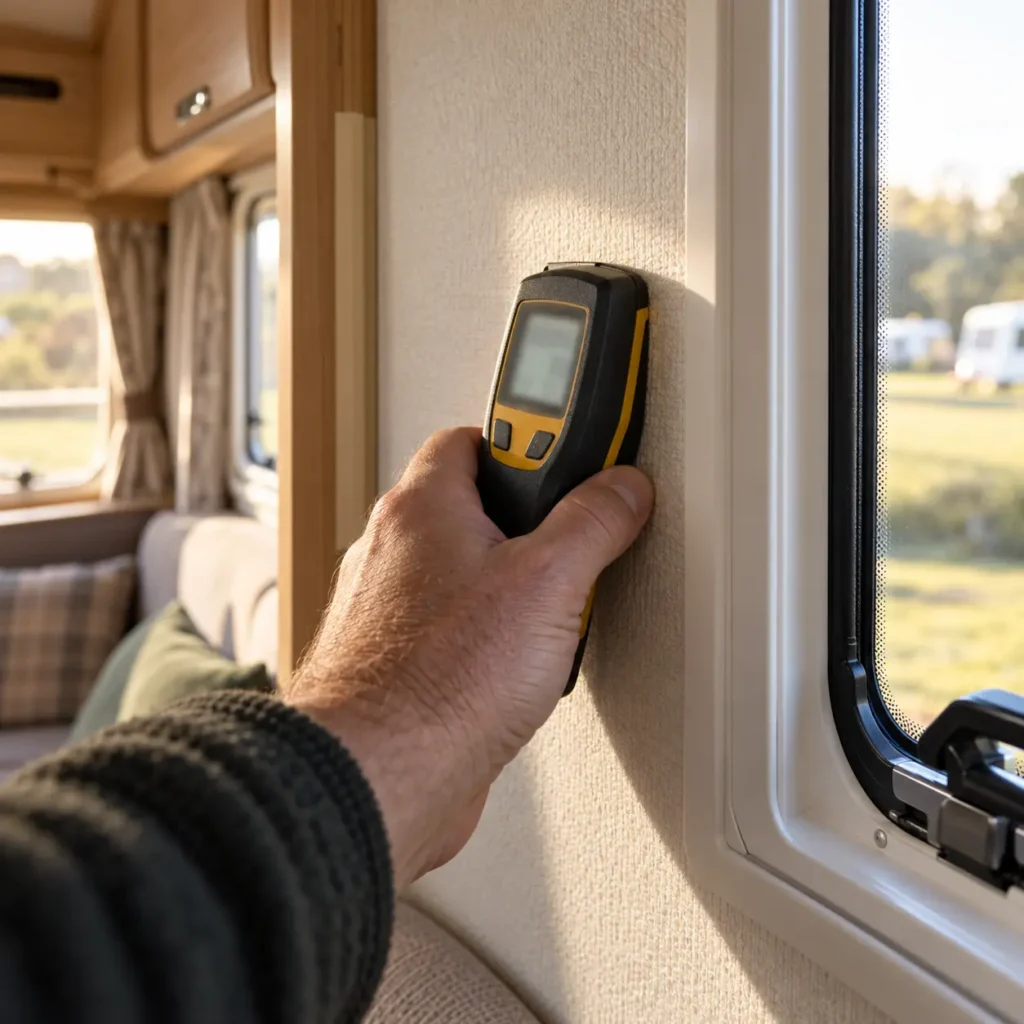
A damp check forms part of every habitation service. The Camping and Caravanning Club describes it as a vital part of any annual service. An Approved Workshop supplies a separate damp report giving moisture readings, based on multiple checks required by the scheme.
Layouts differ, but most reports list readings by area, such as windows, doors, rooflights, corners and floor edges. Some workshops record every figure. Others may only tick points below a damaging level, so ask which type you have. Our guide to caravan habitation checks explains what else a service covers.
What the percentages mean
First, remember that readings are never zero. The Club notes that moisture readings always sit above zero, and anything up to 15 per cent is considered normal. For readings above 15 per cent, your workshop can give appropriate advice.
Above that figure, workshops tend to use similar bands, but they are not a legal standard. Treat the table as a general guide, and follow the notes printed on your own report.
| Reading | Usual meaning | Sensible next step |
|---|---|---|
| Up to 15% | Normal for a caravan structure | No action; compare with next year |
| 15% to 20% | Borderline | Ask for advice and a recheck in a few months |
| 20% to 30% | Possible water ingress | Find the source and plan a repair |
| Over 30% | Likely active leak or damage | Investigate promptly |
Why the pattern matters more than one number
A single high figure is not always a leak. A metal screw or fixing can read differently from the board around it. However, a run of raised readings along a window, seam or awning rail points to water getting in.
Water also travels. It can follow channels and pipes and appear in what looks like a random part of the caravan. As a result, the wettest spot is not always the entry point.
Compare the figures with last year’s report where you can. A reading that creeps up each year tells you more than one result alone. Condensation can also confuse matters, so read our caravan condensation guide before you assume a leak.
What a damp test cannot tell you
A caravan damp report is a snapshot from one day. A leak that only appears in heavy rain may not show on a dry afternoon. Seasonal moisture can also nudge readings up or down.
Methods differ too. The Approved Workshop Scheme says testing can be visual or use equipment, and that requirements may vary with newer construction methods and materials. So a report with fewer numbers is not automatically a poor one.
Meters add another limit. Readings vary between meters, so the range matters more than an exact figure. The report also only covers the points tested, so check whether the underside and areas behind fittings were included.
Finally, remember that numbers are only part of the job. Cracked sealant, soft panels and a musty smell often show up before a meter does.
Reading a damp report when buying used
A caravan damp report is useful evidence, not a guarantee. The Caravan and Motorhome Club advises asking to see receipts or documents relating to ownership or servicing. Look for several years of reports with steady, low readings.
Check the date as well, because an old report says little about today’s condition. The Club also suggests pressing suspect areas lightly for softness and using your nose. If the floor feels spongy, read our guide to caravan floor delamination.
For a serious purchase, consider paying a workshop to inspect the caravan first. Some Approved Workshops list pre-purchase inspections that include a damp inspection. The fee is small compared with a wall or floor repair.
Questions to ask a qualified workshop
The Club recommends annual servicing by an Approved Workshop Scheme member or your supplying dealer. You can find one at approvedworkshops.co.uk. Then ask these questions:
- Which meter did you use, and how do you check it?
- Which areas did you test, including the underside and behind fittings?
- Did you also check sealant, seals and rooflights by eye?
- Are these readings comparable with last year’s report?
- Where do you think the water is getting in?
- Is the damage to the structure, or only to the sealant?
- What will the repair involve, and when should we recheck?
- Does the result affect my manufacturer’s warranty?
On cost, Approved Workshops provide a detailed written estimate for works likely to exceed £150. On warranty, schemes generally insist on at least an annual service, but you should check with your manufacturer.
What to do after a high reading
Do not leave a poor result until next season. Follow these steps:
- Ask the workshop to name the likely entry point, and get it in writing.
- Seal or repair the entry point first, because drying panels while water still gets in achieves nothing.
- Get a written estimate before any work starts.
- Book a recheck after the repair, then compare the new readings.
Scope matters here. The scheme approves workshops for routine servicing and service-related repairs, but it does not cover body repairs. So ask whether your workshop carries out the repair or recommends someone else. Our caravan servicing intervals guide helps you plan the next check.
Caravan damp report checklist
- Check the date and the workshop name on the report.
- Confirm which areas were tested, including floor edges and the underside.
- Note any reading above 15 per cent, and where it sits.
- Look for patterns along seams, windows and rails, not single spikes.
- Compare the figures with previous years.
- Press walls and floors gently for softness.
- Ask for written advice on any reading that needs action.
- Get a written estimate for repairs.
- Arrange a recheck, and keep every report together.
Official guidance checked on 20 October 2026. Rules can change, so check the latest guidance before you travel.