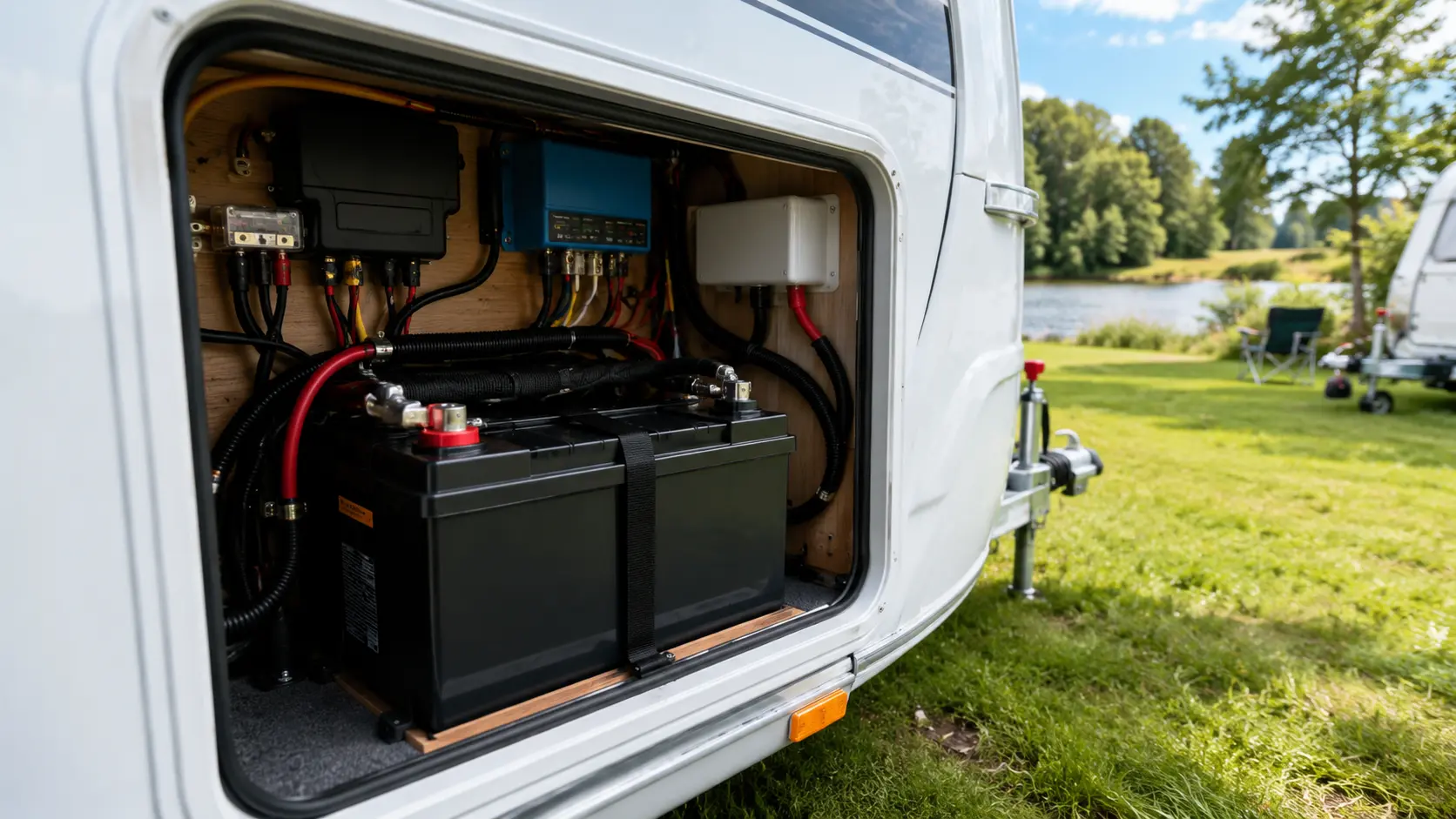
Caravan Battery Guide for Beginners is essential reading if you are new to touring caravans. Your leisure battery powers many of the systems you rely on during a trip, including lights, water pumps, heating controls, USB sockets, alarms, and motor movers.
Understanding how your caravan battery works can help you avoid power problems, look after your equipment properly, and feel more confident before every trip.
Caravan Battery Guide for Beginners: What Does a Leisure Battery Do?
A caravan leisure battery stores electrical energy and supplies power to your caravan’s 12V systems when you are not connected to mains electricity.
Most modern touring caravans use a leisure battery to power:
- Interior lighting
- Water pumps
- Heating control panels
- Motor movers
- USB charging points
- TV systems
- Control panels
- Alarms and security systems
When you are connected to an electric hook-up, your caravan’s charging system will usually power the 12V equipment and recharge the battery at the same time.
Leisure Battery vs Car Battery
A leisure battery is not the same as a car battery. A car battery is designed to provide a short, powerful burst of energy to start an engine. A leisure battery is designed to release power slowly over a longer period.
That difference matters because caravan equipment needs steady power rather than a quick starting boost. For that reason, you should always use a proper leisure battery in your caravan rather than a standard car battery.
Types of Caravan Leisure Battery
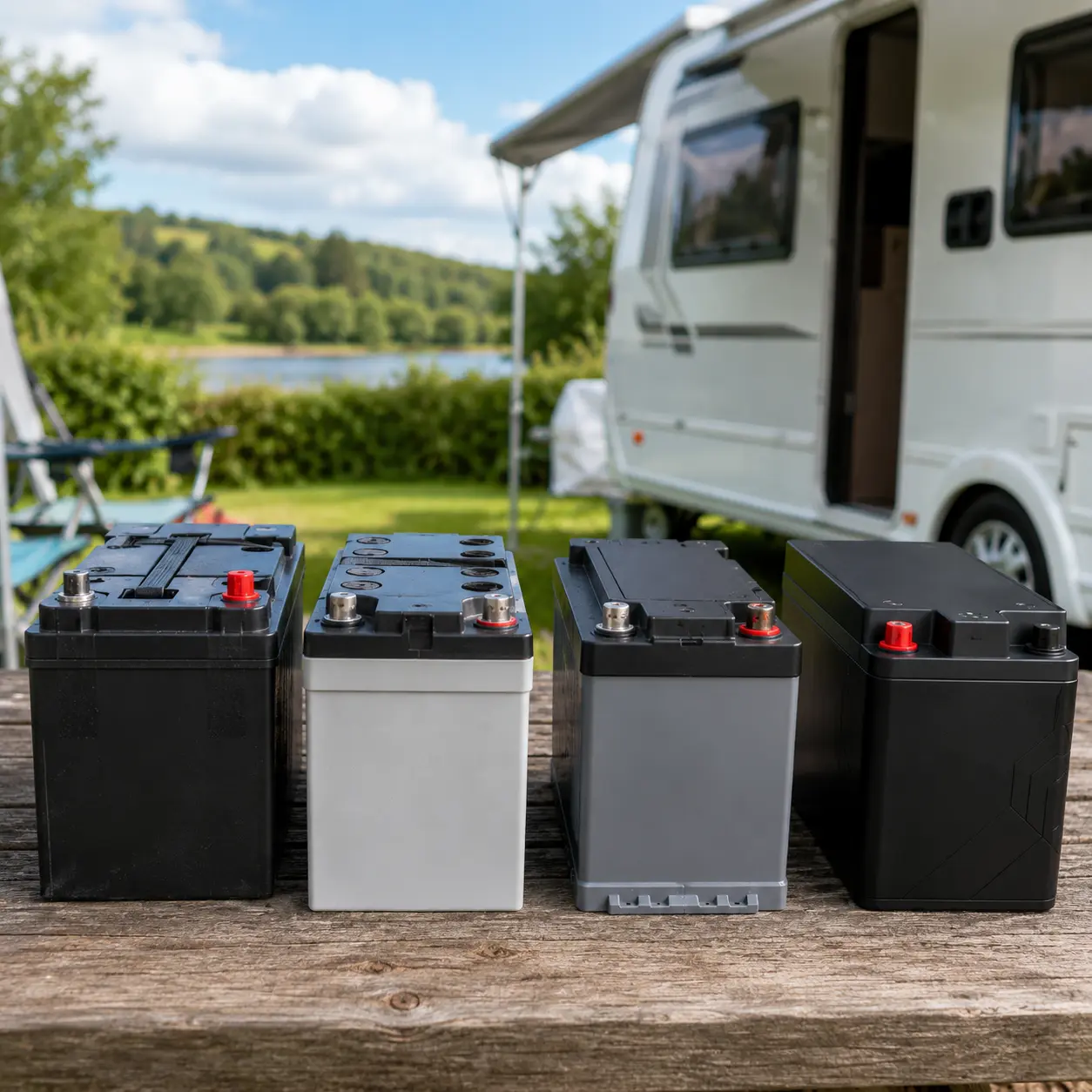
There are several types of leisure battery available, and each one has different benefits.
Lead Acid Batteries
Lead acid batteries are often the cheapest option. They are widely available and suitable for occasional caravanners who mainly use electric hook-up pitches.
They are heavier than newer battery types and usually need more care during storage.
AGM Batteries
AGM batteries are a popular choice for regular caravanners. They are more durable than standard lead acid batteries and generally cope better with vibration.
They are also a good option if you use a motor mover, as they can deliver strong, reliable performance.
Gel Batteries
Gel batteries can handle deeper discharge better than many traditional batteries. They are often reliable and long-lasting, but they can be more expensive and may need compatible charging equipment.
Lithium Batteries
Lithium leisure batteries are becoming more common in caravanning. They are lightweight, charge quickly, and usually offer a longer lifespan.
The main downside is cost. However, regular tourers and off-grid caravanners may find lithium batteries worth considering.
What Size Caravan Battery Do You Need?

Battery capacity is measured in amp hours, usually written as Ah.
Common caravan battery sizes include:
- 75Ah to 85Ah for occasional weekend trips
- 100Ah to 110Ah for regular touring
- 120Ah or more for heavier use or off-grid stays
The right size depends on how you use your caravan. If you mainly stay on electric hook-up pitches, you may not need the largest battery. If you use non-electric pitches, a motor mover, or several 12V items, a larger battery may be useful.
It is also important to think about payload. Batteries can be heavy, so make sure any upgrade fits within your caravan’s limits. Our guide to Caravan Weight Limits Explained for Beginners explains this in more detail.
How Long Does a Caravan Battery Last?
A caravan battery’s lifespan depends on how it is used, charged, stored, and maintained.
As a general guide:
- Lead acid batteries may last around 3 to 5 years
- AGM batteries may last around 4 to 7 years
- Gel batteries may last around 5 to 8 years
- Lithium batteries may last 10 years or more
These figures are only a guide. A well-maintained battery can last longer, while a poorly maintained battery can fail much sooner.
How to Charge a Caravan Battery
Most caravan batteries charge when the caravan is connected to electric hook-up. Your onboard charger manages the charging process while also powering the caravan’s 12V systems.
You can also charge a leisure battery using:
- A suitable smart battery charger
- Solar panels
- Vehicle charging while towing
Always use charging equipment that matches your battery type. For example, some lithium batteries need a compatible charger. If you are unsure, check your caravan handbook, battery instructions, or speak to a qualified caravan technician.
For further official industry information, visit the National Caravan Council.
Caravan Battery Maintenance Tips
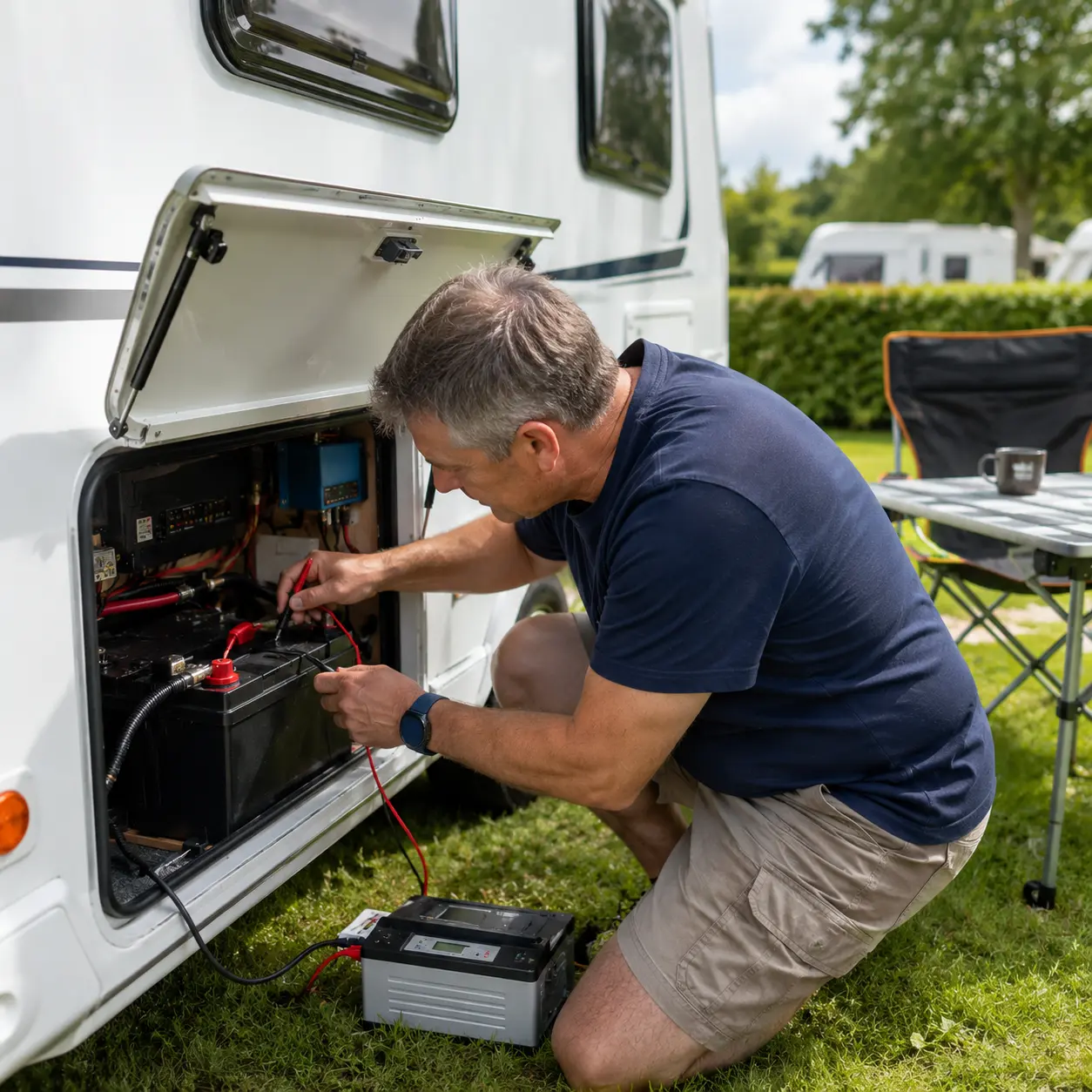
Good battery care can save money and prevent frustrating problems on site.
- Keep the battery charged when not in use
- Avoid letting the battery go completely flat
- Store it in a cool, dry place
- Check terminals for corrosion
- Make sure connections are secure
- Recharge the battery during winter storage
- Use a smart charger where suitable
Many leisure battery problems happen because the battery has been left discharged for too long. This is especially common over winter.
Common Caravan Battery Mistakes
Letting the Battery Go Flat
Allowing a leisure battery to fully discharge can reduce its lifespan and may cause permanent damage.
Using the Wrong Charger
Different battery types need different charging profiles. Using the wrong charger can affect performance and battery life.
Ignoring Winter Storage
A battery left unused for months can slowly discharge. Regular charging during storage helps keep it healthy.
Forgetting About Payload
Some leisure batteries are heavy. Before upgrading, check your available payload and nose weight carefully. Our guide to Caravan Nose Weight Explained Simply is useful if you are reviewing your towing setup.
Signs Your Caravan Battery Needs Replacing
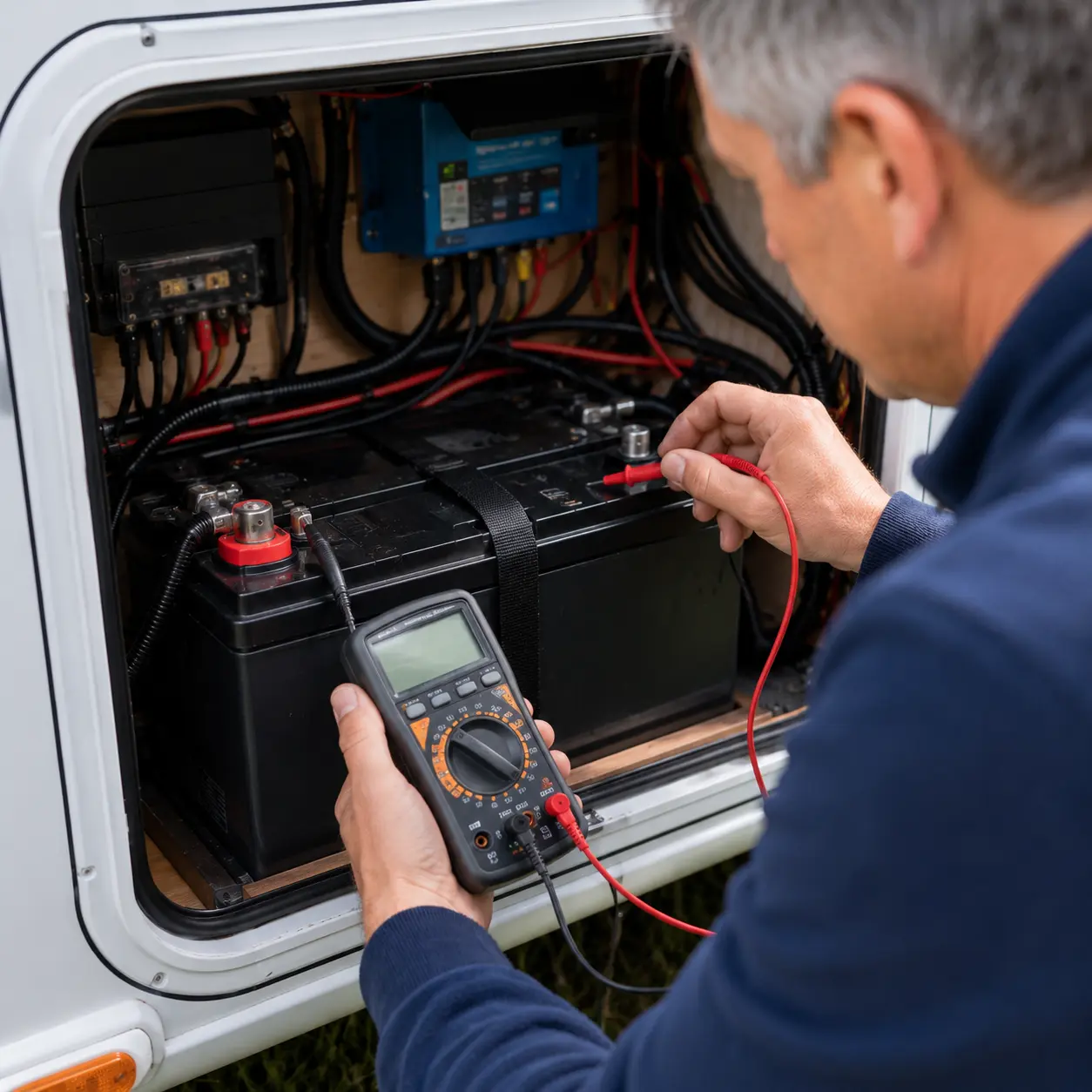
Your battery may be nearing the end of its life if you notice:
- It does not hold charge for long
- Lights dim quickly
- The motor mover feels weak
- The battery takes a long time to charge
- Voltage drops quickly after charging
- The battery struggles after storage
If the same problems keep returning after proper charging, it may be time to replace the battery.
Is a Lithium Caravan Battery Worth It?
A lithium battery can be a good upgrade for some caravanners, but it is not essential for everyone.
If you tour regularly, use off-grid pitches, or want to reduce weight, lithium may be worth considering. However, if you mainly use electric hook-up pitches, a good AGM battery may be more than enough.
The best choice depends on your budget, touring style, charging setup, and how much power you use.
Battery Safety Before Every Trip
Before each trip, it is worth carrying out a few simple checks.
- Check the battery is charged
- Make sure terminals are secure
- Look for damage or corrosion
- Confirm the battery is properly secured
- Check your motor mover works before leaving home
Battery checks sit alongside your wider caravan preparation. Our Caravan Tips & Guides hub has more beginner-friendly advice, and our Best Caravan Sites UK guide can help you plan where to tour next.
Final Thoughts
This Caravan Battery Guide for Beginners gives you the basics you need to understand your leisure battery, choose the right type, charge it correctly, and avoid common mistakes.
A well-maintained caravan battery makes touring easier, especially when using a motor mover, staying on non-electric pitches, or preparing your caravan after winter storage.
Once you understand your battery, your caravan’s 12V system feels much less confusing. It is one of those small bits of knowledge that can make every trip feel smoother and more reliable.
Related Guides
- Caravan Water System Explained for Beginners
- Caravan Setup Equipment for UK Touring
- Caravan Weight Limits Explained for Beginners
- Caravan Nose Weight Explained Simply
- Caravan Tyre Pressure Guide for Beginners
Discover More from Caravan Adventuring
Whether you’re searching for campsite reviews, travel diaries, touring advice or caravan setup guides, we’ve got plenty more content to help you plan your next adventure.
Browse Our Full Content Library
Suggest a Campsite for Review
Have you stayed at a campsite that deserves more attention?
We’re always looking for new campsites to feature on Caravan Adventuring. Whether it’s a hidden gem, a family favourite, or a site with outstanding facilities, we’d love to hear about it.