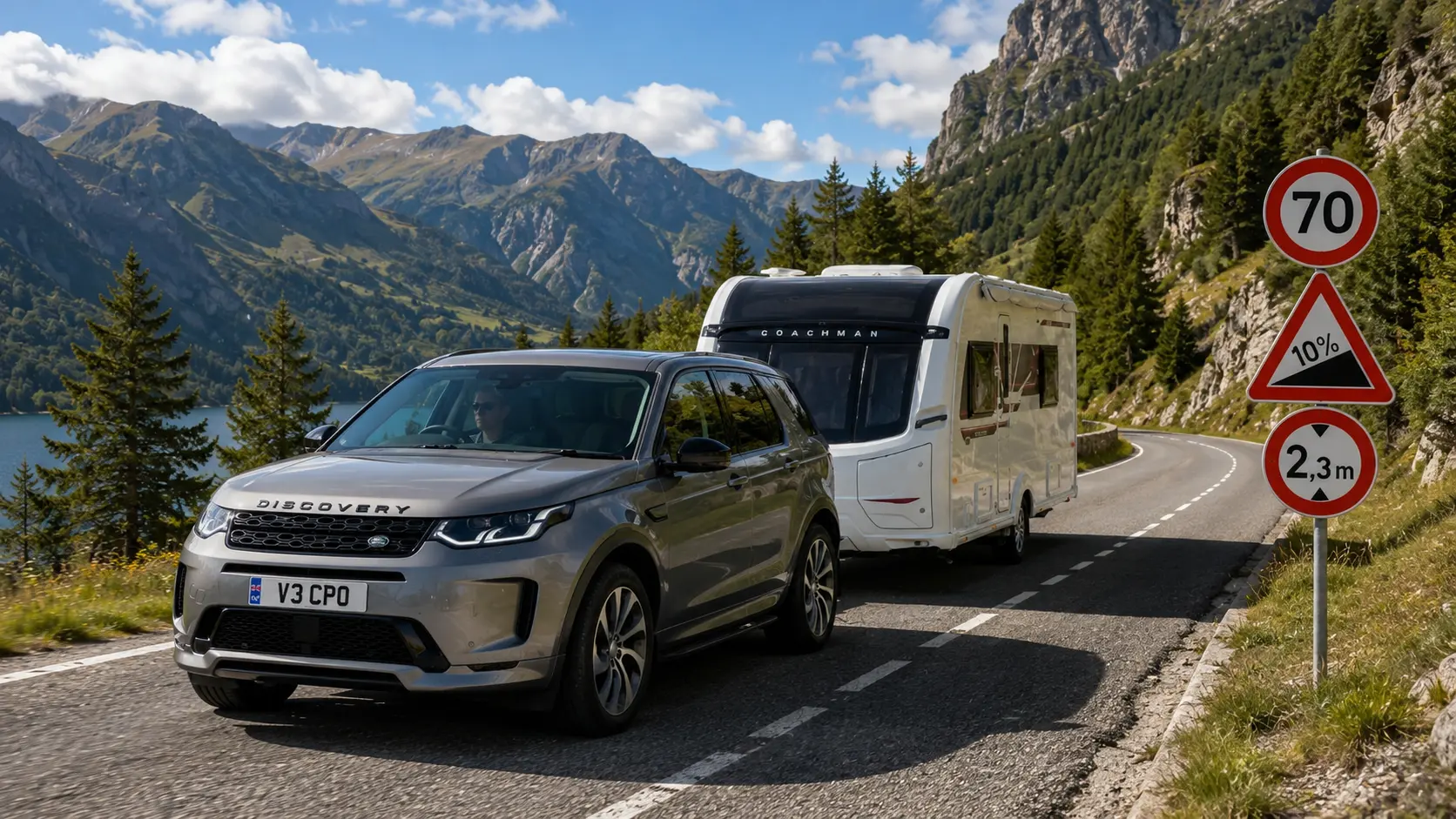
Driving in Europe with a caravan or motorhome can be one of the best ways to explore the continent, but unfamiliar road signs can quickly make a simple journey more stressful than it needs to be.
Many European road signs will look familiar to UK drivers, but some have different meanings, apply specifically to larger or heavier vehicles, or indicate restrictions that could directly affect your caravan outfit or motorhome.
A missed width restriction, weight limit or low bridge warning can be far more serious when you’re towing a caravan. Even signs that look almost identical to those in the UK can sometimes be interpreted differently from one country to another.
This beginner-friendly guide explains the most important European road signs caravan owners and motorhome drivers should recognise before heading abroad, with a particular focus on the signs that matter most when you’re driving a larger, longer or heavier touring vehicle.
Quick Answer: Are European Road Signs Different From UK Road Signs?
Many European road signs use internationally recognised symbols and will be familiar to UK drivers. However, there are important differences in areas such as speed limits, priority rules, weight restrictions, low-emission zones and towing regulations.
When touring with a caravan or motorhome, it’s particularly important to understand signs relating to vehicle width, height, weight, gradients, overtaking restrictions and environmental zones.
Why European Road Signs Matter More When Towing a Caravan
When you’re driving a normal car, taking a wrong turn or encountering an unexpected restriction can often be inconvenient rather than disastrous. With a caravan behind you, the consequences can be very different.
Narrow streets, low bridges, tight mountain roads and weight-restricted routes can leave you with very few options for turning around safely. Your combined outfit may also be considerably longer and wider than the car you’re used to driving every day.
Before travelling, you should know the approximate:
- Overall height of your caravan or motorhome
- Overall width, including any relevant mirrors
- Total length of your outfit
- Maximum authorised mass of your tow car
- Maximum technically permissible laden mass of your caravan
- Combined permitted weight of your complete outfit
Keeping these measurements somewhere easily accessible can help you make quick decisions when you encounter a restriction sign.
European Speed Limit Signs
European speed limit signs generally use the familiar circular design with a red border and a number in the centre. Unlike the UK, speeds are displayed in kilometres per hour rather than miles per hour.
However, seeing a posted speed limit doesn’t necessarily mean you’re legally allowed to travel at that speed while towing.
Many European countries have separate maximum speed limits for cars towing caravans and trailers. These can depend on factors including:
- The country you’re travelling through
- The type of road
- The weight of your caravan
- The combined weight of your outfit
- Whether your outfit meets additional technical requirements
For example, a motorway may have a general speed limit of 120 km/h or 130 km/h, while a lower maximum limit applies to vehicles towing caravans.
Important:
Never assume the number shown on a general speed limit sign is automatically your legal maximum when towing. Always check the current towing speed limits for every country on your route before travelling.
End of Speed Limit Signs
A circular sign showing a speed limit crossed by diagonal black lines usually indicates the end of that particular speed restriction.
This doesn’t mean there is no speed limit. Instead, the normal limit for that type of road and vehicle will usually apply.
For caravanners, this distinction matters because your towing limit may still be lower than the standard maximum for cars.
European Weight Limit Signs
Weight restriction signs are particularly important for anyone towing a caravan or driving a heavier motorhome.
A circular sign with a red border displaying a weight in tonnes generally indicates that vehicles exceeding the stated maximum weight are prohibited.
For example, a sign displaying 3.5 t indicates a 3.5-tonne restriction.
The exact way the restriction applies can depend on the specific sign and local regulations. It may relate to the maximum authorised mass of an individual vehicle rather than simply the actual weight at that moment.
This is particularly relevant to larger motorhomes and heavier tow cars.
Gross Combination Weight Restrictions
Not every weight restriction is necessarily based only on the weight of your tow car or motorhome. Depending on the country, road and signage, restrictions may apply to particular vehicle categories, axle weights or combinations.
If you’re towing, you should understand the key weight figures shown on your vehicle and caravan plates before travelling abroad.
These include:
- Maximum authorised mass of the tow car
- Maximum technically permissible laden mass of the caravan
- Maximum train weight of the tow vehicle
- Individual axle limits where relevant
If you’re uncertain whether a particular restriction applies to your outfit, don’t simply assume you’ll be fine because your caravan itself weighs less than the number displayed.
Axle Weight Restriction Signs
Some European roads and bridges have restrictions based on maximum axle weight rather than total vehicle weight.
These signs typically show an axle symbol with a maximum permitted weight displayed in tonnes.
They’re more likely to affect heavier commercial vehicles and large motorhomes, but caravan owners should still recognise what they mean, particularly when travelling on rural roads, older bridges or remote routes.
European Width Restriction Signs
A circular red-bordered sign displaying a width measurement means vehicles wider than the stated limit are prohibited.
This is one of the most important signs for caravanners.
A caravan is often considerably wider than the tow car, so a route that looks perfectly manageable from the driver’s seat may not be suitable for the complete outfit.
Width restrictions may appear:
- On narrow village streets
- At old bridges
- On mountain roads
- At roadworks
- On historic town approaches
- Before tunnels or narrow passages
Never judge whether you’ll fit based only on the width of your tow car.
Important:
Your towing mirrors extend beyond the tow car, while the caravan itself may be wider than both. Know the width of your complete outfit before setting off.
European Height Restriction Signs
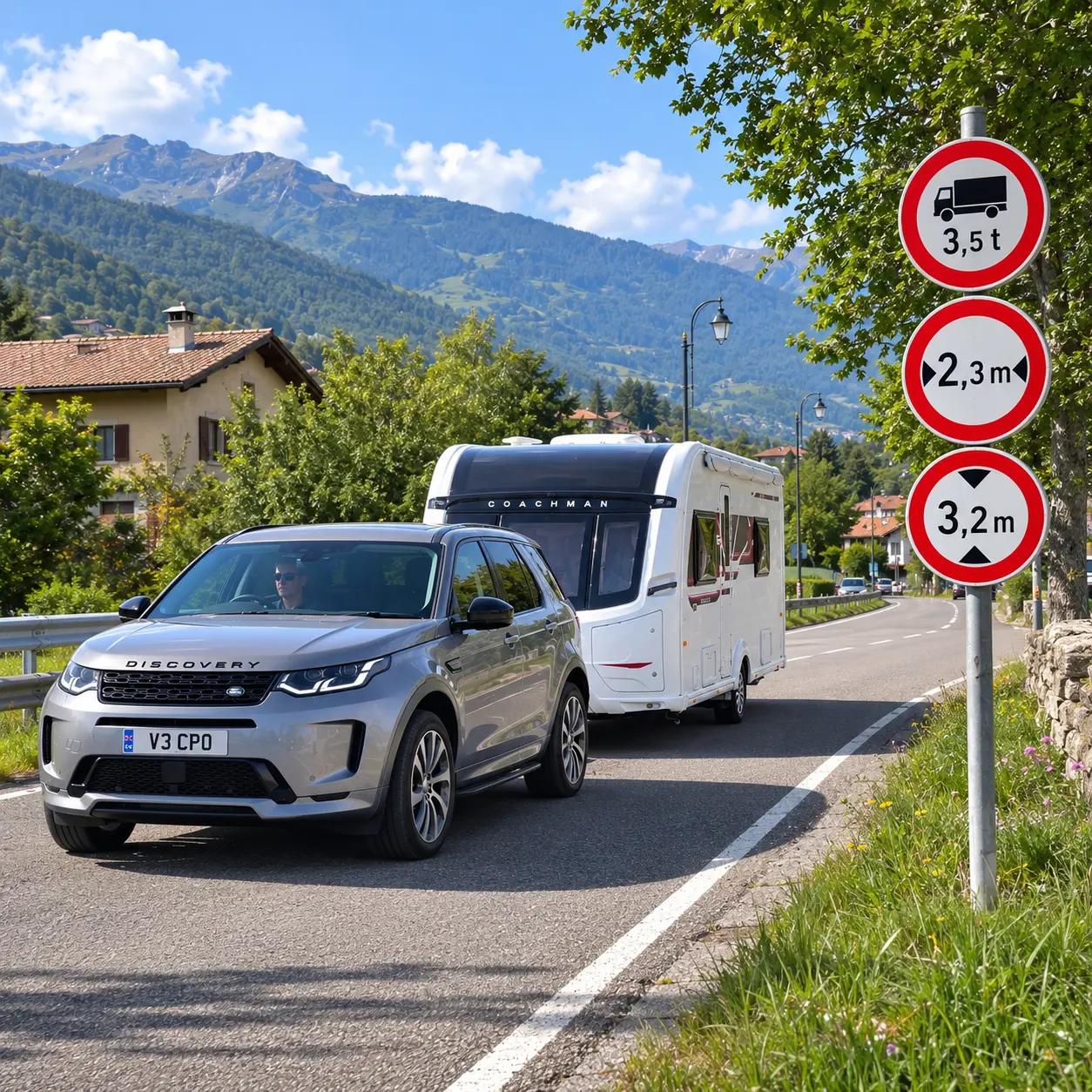
Height restrictions are especially important for motorhome owners, but caravanners also need to know the overall height of their caravan.
A circular sign with a red border and a height measurement indicates that vehicles exceeding the displayed height are prohibited.
Possible hazards include:
- Low bridges
- Tunnels
- Underground car parks
- Fuel station canopies
- Height barriers
- Low tree branches
Remember that roof-mounted equipment can increase your total height. Air-conditioning units, satellite dishes and other accessories should all be considered when recording your maximum vehicle height.
European Length Restriction Signs
Some roads prohibit vehicles or vehicle combinations exceeding a specified length.
This can be particularly relevant to caravan outfits because the combined length of the tow car and caravan may be considerably greater than drivers initially realise.
Length restrictions are often used where there are:
- Very tight bends
- Narrow mountain passes
- Restricted ferry approaches
- Small historic streets
- Limited turning areas
When towing, make sure you know the total approximate length of your complete outfit, not just the length of the caravan.
No Entry Signs and Access Restrictions
The familiar red circular sign with a horizontal white bar means no entry and is widely used throughout Europe.
However, additional signs mounted underneath may provide exceptions or further restrictions.
These supplementary plates may contain text in the local language, vehicle symbols, weight limits or specific times when the restriction applies.
Don’t look only at the main sign. Always check any additional plate beneath it.
Signs Prohibiting Cars With Trailers
One of the most important signs for caravan owners specifically shows a car towing a trailer or caravan inside a red-bordered circle.
This generally means that vehicles towing trailers are prohibited.
You may encounter this restriction on:
- Narrow mountain roads
- Steep routes
- Historic town centres
- Routes with tight hairpin bends
- Temporary diversions
If you see this sign while towing a caravan, don’t continue unless a supplementary plate clearly provides an exemption that applies to you.
No Overtaking Signs for Vehicles and Caravans
European countries use various signs to indicate overtaking restrictions. Some apply to all vehicles, while others apply only to certain categories of heavier vehicles.
Whether a restriction applies to your caravan outfit can depend on the exact sign, your vehicle category and local rules.
On motorways and major roads, you may also encounter specific overtaking restrictions affecting vehicles towing trailers.
When in doubt, stay in lane and avoid overtaking until you’re certain the restriction has ended.
Steep Descent Warning Signs
A triangular warning sign showing a descending slope and a percentage warns of a steep downhill gradient.
For example, 10% means the road descends 10 metres vertically for every 100 metres travelled horizontally.
Steep descents require extra care when towing because the caravan adds considerable weight behind the tow car.
Before descending:
- Reduce your speed early
- Select an appropriate lower gear
- Use engine braking where possible
- Avoid riding the brakes continuously
- Leave additional distance from vehicles ahead
Long downhill sections can cause brakes to overheat if they’re used continuously.
Steep Ascent Warning Signs
A similar triangular sign showing an upward slope warns of a steep climb.
When towing, steep ascents can put additional strain on the tow car’s engine, transmission and cooling system.
Maintain a sensible speed, use an appropriate gear and avoid putting unnecessary strain on the vehicle by attempting to maintain an unrealistic pace uphill.
On particularly demanding routes, you may encounter slow-vehicle lanes or designated areas where slower traffic can allow other vehicles to pass.
Crosswinds Warning Signs
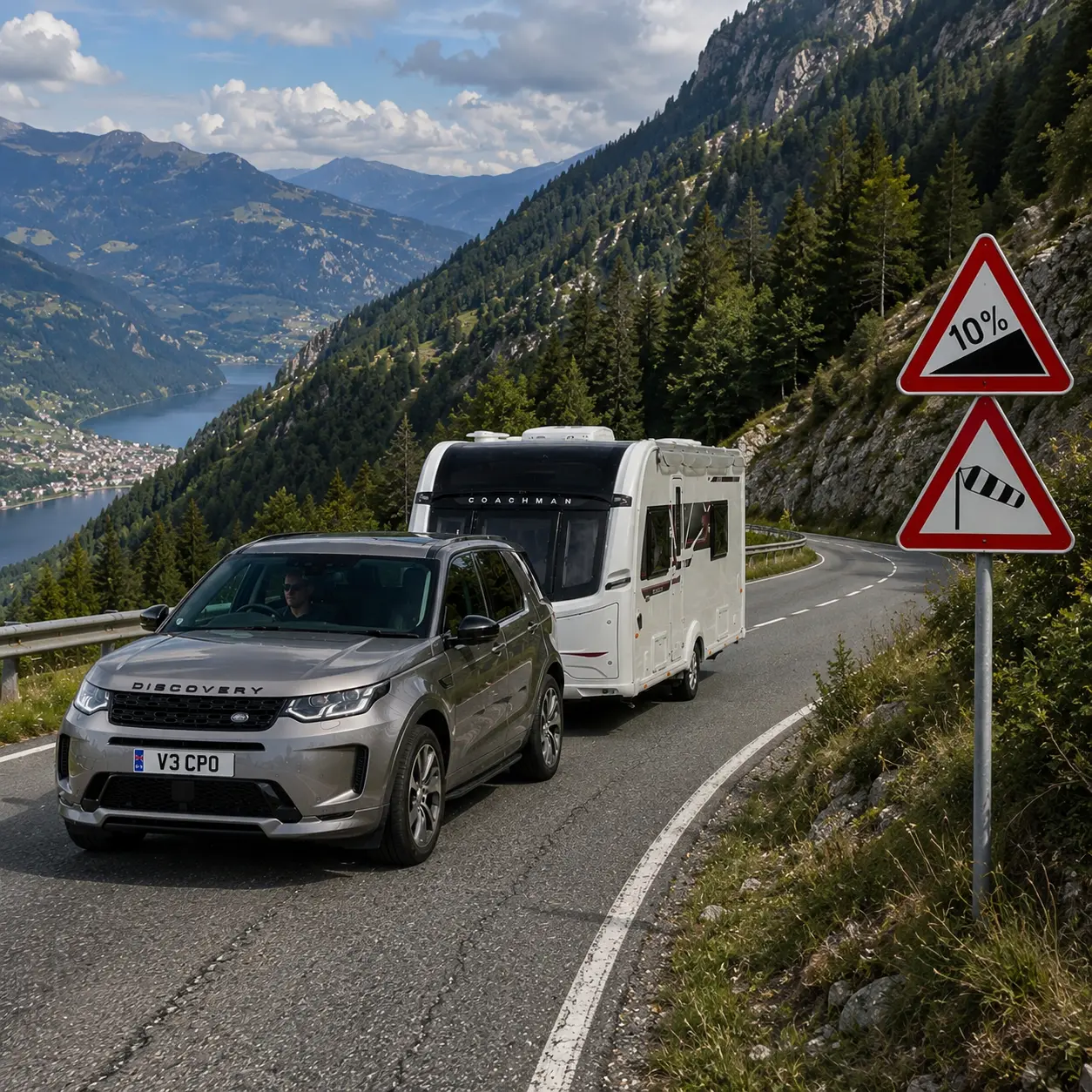
A triangular warning sign featuring a windsock warns of strong side winds.
This is especially important when towing a caravan because sudden crosswinds can affect stability.
Exposed bridges, coastal roads, open plains and mountain passes can all be vulnerable to strong gusts.
If you encounter a crosswind warning:
- Reduce speed smoothly if necessary
- Keep both hands firmly on the steering wheel
- Avoid sudden steering movements
- Allow extra space when passing large vehicles
- Be prepared for sudden changes in wind when leaving sheltered areas
Falling Rocks Warning Signs
Falling-rock signs are common on mountain roads and routes through steep valleys.
The triangular sign usually depicts rocks falling from a cliff face.
As well as warning about rocks potentially falling onto the road, it should alert you to the possibility of debris already lying on the carriageway.
With a caravan in tow, sudden swerving should be avoided wherever possible, so reduce speed and remain alert.
Slippery Road Warning Signs
The familiar triangular sign showing a car with skid marks warns that the road may be slippery.
Possible causes include:
- Rain
- Ice
- Snow
- Mud
- Loose surfaces
- Oil or other contamination
Caravan outfits need more distance to slow down, so reduce your speed smoothly and increase your following distance.
Uneven Road and Speed Hump Signs
European road signs may warn of uneven surfaces, bumps, dips or speed humps.
These warnings are particularly relevant when towing because hitting a severe bump too quickly can cause items inside the caravan to move, damage fixtures or destabilise the outfit.
Slow down progressively and avoid harsh braking immediately before the hazard.
Loose Chippings Signs
A triangular sign depicting stones being thrown from a vehicle’s tyres warns of loose chippings.
Reduce your speed and leave extra distance from the vehicle ahead to minimise the risk of stone chips to your tow car, caravan and windows.
Avoid sudden acceleration, heavy braking and unnecessarily close overtaking.
Road Narrows Signs
Triangular warning signs showing the road becoming narrower may indicate narrowing on both sides or on one side only.
For caravanners, these signs should be taken seriously. Your caravan may be significantly wider than the tow car, and your towing mirrors will also increase the overall width of your outfit.
Reduce speed early and pay close attention to oncoming traffic, roadside walls, barriers and other obstacles.
Two-Way Traffic Signs
A triangular sign showing two arrows pointing in opposite directions warns of two-way traffic.
This is particularly important after leaving a one-way road or divided carriageway, where you may not immediately expect oncoming vehicles.
When towing a wide caravan, allow plenty of clearance and avoid positioning too close to the centre line.
Tunnels and Caravan Touring
Tunnel signs themselves are usually easy to recognise, but tunnels can introduce additional considerations for caravanners and motorhome owners.
Before entering, pay attention to:
- Height restrictions
- Width restrictions
- Speed limits
- Minimum following distances
- Lane restrictions
- Restrictions involving gas systems or hazardous materials
Some tunnels may have specific regulations affecting vehicles carrying LPG or gas cylinders, so always check the rules for major tunnels on your planned route before travelling.
Priority Road Signs
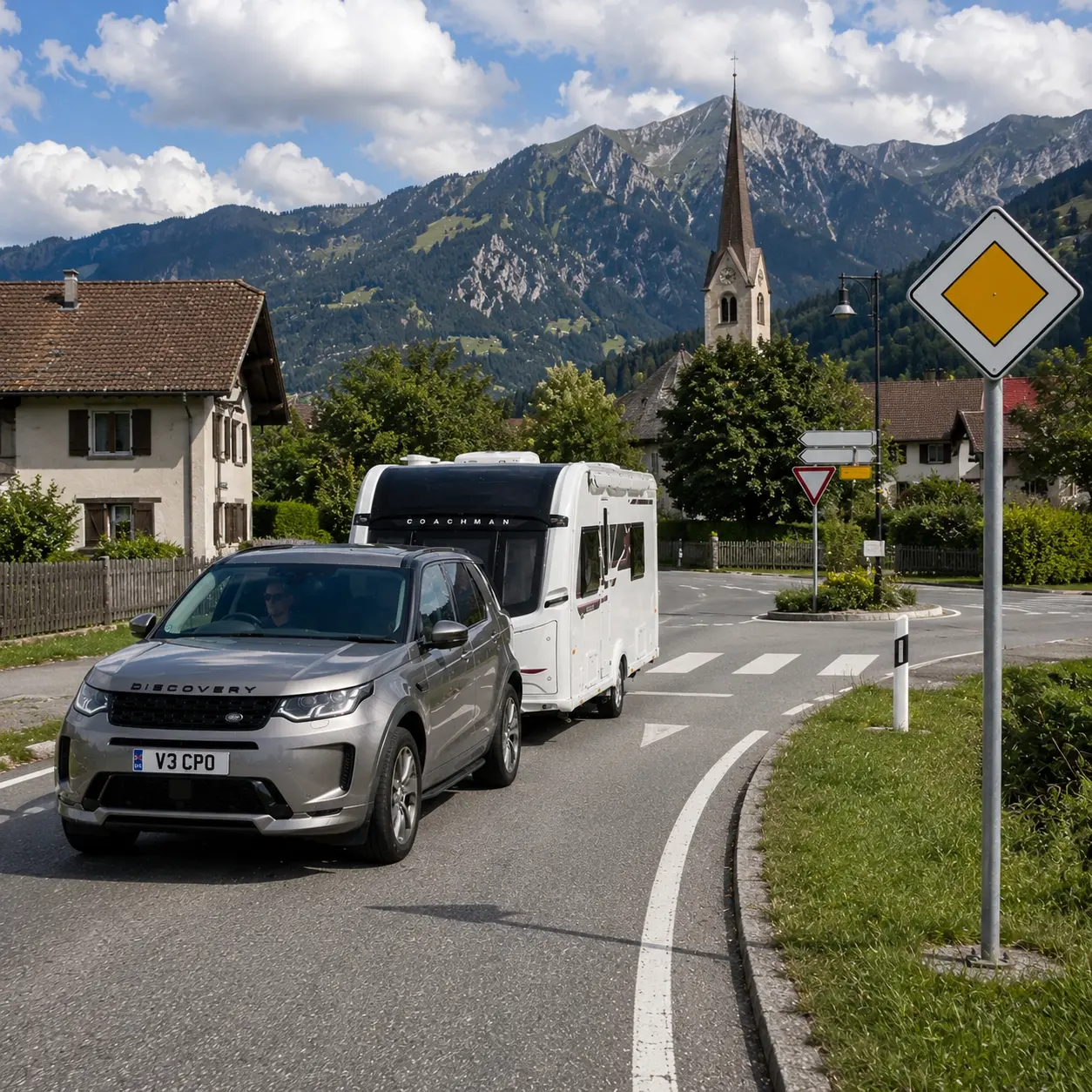
Priority rules are one of the areas where UK drivers can be caught out when driving in continental Europe.
A yellow diamond with a white border generally indicates that you’re travelling on a priority road.
This means you usually have priority at intersections until that priority ends or another sign indicates otherwise.
The end of a priority road is typically shown by the same diamond crossed by a diagonal black line.
These signs are much more prominent in many European countries than they are in the UK, so it’s worth learning them before travelling.
Priority to the Right
In some European countries and situations, traffic approaching from the right may have priority unless road signs, traffic lights or markings state otherwise.
This rule can be unfamiliar to UK drivers and is especially important at unmarked junctions and in residential areas.
The exact rules vary between countries, so you should always check the current driving regulations for each country on your route.
Important:
Never assume that travelling on what appears to be the larger or more important road automatically gives you priority. Watch carefully for priority signs and road markings.
Roundabout Signs and Priority
Roundabouts are common throughout Europe, but priority rules and lane conventions can vary.
In many countries, traffic already on the roundabout has priority where indicated by signs. However, you shouldn’t assume every roundabout operates exactly as it would in the UK.
When towing:
- Approach at a controlled speed
- Allow additional room for the caravan to track inside the tow car’s path
- Watch kerbs and street furniture
- Be clear about your intended exit
- Avoid sudden lane changes
Traffic Lights With Directional Arrows
European traffic lights may include directional arrows controlling individual lanes or specific movements.
A green light for one direction doesn’t necessarily mean every lane can proceed.
This is particularly important when towing because changing lanes at the last moment can be difficult and unsafe.
Choose the correct lane early and watch overhead signs as well as roadside signals.
Low-Emission Zone Signs
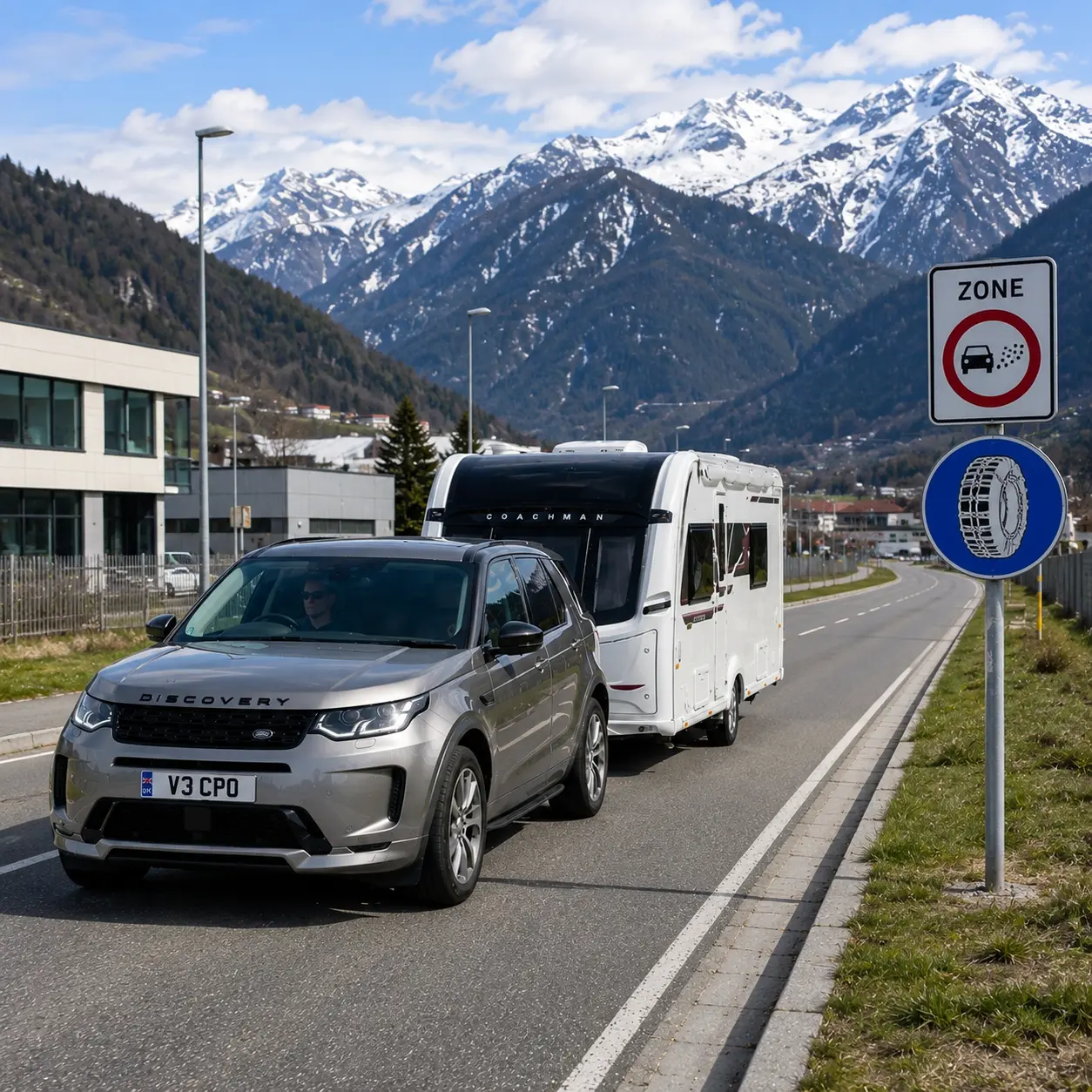
Low-emission zones are becoming increasingly common across Europe, but there isn’t one universal sign or system used by every country or city.
Depending on your destination, you may need:
- An emissions sticker
- Advance online registration
- To meet a minimum emissions standard
- To pay a charge
- To avoid certain zones completely
These restrictions can affect tow cars and motorhomes differently, particularly where vehicle weight or classification is involved.
Don’t rely solely on spotting a sign as you approach a city. Research environmental-zone requirements before your journey, because some registrations or stickers may need to be arranged in advance.
Environmental Zone Signs Can Vary by Country
France, Germany, Belgium, Spain, Italy and other European countries may use different systems, signs and registration requirements.
A sticker valid in one country doesn’t automatically satisfy the rules in another.
Requirements also change over time, so always check official information before travelling rather than relying on an old forum post, social media comment or outdated guide.
For wider guidance on recognising signs when driving abroad, the UK Government’s official guidance for driving in the EU is a useful starting point before your journey.
Snow Chain Signs
A blue circular sign showing a tyre fitted with snow chains generally indicates that snow chains are mandatory.
This is different from a warning or recommendation. Where the sign applies, you may be legally required to fit suitable chains before continuing.
If you’re planning winter touring or travelling through mountainous areas, research the requirements for:
- Winter tyres
- Snow chains
- Which axle chains must be fitted to
- Seasonal equipment rules
- Trailers and caravans
Rules vary considerably between countries and regions.
Winter Equipment Zone Signs
Some European countries use signs marking areas where winter equipment rules apply during certain dates or weather conditions.
These requirements may apply even if the road appears clear when you arrive.
Mountain regions can experience rapidly changing weather, so don’t assume winter equipment is unnecessary simply because conditions are mild at lower elevations.
Mountain Pass Closure Signs
Mountain routes may use signs, electronic displays or colour-coded boards to show whether a pass is open, closed or only accessible with winter equipment.
Conditions can change rapidly due to:
- Snowfall
- Ice
- Avalanche risk
- Landslides
- High winds
- Roadworks
A route that appears available on your sat-nav may not be suitable or open when you arrive.
For caravan owners, route suitability matters just as much as whether a road is technically open.
Caravan and Trailer Parking Signs
Parking signs may include supplementary symbols showing which types of vehicles are permitted or prohibited.
A parking area suitable for cars isn’t automatically suitable for a car-and-caravan combination.
Look for:
- Trailer prohibitions
- Maximum vehicle lengths
- Motorhome-specific bays
- Overnight parking restrictions
- Time limits
- Weight restrictions
Never unhitch and leave a caravan in a parking area unless you’re confident it’s permitted.
Motorhome-Specific Signs
Motorhome owners may encounter signs showing a motorhome silhouette, particularly around dedicated parking areas, service points and aires.
Supplementary signs may indicate facilities for:
- Fresh water
- Wastewater disposal
- Toilet disposal
- Electric hook-up
- Overnight parking
However, a motorhome symbol doesn’t necessarily mean caravans are also permitted. Caravan owners should check the specific rules before entering or staying overnight.
Electronic Motorway Signs
Electronic motorway signs can display temporary speed limits, lane closures, weather warnings, traffic incidents and route restrictions.
A red cross above a lane means that lane is closed and must not be used.
When towing, react early to lane closures. Your outfit is longer, acceleration is slower and you may need a larger safe gap before changing lanes.
What If You Don’t Understand a European Road Sign?
If you encounter a road sign you don’t understand, don’t simply ignore it.
Where it’s safe and legal to do so, stop somewhere suitable and check its meaning before continuing, especially if the sign appears to relate to:
- Weight
- Width
- Height
- Vehicle length
- Trailers
- Environmental zones
- Winter equipment
- Mountain routes
A few minutes spent checking could prevent a difficult or dangerous situation further along the route.
Can You Rely on Sat-Nav When Towing in Europe?
A sat-nav can be extremely useful, but it shouldn’t replace your own judgement or road signs.
Standard car navigation systems may direct you onto roads that are unsuitable for a caravan because they don’t necessarily account for your outfit’s:
- Height
- Width
- Length
- Weight
- Trailer restrictions
Even caravan-specific or large-vehicle navigation systems can contain outdated information.
Road signs and temporary restrictions always take priority over your sat-nav instructions.
Our Advice Before Driving in Europe With a Caravan
You don’t need to memorise every road sign used across the whole of Europe before your first trip.
Focus first on the signs that could directly affect the safety or legality of your outfit:
- Speed limits
- Weight restrictions
- Width restrictions
- Height restrictions
- Length restrictions
- Trailer prohibitions
- Steep gradients
- Crosswinds
- Priority rules
- Low-emission zones
- Winter equipment requirements
Learning these signs before you travel can make European touring feel considerably less daunting and help you make better decisions when approaching unfamiliar roads.
The most important rule is simple: know the dimensions and weights of your outfit, research country-specific regulations before travelling and never ignore a road sign simply because your sat-nav tells you to continue.
Final Thoughts
European road signs aren’t something to fear, and most become familiar surprisingly quickly once you’ve spent a little time driving abroad.
For caravan owners and motorhome drivers, the biggest priority is recognising restrictions that affect larger, longer, wider or heavier vehicles.
A little preparation before your journey can help you avoid unsuitable roads, unexpected restrictions and stressful situations : leaving you free to enjoy what European touring is really about: discovering new places and enjoying the adventure along the way.