Following a Caravan Tyre Pressure Guide for Beginners is one of the easiest ways to improve towing safety and reduce the risk of tyre-related problems on the road. Correct tyre pressures help your caravan handle properly, reduce uneven tyre wear, and minimise the chance of a dangerous blowout during a journey.
Many caravanners spend time checking their hitch, lights and loading before a trip but overlook tyre pressures. However, a few minutes with a tyre pressure gauge can make a significant difference to towing stability and overall safety.
If you’re new to touring, our Caravan Tips & Guides hub contains more practical advice for beginners.
Why Caravan Tyre Pressure Matters
Your caravan tyres support the entire weight of the caravan and are designed to operate at specific pressures recommended by the manufacturer.
If pressures are incorrect, the tyre may not perform as intended. This can affect braking distances, towing stability, fuel economy and tyre lifespan.
Correct tyre pressures help:
- Improve towing stability
- Reduce tyre wear
- Improve fuel efficiency
- Lower the risk of tyre failure
- Improve handling in crosswinds
- Support the caravan’s designed load capacity
Where to Find the Correct Caravan Tyre Pressure
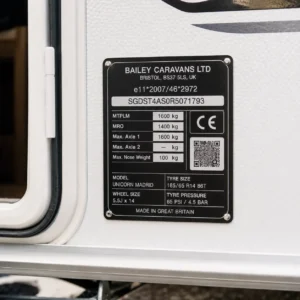
The correct tyre pressure should be provided by the caravan manufacturer. This information is usually found in the handbook or official documentation supplied with the caravan.
Do not assume the pressure printed on the tyre sidewall is the correct operating pressure for your caravan. The sidewall often shows the tyre’s maximum pressure rather than the recommended working pressure.
While checking manufacturer information, it is also worth understanding your caravan’s weight limits. Our guide to Caravan Weight Limits Explained for Beginners explains the key weight figures every caravanner should know.
When Should You Check Caravan Tyre Pressures?
Tyre pressures should be checked before every journey.
You should also check them:
- After winter storage
- At the start of the touring season
- After a long period without using the caravan
- Following major temperature changes
- After fitting new tyres
Always check pressures when tyres are cold. Even a short drive can increase tyre temperature and produce an inaccurate reading.
How to Check Caravan Tyre Pressure Correctly
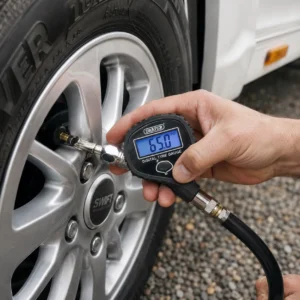
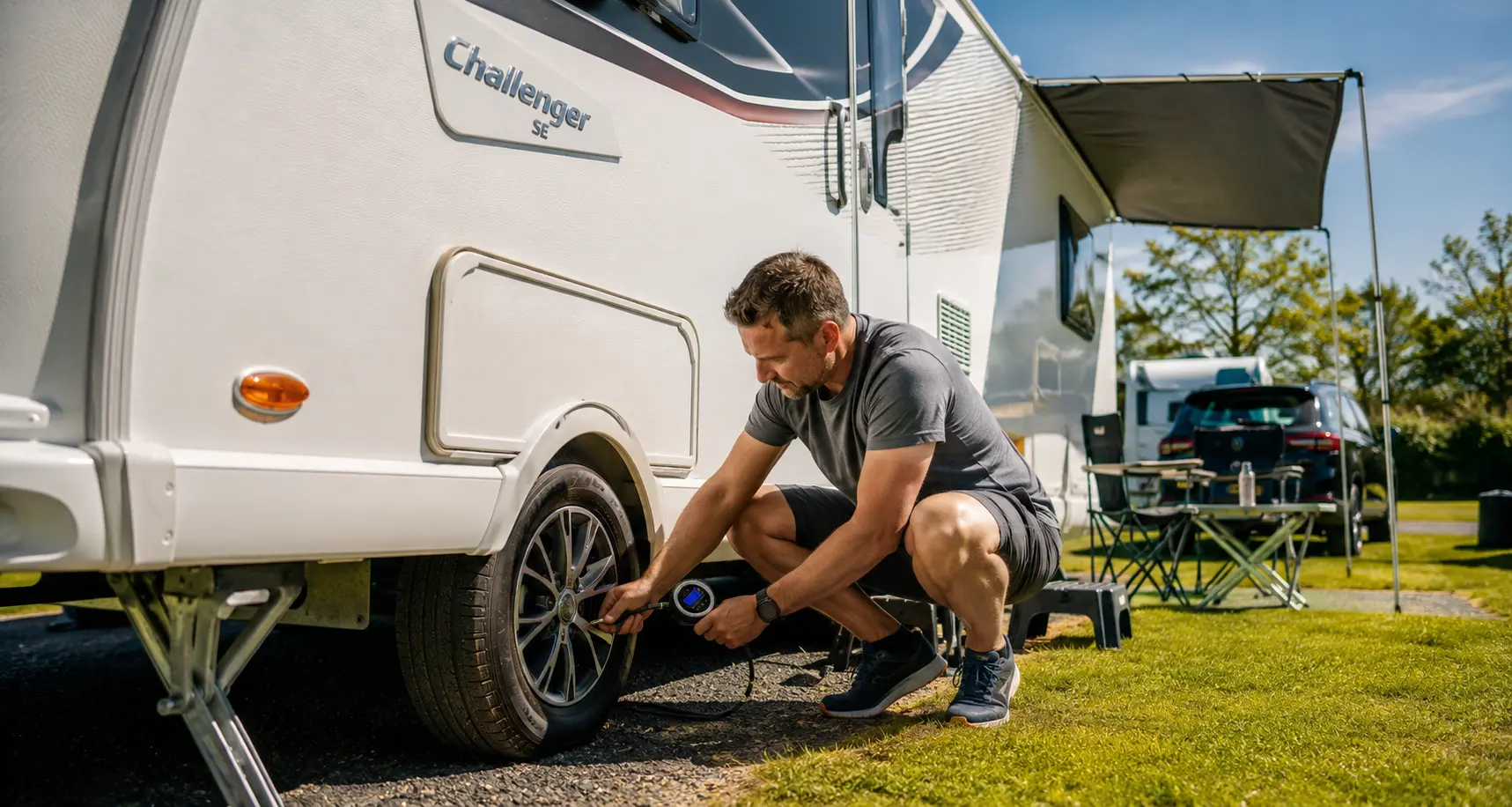
Using a reliable tyre pressure gauge is the best way to obtain an accurate reading.
- Ensure the tyres are cold.
- Remove the valve cap.
- Attach the gauge firmly to the valve.
- Compare the reading with the manufacturer’s recommendation.
- Add or release air as required.
- Replace the valve cap securely.
Remember to check your spare wheel if your caravan carries one.
Before setting off, it is also worth following a complete pre-departure routine. Our First Caravan Trip Checklist covers the essentials.
What Happens If Pressure Is Too Low?
Underinflated tyres create excessive heat and flexing within the tyre structure.
This can lead to:
- Increased risk of tyre failure
- Poor towing stability
- Excessive shoulder wear
- Higher fuel consumption
- Longer braking distances
Low pressures are one of the most common causes of caravan tyre problems.
What Happens If Pressure Is Too High?
Overinflated tyres can reduce the amount of rubber in contact with the road surface.
This may result in:
- Reduced grip
- Harsher ride quality
- Increased centre tread wear
- Reduced braking effectiveness
- Less stable handling on uneven surfaces
Following the manufacturer’s recommended pressure remains the safest approach.
Should You Adjust Pressures for Loading?
Most caravans are designed to operate using the manufacturer’s specified tyre pressures when loaded within their permitted weight limits.
It is important to avoid overloading your caravan. Excessive weight places additional stress on tyres, suspension and braking systems.
Our Caravan Loading Safety Guide explains how correct loading improves towing safety and stability.
Tyre Age Is Just as Important as Tyre Pressure
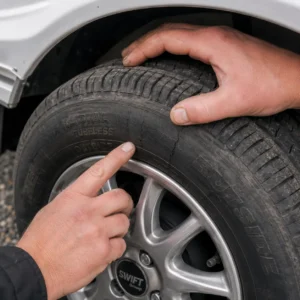
Even when pressures are correct, tyre condition must be checked regularly.
Inspect caravan tyres for:
- Cracks in the sidewalls
- Bulges or deformities
- Cuts and impact damage
- Uneven wear patterns
- Signs of weathering
Caravan tyres often age before they wear out. For this reason, regular inspection is just as important as checking pressure.
Additional tyre safety advice can be found through TyreSafe, a recognised UK tyre safety organisation.
Build Tyre Checks into Your Touring Routine
Making tyre pressure checks part of your regular touring preparation takes only a few minutes and can help prevent costly or dangerous problems.
Many experienced caravanners include tyre pressure checks alongside hitch inspections, lighting checks and loading checks before every journey.
For a complete preparation guide, see our Caravan Touring Tips for Beginners article.
Caravan Tyre Pressure Checklist
- Check pressures before every trip
- Check tyres when cold
- Use manufacturer-recommended pressures
- Inspect for cracks and damage
- Check spare wheel pressure
- Monitor tyre age
- Stay within legal weight limits
- Review tyre condition regularly
Final Thoughts
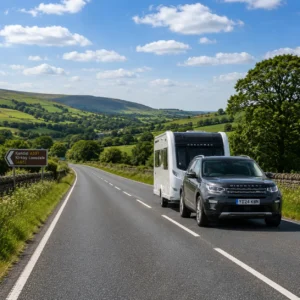
Following a Caravan Tyre Pressure Guide for Beginners can significantly improve towing safety, tyre lifespan and overall confidence on the road. By checking pressures regularly and inspecting tyres for signs of wear or ageing, you’ll reduce the risk of problems and enjoy safer caravan adventures.
Related Guides
- Caravan Weight Limits Explained for Beginners
- Caravan Loading Safety Guide
- Caravan Touring Tips for Beginners
- Caravan Water System Explained for Beginners
- First Caravan Trip Checklist: Everything You Need to Know
Discover More from Caravan Adventuring
Whether you’re searching for campsite reviews, travel diaries, touring advice or caravan setup guides, we’ve got plenty more content to help you plan your next adventure.
Browse Our Full Content Library
Suggest a Campsite for Review
Have you stayed at a campsite that deserves more attention?
We’re always looking for new campsites to feature on Caravan Adventuring. Whether it’s a hidden gem, a family favourite, or a site with outstanding facilities, we’d love to hear about it.