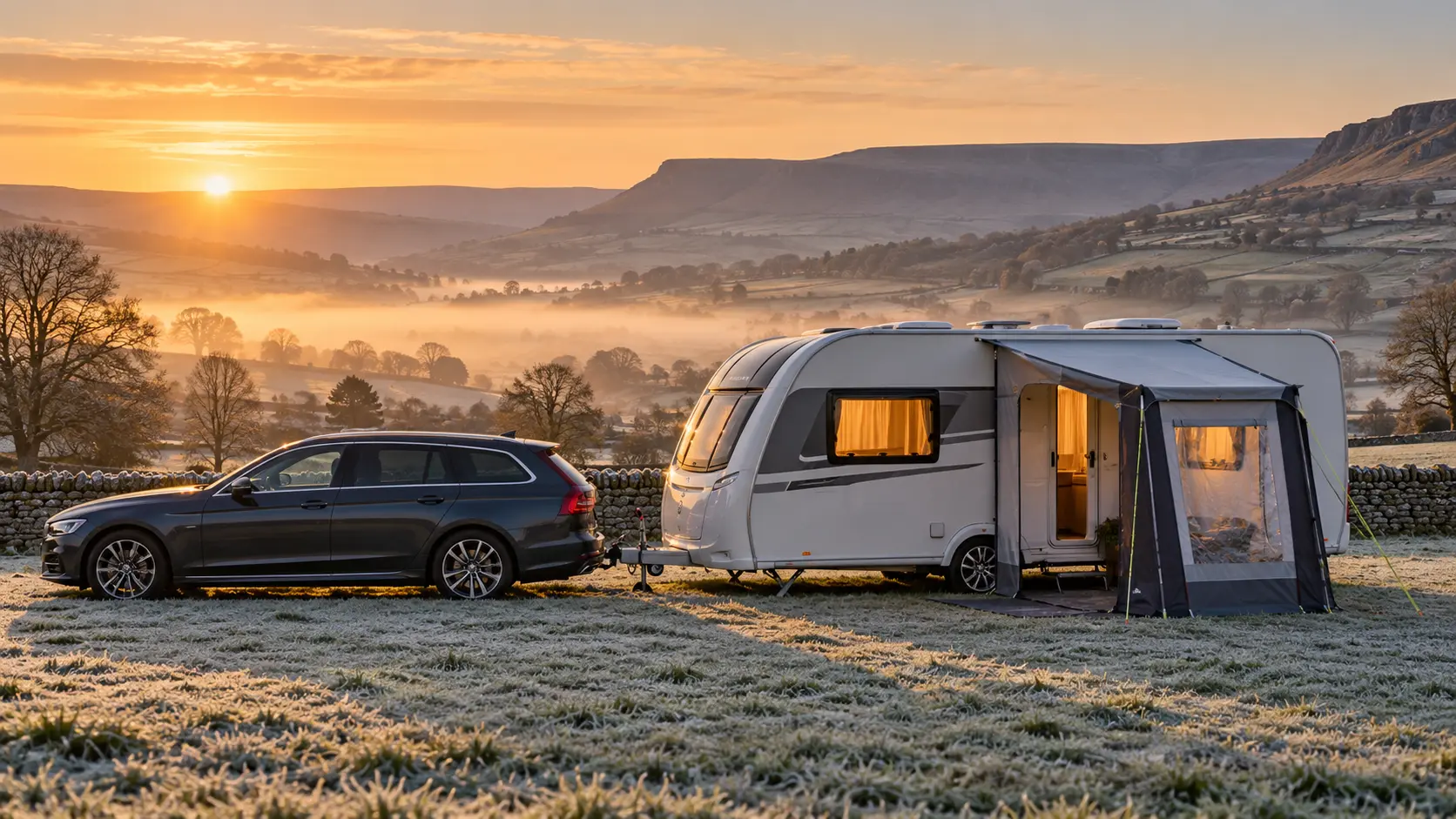
Winter caravanning suits anyone who enjoys quiet sites, crisp walks and a warm van at the end of the day. It also needs more preparation than a summer trip. This guide covers towing, gas, water, heating and site choice, so you can tour through the cold months with confidence.
Is winter caravanning right for you?
Winter sites are quieter, and many stay open all year. However, short days, wet pitches and freezing nights mean every job takes longer. As a result, a relaxed plan works better than a tight itinerary.
First, check your caravan handbook for its insulation grade, because older models cope less well with hard frost. Also keep your dates flexible. If a severe forecast arrives, staying at home is the sensible choice.
Prepare the caravan before you leave
Cold weather finds weak spots quickly, so check everything a few days before you go. Our guide to essential caravan safety checks before every trip covers the basics. In winter, pay extra attention to these points:
- Tyres: check condition and pressure when cold, because pressure drops as the temperature falls.
- Battery: charge it fully, as cold weather reduces its capacity.
- Lights: test every bulb, because you will often travel in poor light.
- Gas: fill your cylinders and carry a spare.
- Seals and doors: look for gaps that let draughts in.
Then pack warm bedding, a torch and a few litres of drinking water. A small porch awning also helps, because it works as an airlock and gives you somewhere to leave muddy boots.
Tow safely in frost, ice and snow
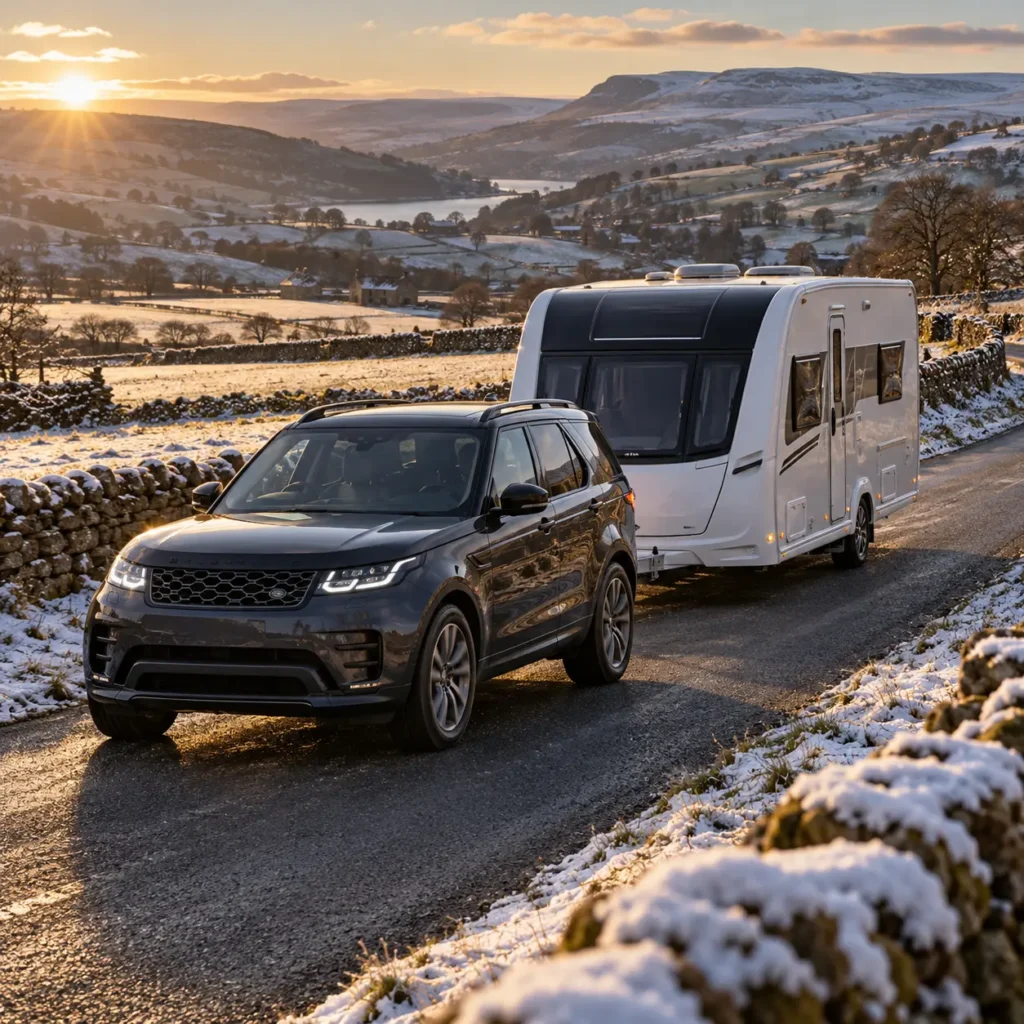
Check the forecast before every leg of the trip. The Highway Code says not to drive in icy or snowy weather unless your journey is essential, and to allow extra time if it is. The Met Office warnings page shows current alerts for your route.
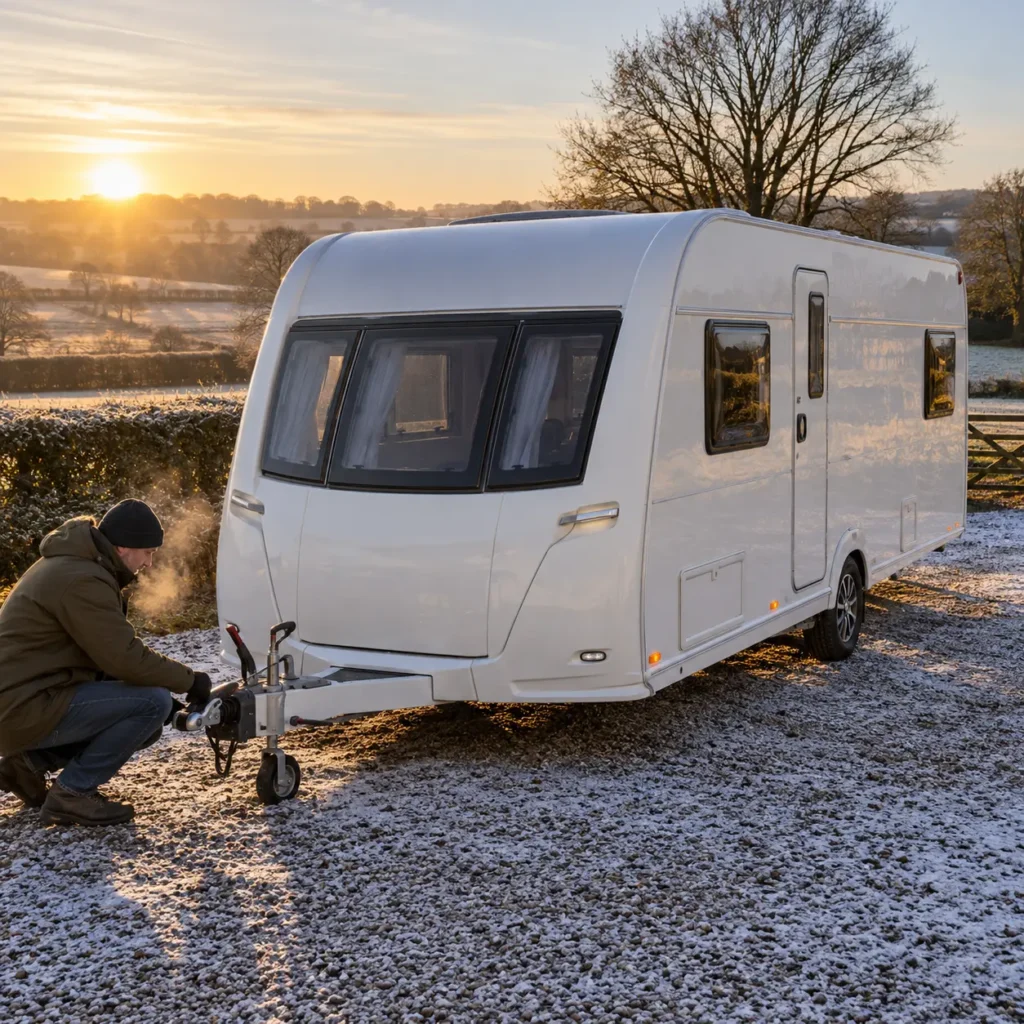
Before you set off, clear every window, light and number plate. You must be able to see, and you should remove any snow that might fall into the path of other road users. That includes snow on the caravan roof.
On the road, the Highway Code guidance on adverse weather is a good reference. These habits matter most with a caravan behind you:
- Leave a much bigger gap, because stopping distances can be ten times greater than on dry roads.
- Drive slowly in as high a gear as possible, and accelerate and brake very gently.
- Slow down on the straight before a bend, then steer smoothly. Sudden actions can upset a caravan.
- Light steering may mean ice, and tyres make almost no noise on it.
Also carry a winter emergency kit. The Highway Code lists de-icer, an ice scraper, a torch, warm clothing and boots, a first aid kit, jump leads and a shovel, plus a warm drink and food.
Choose the right gas for winter caravanning
Gas is the most common cause of cold-weather problems. Butane stops turning into gas near freezing, so your heater or hob can fail just when you need it. Propane keeps working in much lower temperatures, so it suits winter use.
| Gas | Cold-weather performance | Common Calor cylinder sizes |
|---|---|---|
| Butane | Only changes readily to gas above 0°C | 4.5kg, 7kg and 15kg |
| Propane | Becomes a gas down to -40°C | 3.9kg, 6kg and 13kg |
Most caravan appliances run on either gas. Even so, check that your regulator and hose suit propane, and ask your supplier before you swap. Our caravan gas bottles guide explains cylinders and regulators in more detail.
Heating uses gas quickly in winter, so always carry a full spare. You can also use winter touring advice from the Camping and Caravanning Club to plan your supplies.
Keep the water supply flowing
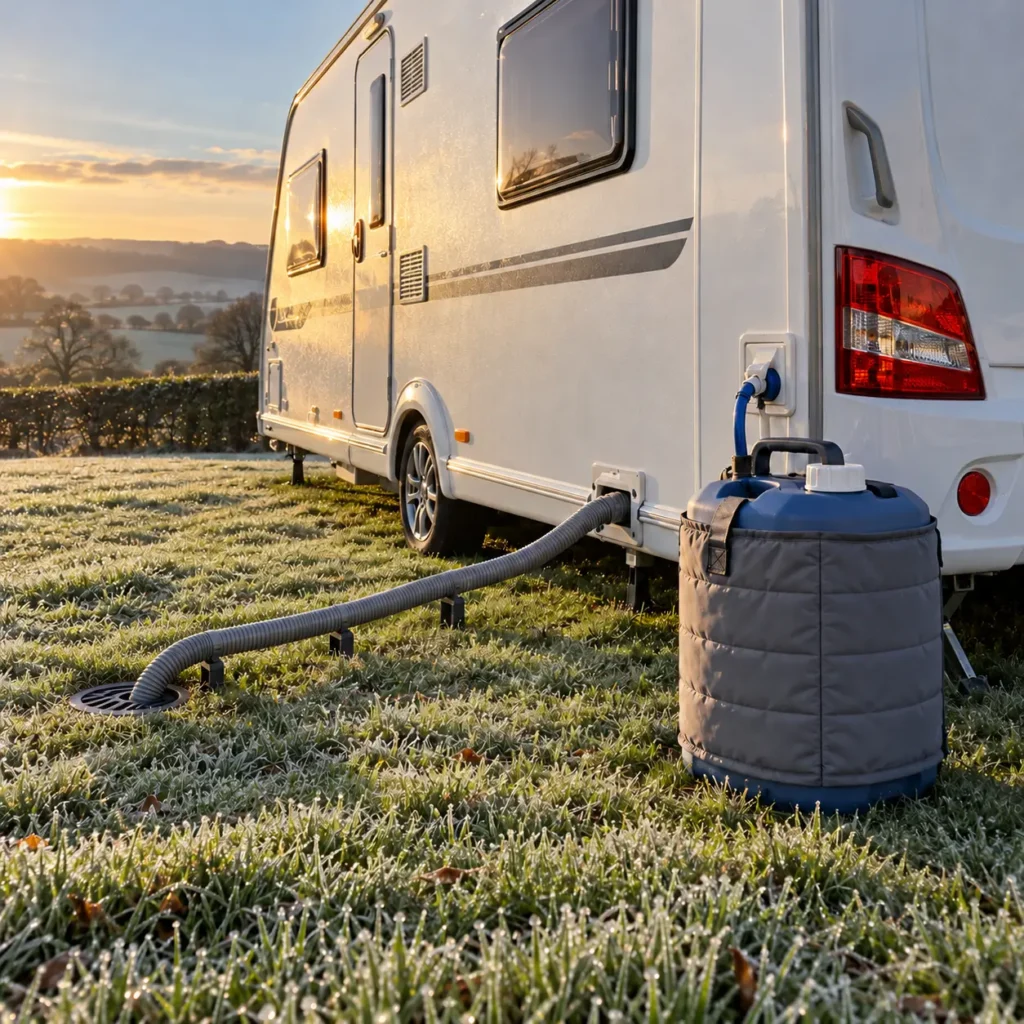
Frozen water is the other big winter nuisance. The caravan itself is usually fine, but the external parts are exposed. External water carriers can freeze even when insulated, so an insulated jacket that also covers the inlet pipe is a basic requirement.
On very cold nights, take extra steps:
- Drain the external carrier when sub-zero temperatures are forecast overnight.
- Keep a few litres inside the caravan, so you can still make a hot drink.
- Use a bucket for waste water rather than risk a frozen tank.
- Make sure waste pipes slope downhill along their full length. Standing water freezes first.
Site taps can freeze too, so fill up in the afternoon rather than at dusk.
Stay warm and control condensation
A warm caravan is also a damp one if you ignore ventilation. Cooking, breathing and wet coats all add moisture, and it condenses on cold surfaces. Read our caravan condensation guide for causes and fixes.
Never block the vents to save heat. Leave them open, wipe windows each morning and lift cushions to let air circulate. For heating choices, our caravan heating guide compares gas, electric and blown-air systems.
Many people run electric heating on hook-up and keep gas as a backup. However, a pitch supply is limited, so running several heaters at once can trip it. Switch off the kettle or heater you do not need.
Fit a working carbon monoxide alarm, and test it before you leave. Also never bring a barbecue or unflued heater inside to warm the van.
Choose a winter-friendly pitch and site
Before booking, check that the site is open and that its water points and shower block stay in use. Ask about gritting and whether the pitches drain well. A hardstanding is easier to leave on a wet morning than soft grass.
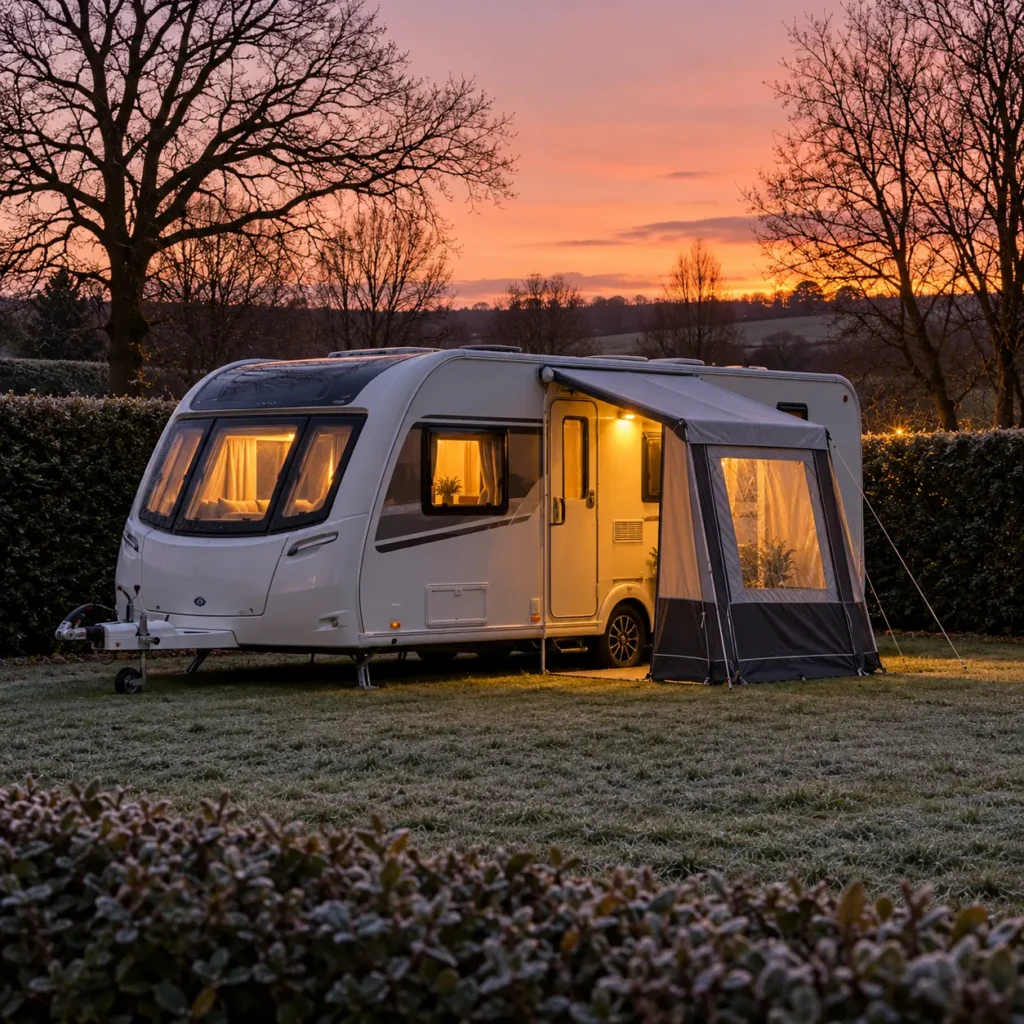
Arrive in daylight, because it gets dark early and setting up in the dark causes mistakes. Next, park with the door and awning sheltered from the prevailing wind. Frozen ground can make awning pegs difficult, so carry a mallet and a few spare pegs.
Winter caravanning checklist
Use this list before each cold-weather trip:
- Forecast checked for the whole route and the campsite.
- Tyres, lights, brakes and hitch checked.
- Battery fully charged.
- Propane fitted, with a full spare cylinder.
- Insulated jacket on the water carrier, and a few litres kept inside.
- Bucket ready for waste water.
- Carbon monoxide alarm tested.
- Vents clear and a cloth ready for condensation.
- Ice scraper, de-icer, shovel, torch and warm clothing in the car.
- Warm bedding, hot drinks and food in case of delays.
Official guidance checked on 22 October 2026. Rules can change, so check the latest guidance before you travel.