This caravan fire safety guide explains the essential precautions every touring caravan and motorhome owner should take before and during every trip. While caravan fires are relatively rare, they can spread quickly because living, cooking and sleeping areas are close together. Understanding the risks, maintaining your caravan properly and knowing exactly what to do in an emergency can help protect you and everyone travelling with you.
Whether you’re preparing for your first touring holiday or refreshing your safety knowledge before the season begins, this guide covers practical fire prevention, emergency procedures, gas and electrical safety, alarm placement and the equipment every caravan should carry.
Your Priority in Any Fire: Get Out and Stay Out
If a fire starts inside your caravan or motorhome, getting everyone to safety must always come first.
- Alert everyone immediately.
- Leave the caravan or motorhome without delay.
- Help everyone move to a safe place.
- Warn nearby campers if they could be affected.
- Call 999 and ask for the Fire and Rescue Service.
- Never re-enter the caravan until firefighters confirm it is safe.
Only use a fire extinguisher or fire blanket if the fire is very small, you have a clear escape route behind you and using the equipment helps you leave safely. Never stay inside a developing fire to protect belongings or attempt to save the caravan.
Why Fire Safety Matters
Your caravan contains LPG appliances, electrical systems, batteries, cooking equipment and combustible furnishings within a compact living space. Even a small fire can spread rapidly if nobody discovers it straight away.
Fortunately, you can reduce most common fire risks through regular maintenance, sensible storage and safe everyday habits.
Fit the Right Safety Equipment
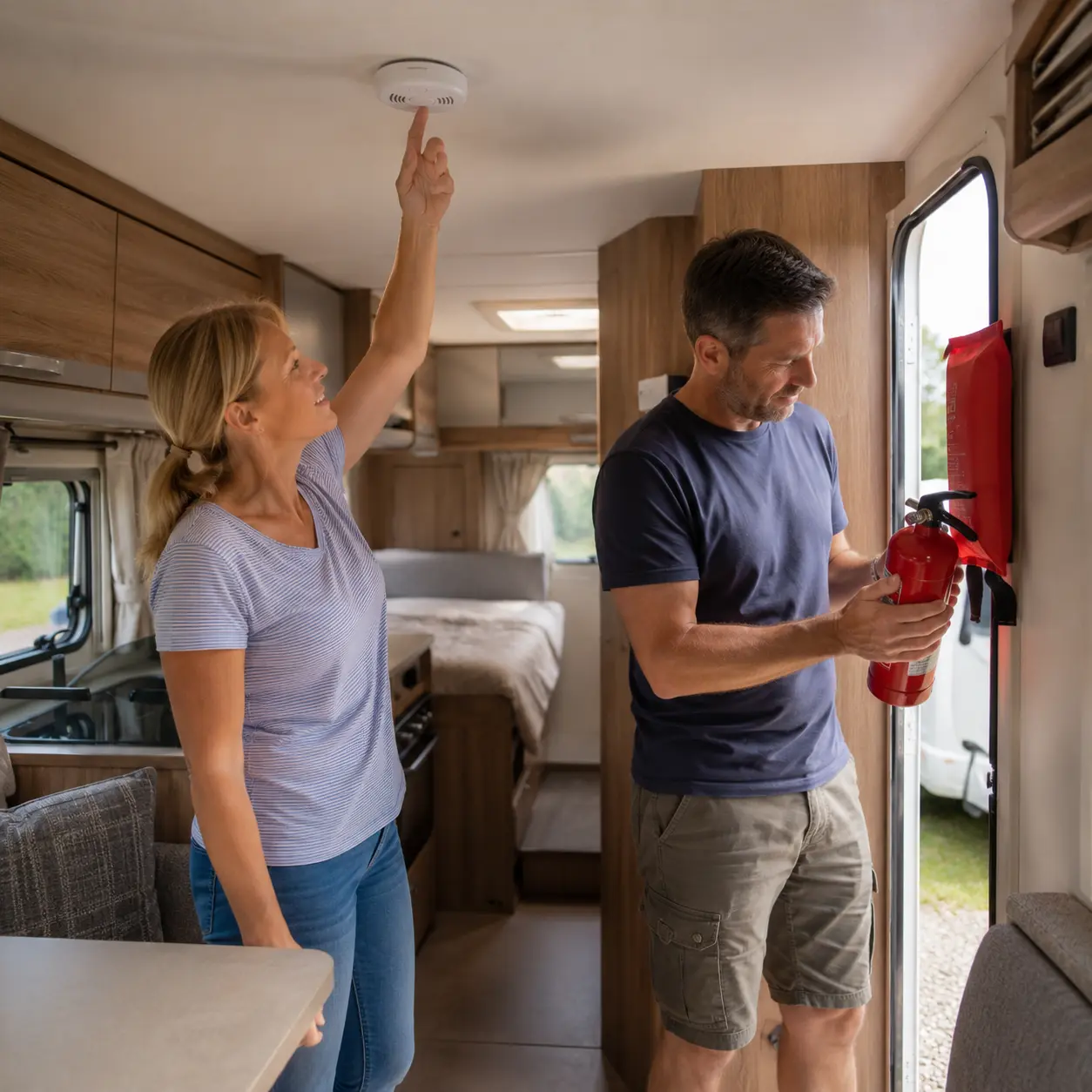
Smoke Alarm
Install at least one working smoke alarm in accordance with the manufacturer’s instructions. Test it before every trip and again after the caravan has been in storage.
Replace the batteries when required and fit a new alarm once it reaches the end of its recommended service life.
Carbon Monoxide Alarm
Fit a carbon monoxide alarm if your caravan or motorhome contains any fuel-burning appliance, including an LPG cooker, heater or water heater.
Because carbon monoxide cannot be seen, smelt or tasted, a working alarm provides essential protection while touring.
Fire Extinguisher
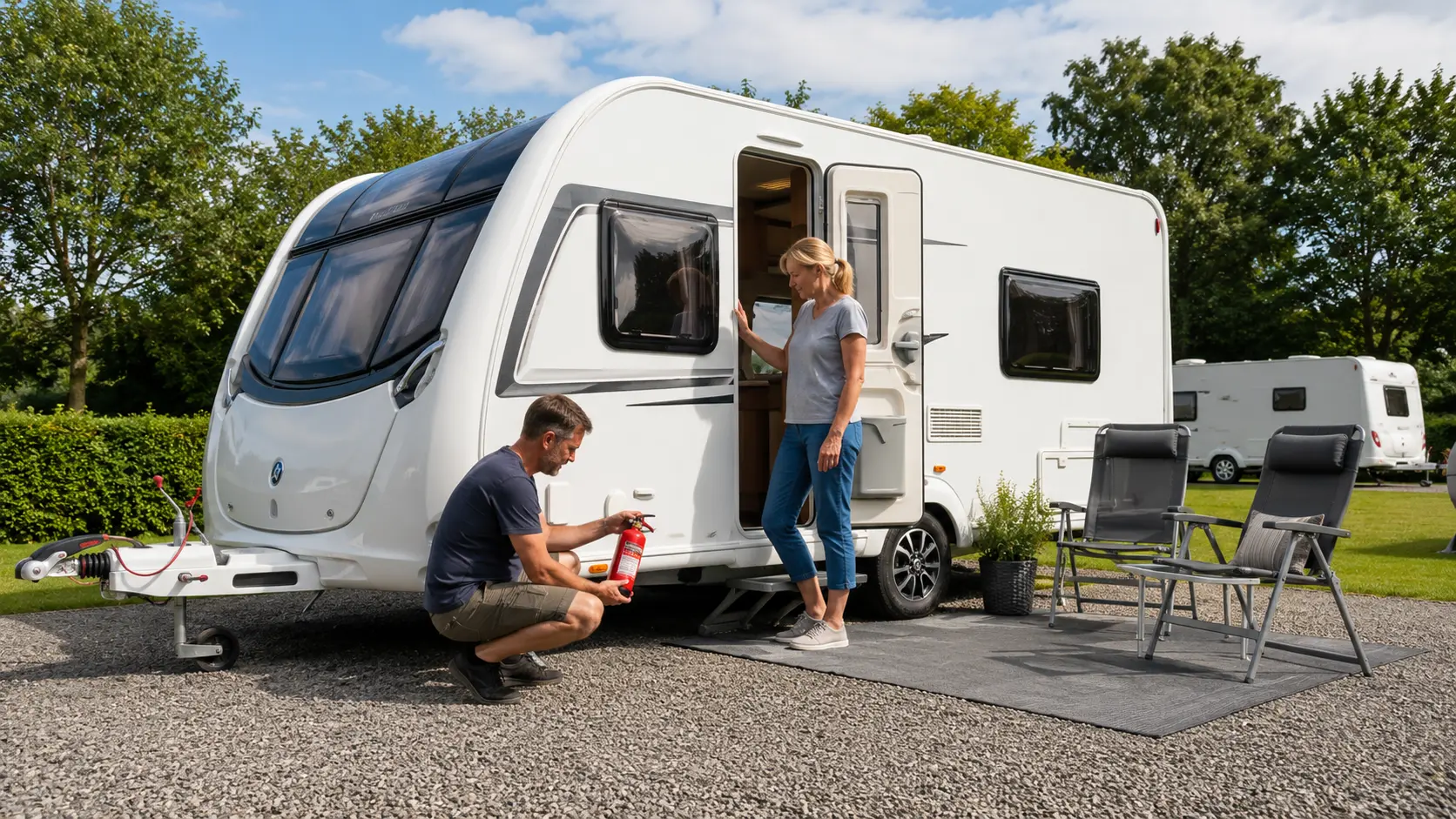
Carry an approved fire extinguisher suitable for use in a caravan or motorhome. Follow the manufacturer’s instructions and choose equipment that matches your touring requirements.
Position the extinguisher close to the main exit so you can reach it while leaving the caravan. Avoid placing it beside the cooker because a fire there could block access.
Fire Blanket
Keep a fire blanket within easy reach of the kitchen, but position it far enough away that you do not need to reach through flames to collect it.
Inspect both the fire extinguisher and fire blanket regularly. Replace either item if it becomes damaged or reaches its recommended replacement date.
Keep Your LPG System Safe
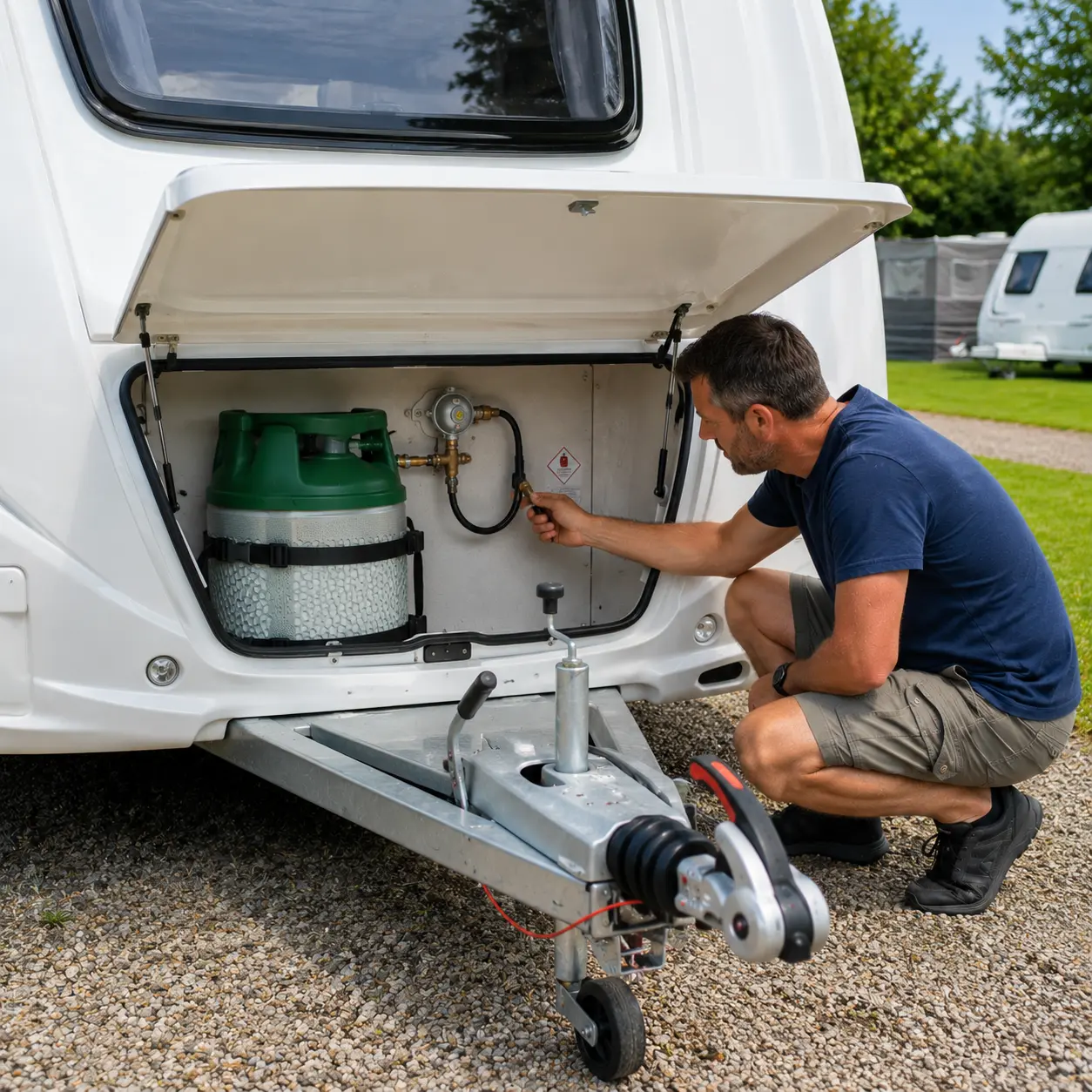
Arrange for a suitably qualified caravan or motorhome technician, such as an Approved Workshop Scheme member, to inspect and maintain your LPG system in line with the manufacturer’s servicing recommendations.
Before every trip:
- Inspect flexible gas hoses for cracks, damage or signs of wear.
- Check that every gas cylinder is secure.
- Store cylinders only in the designated ventilated gas locker.
- Turn off the gas supply before towing unless your installation is specifically approved for use while travelling.
If You Smell Gas
If you suspect a gas leak:
- Turn off the gas supply if it is safe to do so.
- Do not smoke or use naked flames.
- Avoid operating electrical switches.
- Open doors and windows to improve ventilation.
- Move everyone outside the caravan.
- Never search for the leak with a naked flame.
- Keep low-level floor vents clear because LPG can collect near floor level.
- Arrange a professional inspection before using the gas system again.
Use Electricity Safely
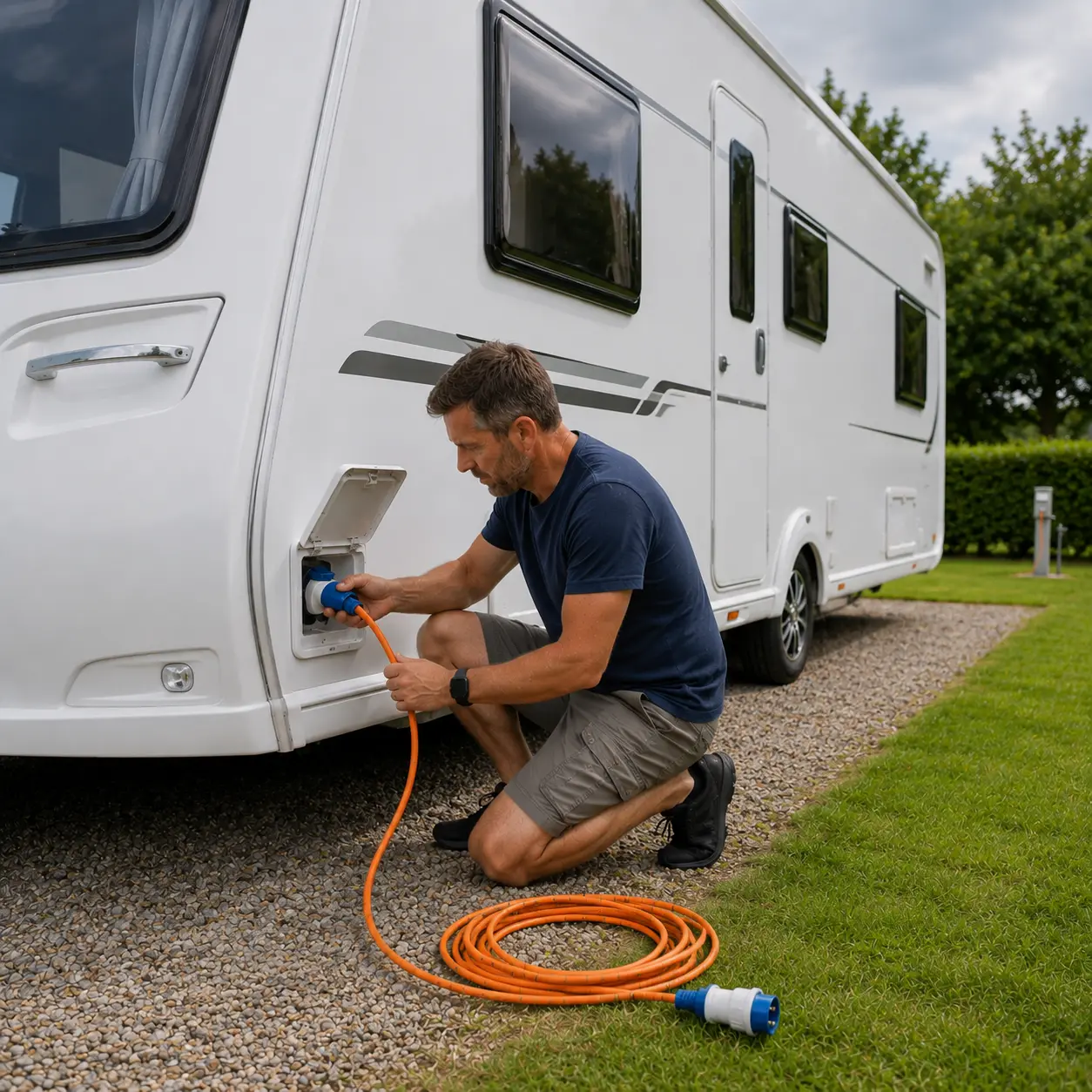
Damaged cables, overloaded sockets and faulty electrical equipment can all create a serious fire risk.
- Inspect mains hook-up cables before every journey.
- Replace damaged plugs and cables immediately.
- Avoid overloading sockets with multiple high-powered appliances.
- Choose equipment designed for caravan use where appropriate.
- Arrange professional repairs if you notice damaged wiring or recurring electrical faults.
Charge Lithium Batteries Responsibly
Many touring essentials now use lithium batteries, including phones, tablets, power banks and e-bikes.
- Use only manufacturer-approved chargers.
- Charge batteries on hard, well-ventilated surfaces.
- Disconnect chargers once charging is complete.
- Stop using batteries that become swollen, damaged or unusually hot.
- Keep bedding, clothing and other combustible materials away from charging equipment.
Cook Safely Every Time
Cooking is one of the most common situations where caravan fires can begin, so never leave food unattended while preparing meals.
- Keep tea towels, paper towels and packaging away from hobs.
- Turn saucepan handles away from the edge.
- Switch appliances off after use.
- Keep children away from hot cooking equipment.
- Use the caravan’s heating system instead of the cooker or oven to warm the interior.
Never Bring a BBQ Indoors
Never use a barbecue inside a caravan, motorhome or awning.
Likewise, never bring a disposable or charcoal barbecue indoors while it is still hot or cooling. Charcoal continues producing dangerous carbon monoxide long after cooking has finished.
Store Flammable Materials Correctly
Keep fuels, aerosols and flammable liquids in their original containers and follow the manufacturer’s storage instructions. Store them away from heat sources and ignition points.
Always keep LPG cylinders in their designated ventilated gas locker.
Keep Escape Routes Clear
Keep the entrance door and emergency escape windows free from luggage, bicycles and camping equipment at all times.
Make sure everyone travelling with you knows:
- How to open every exit.
- Where the fire extinguisher is stored.
- Where the fire blanket is located.
- Where to meet after evacuating.
Stay Safe on the Campsite
Follow campsite rules on spacing between caravans and motorhomes. Adequate spacing helps slow the spread of fire and gives emergency services better access if they are needed.
If a neighbouring caravan catches fire, move everyone to a safe distance immediately. Warn nearby campers if it is safe to do so, then call 999 if emergency services have not already been contacted. Never approach a burning caravan because LPG cylinders may be involved.
Pre-Trip Caravan Fire Safety Checklist
- Smoke alarm tested: ☐
- Carbon monoxide alarm tested: ☐
- Fire extinguisher in date: ☐
- Fire blanket in date: ☐
- Gas system inspected: ☐
- Hook-up cable checked: ☐
- Floor vents unobstructed: ☐
- Escape routes clear: ☐
- Everyone knows the escape plan: ☐
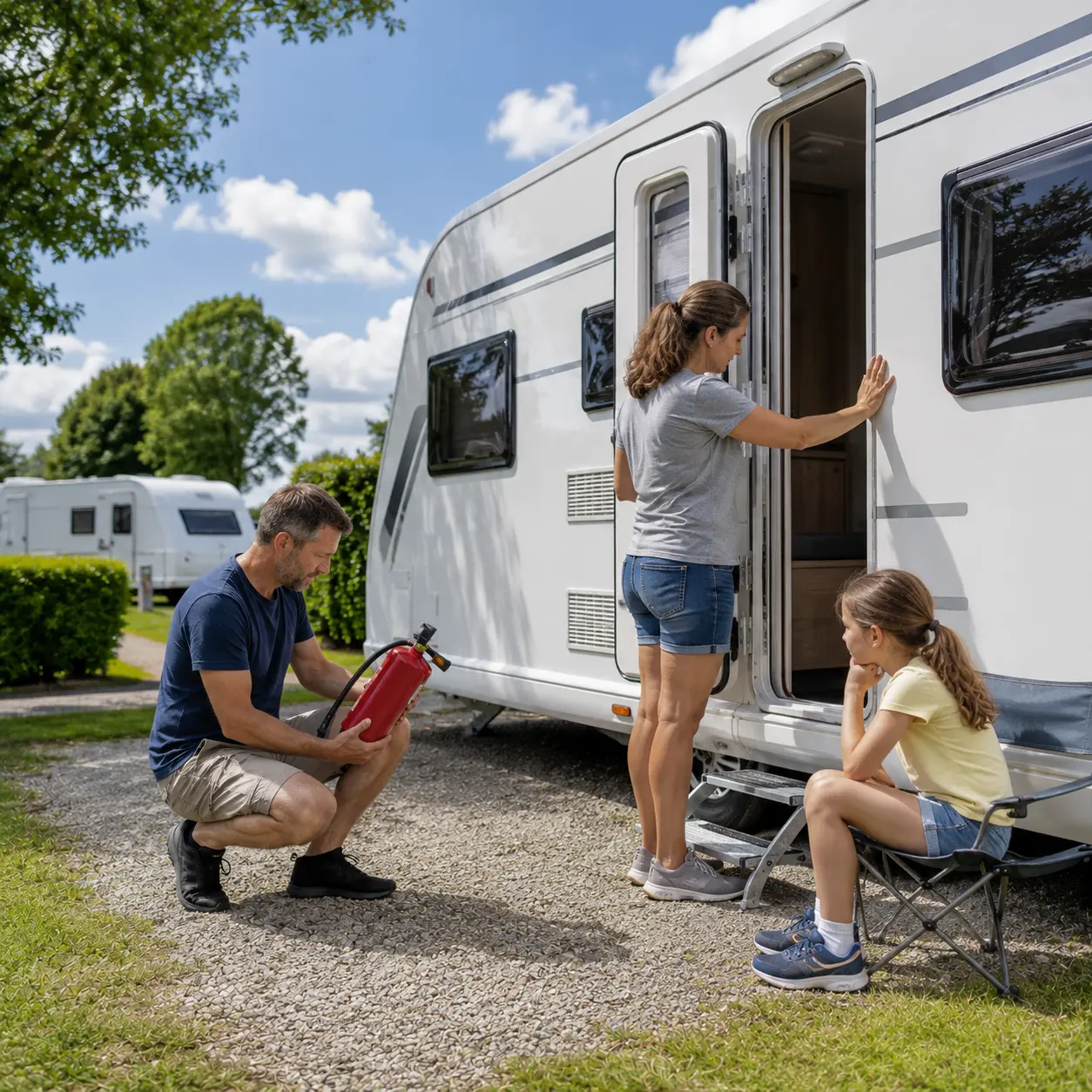
Further Fire Safety Advice
For more detailed information, read the Camping and Caravanning Club fire safety guidance and the National Fire Chiefs Council guidance.
Frequently Asked Questions
Should every caravan have a smoke alarm?
Yes. Install a working smoke alarm in accordance with the manufacturer’s instructions. Test it before every trip and replace it when it reaches the end of its recommended service life.
Do I need a carbon monoxide alarm?
Yes, if your caravan or motorhome has any fuel-burning appliance, including LPG cookers, heaters or water heaters. A carbon monoxide alarm provides an early warning of a gas you cannot see, smell or taste.
Where should I keep my fire extinguisher?
Store it close to the main entrance so you can reach it while leaving the caravan. Avoid placing it where a fire near the cooker could prevent safe access.
Can I use a barbecue inside an awning?
No. Charcoal and gas barbecues should never be used inside a caravan, motorhome or awning because they create both fire and carbon monoxide hazards. Leave every barbecue outside until it has cooled completely.
What should I do if my smoke alarm sounds?
Treat every alarm as genuine until you know otherwise. Alert everyone immediately, leave the caravan without delay, move to a safe place and call 999 if there is any sign of fire.
How often should my caravan’s LPG system be serviced?
Follow the servicing schedule recommended by your caravan or appliance manufacturer. Ask a suitably qualified caravan or motorhome technician, such as an Approved Workshop Scheme member, to inspect the system.
What should I do if a neighbouring caravan catches fire?
Move everyone to a safe distance straight away. Warn nearby occupants if you can do so safely and call 999 if emergency services have not already arrived. Never approach a burning caravan because LPG cylinders may be involved.
Final Thoughts
Fire safety is one of the simplest ways to protect yourself, your family and your caravan. Regular maintenance, sensible storage, working alarms and safe everyday habits all help reduce the risk of fire.
Above all, everyone travelling with you should understand exactly what to do if an emergency happens. Remember the key message: get out, stay out and call 999. Following a simple fire safety routine before every trip will help you enjoy safer and more confident touring throughout the year.