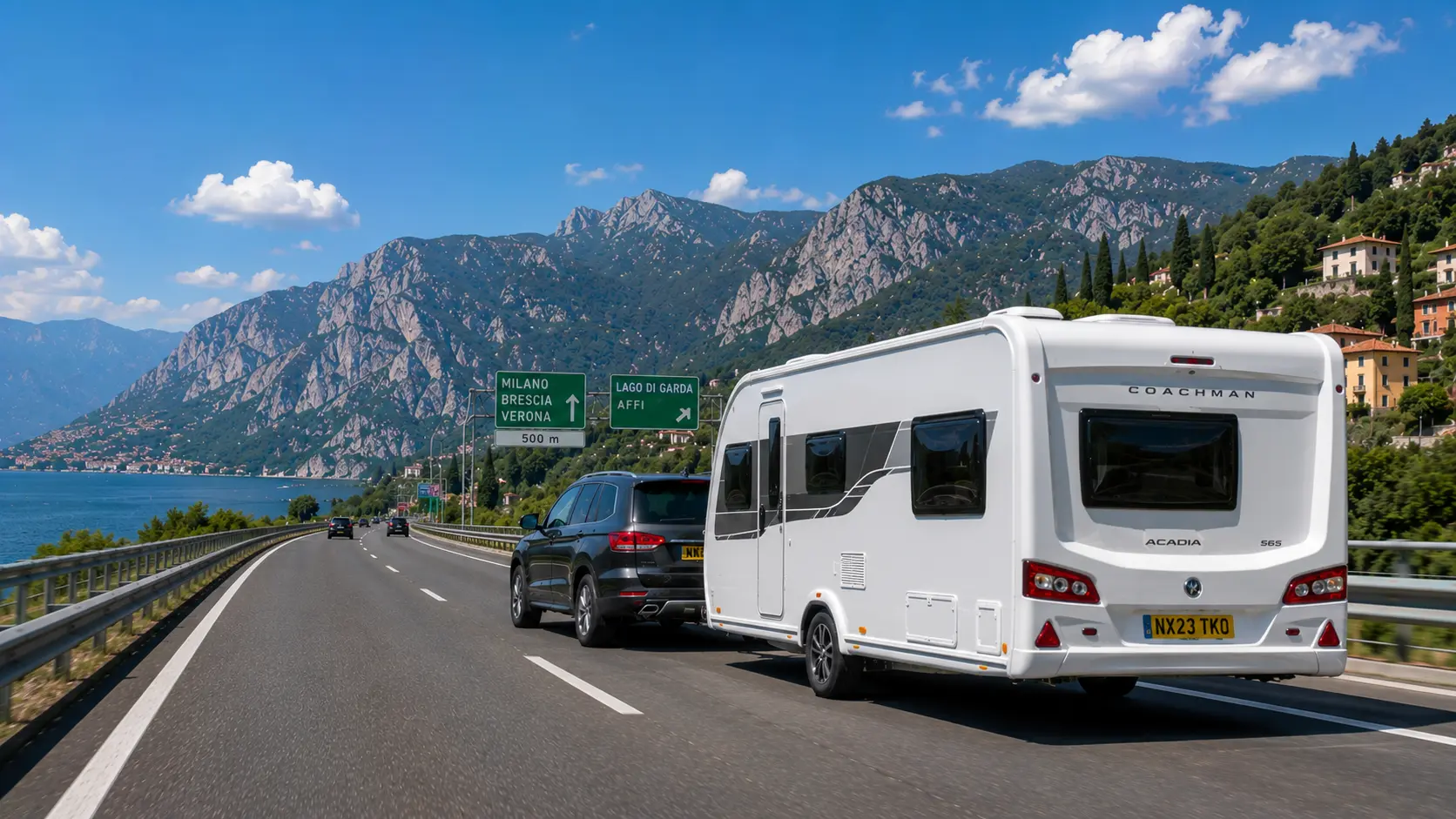
Driving in Italy with a caravan can feel like a big step for UK tourers, but it is also one of the most rewarding European touring adventures you can have.
From the Italian Lakes and the Dolomites to Tuscany, the Adriatic coast and the south of Italy, there are some incredible places to explore with your caravan. However, Italy is not quite the same as touring around the UK. The roads, tolls, driving style, city restrictions and campsite access all need a bit of planning before you go.
This guide covers the main things UK caravanners should know before towing in Italy, including documents, speed limits, toll roads, mountain routes, fuel stops, campsites and practical towing tips.
Before setting off, it’s worth checking the latest official driving advice for Italy, including road rules, required documents and useful travel information. The official Italy driving guide is regularly updated and is an excellent resource to help you prepare for a safe and enjoyable touring holiday.
Is Italy Good for Caravan Touring?
Yes, Italy can be fantastic for caravan touring, especially if you enjoy scenic drives, warm weather, lakeside campsites, coastal routes and historic towns.
That said, Italy rewards planning. Some roads are narrow, older towns can have strict access zones, and campsites can vary from large holiday parks to smaller rural sites with tighter entrances.
If you are new to European touring, northern Italy is usually the easiest place to start. Areas around Lake Garda, Lake Como, Lake Maggiore, Verona, Venice and the Adriatic coast are popular with caravanners and generally have good campsite options.
Driving on the Right in Italy

In Italy, you drive on the right-hand side of the road and overtake on the left. This is one of the biggest adjustments for UK drivers, especially when towing a caravan.
Roundabouts, junctions and motorway slip roads need extra concentration at first. It usually becomes easier after the first day, but the key is to slow everything down. Give yourself more space, use your mirrors often and avoid rushing decisions.
If possible, try to arrive in Italy during daylight. Towing into an unfamiliar campsite at night, after a long journey, is not the relaxing start anyone wants.
Documents to Carry When Towing in Italy
Before driving in Italy with a caravan, make sure you have the right documents with you. These may include:
- Full UK driving licence
- Passport
- Vehicle V5C log book
- Caravan or trailer registration certificate if required
- Motor insurance certificate
- Breakdown cover documents
- Travel insurance details
- Campsite booking confirmations
- European accident statement form if supplied by your insurer
If your tow car is leased, hired or on finance, you may need a VE103 certificate instead of the V5C. Do not leave this until the week before travel, as it can take time to arrange.
Trailer Registration for Italy
All UK caravans over 750kg need to be registered before travelling to or through most European countries, including Italy. This means the caravan may need its own trailer registration plate and certificate.
This is separate from your normal tow car number plate. Check the latest UK Government trailer registration guidance before travelling, especially if your caravan is over 750kg.
Essential Equipment for Driving in Italy
When touring Italy, you should carry the right safety equipment in the car. Requirements and advice can change, but UK caravanners should normally carry:
- Warning triangle
- High-visibility jackets
- Headlamp beam deflectors or adjusted headlights
- UK identifier on the rear of the vehicle and caravan
- Spare glasses if your licence requires you to wear them
- First aid kit
- Fire extinguisher
- Spare bulbs if suitable for your vehicle
High-visibility jackets should be kept inside the car, not packed away in the boot or caravan. If you have to leave the vehicle at the roadside, you need them before stepping out.
Speed Limits in Italy
Italian speed limits vary depending on the road type, weather and vehicle. Always follow posted signs, especially when towing.
As a general guide, Italian limits for cars are usually 50km/h in built-up areas, 90km/h on secondary roads, 110km/h on main roads and 130km/h on motorways. Lower limits may apply when towing, in bad weather, near roadworks or on specific signed sections.
When towing a caravan, do not assume you can travel at the same speed as solo cars. Keep your speed comfortable, leave plenty of braking distance and let faster traffic pass when safe.
Italian Motorways and Toll Roads

Italy has a large motorway network, and many motorways are toll roads. These are often the easiest routes when towing because they are generally wider, faster and more direct than smaller roads.
At toll booths, choose a lane suitable for card or cash payment unless you have an electronic toll device that works in Italy. Avoid Telepass-only lanes unless you are registered to use them.
With a caravan, take extra care at toll booths. Some lanes can feel narrow, and the kerbs are not forgiving. Line up straight, take your time and do not let impatient drivers behind you rush the process.
ZTL Zones in Italian Towns and Cities
One of the biggest things UK visitors need to understand is the ZTL system. ZTL stands for Zona a Traffico Limitato, which means restricted traffic zone.
Many historic Italian towns and cities have ZTL areas to reduce traffic. These zones are often monitored by cameras, and entering without permission can lead to fines.
When towing a caravan, avoid driving into historic centres unless you are absolutely sure your route is allowed. This is especially important in places such as Florence, Pisa, Rome, Bologna, Verona and many smaller walled towns.
A good rule is simple: park outside the centre, use public transport where possible and never follow your sat nav blindly into an old town.
Using Sat Nav in Italy With a Caravan
A caravan-friendly sat nav is very useful in Italy. Standard car sat navs can send you down narrow streets, steep lanes or routes that are not suitable for towing.
Before setting off, check your route manually. Look for motorway options, avoid old town centres and pay attention to bridge heights, steep gradients and tight village roads.
Google Maps can be useful for checking traffic and street view, but it should not be trusted on its own for caravan routing.
Fuel Stops and Service Areas
Motorway service areas in Italy are generally the easiest places to stop with a caravan. Many have larger forecourts, food options and space to pull through.
Smaller petrol stations in towns can be much tighter. Some have awkward entrances, low canopies or limited turning space, so it is better to refuel before you are desperate.
Diesel is widely available, but always check pump labels carefully. If you are unsure, ask before filling. A mistake here could ruin the trip very quickly.
Mountain Roads and Lake Routes

Italy has some breathtaking roads, but not all of them are caravan-friendly. Mountain passes, lakeside roads and rural villages can be narrow, twisty and busy.
The Italian Lakes are beautiful, but some roads around the water can feel tight with a caravan. Lake Garda is popular with UK tourers, but campsite access and local roads still need planning.
If you are heading into the Dolomites or Alpine areas, check gradients, weather conditions and campsite access before travelling. Just because a route looks shorter does not mean it is easier.
Italian Driving Style
Italian driving can feel more assertive than UK driving. You may notice closer following, quick lane changes and confident overtaking, especially around cities.
Do not get dragged into the pace. When towing, steady and predictable driving is best. Stay calm, keep right unless overtaking and give yourself plenty of space.
On motorways, lorries and faster cars may sit close behind at times. Hold your line, avoid sudden braking and wait for a safe opportunity to let traffic pass.
Campsite Arrival Tips

Italian campsites can be excellent, but access roads and pitches vary. Some sites have narrow entrances, tree-lined roads, tight turns or terraced layouts.
Before booking, check recent reviews, campsite photos and arrival instructions. If you have a larger twin-axle caravan or a long outfit, contact the site before travelling.
It is also worth checking whether the campsite has specific arrival times. Many Italian sites have quiet periods during the afternoon, and reception may close for a few hours.
When Is the Best Time to Tow a Caravan to Italy?
Spring and early autumn are often the best times for caravan touring in Italy. The weather is usually pleasant, roads can be quieter and campsites may feel more relaxed.
July and August can be very hot and busy, especially around lakes, beaches and major tourist areas. If travelling in peak summer, book campsites early and plan shorter driving days.
Winter touring is possible in some areas, but mountain routes may require winter tyres or snow chains, and not all campsites stay open all year.
Practical Tips for UK Caravanners Driving in Italy
- Plan your route before leaving the campsite.
- Avoid arriving at busy towns during rush hour.
- Use motorways for longer towing days.
- Check campsite access before booking.
- Keep toll money or cards handy.
- Do not rely only on a standard sat nav.
- Watch for ZTL signs in towns and cities.
- Take regular breaks in service areas.
- Allow extra time for mountain or lakeside roads.
- Stay calm if local drivers seem impatient.
Is Driving in Italy With a Caravan Difficult?
Driving in Italy with a caravan is not necessarily difficult, but it does need preparation. The motorways are generally good, the scenery is incredible and many campsites are well set up for touring.
The biggest challenges are usually city restrictions, narrow local roads, toll booths, campsite access and adjusting to the Italian driving style.
If you plan ahead, avoid unsuitable routes and give yourself enough time, Italy can be a brilliant caravan destination.
Final Thoughts
Driving in Italy with a caravan is a proper adventure. It can take you from Alpine scenery to lakeside sunsets, coastal campsites and some of Europe’s most beautiful towns.
For UK caravanners, the key is not to rush. Sort your documents, check your caravan registration requirements, plan sensible routes and respect local driving rules.
Do that, and Italy could become one of your most memorable touring trips yet.
Discover More from Caravan Adventuring
Whether you’re searching for campsite reviews, travel diaries, touring advice or caravan setup guides, we’ve got plenty more content to help you plan your next adventure.
Browse Our Full Content Library →
Related Guides
- Driving in France With a Caravan
- Driving in Spain With a Caravan
- Caravan Gas Bottles Explained
- Caravan Fridge Guide for Beginners
- Caravan Storage Tips for Winter
Campsite Reviews
Looking for honest campsite reviews before your next trip?
Suggest Our Next Campsite Review
We’re always looking for great campsites to visit and review.
If you’ve found a hidden gem or a campsite you think deserves more attention, let us know.