
Touring France in our caravan has always been a dream, but the rules can be a lot to keep up with. As we plan this year’s travels, the French Crit’Air Guide and the wider French Crit’Air sticker 2026 rules are high on our list. This Crit’Air UK travellers guide is exactly the sort of thing we wish we had sooner. These little circular stickers are not needed in most French towns, villages, or rural areas. You usually only need one when you drive into specific Low Emission Zones in major cities and larger agglomerations. We have spent a lot of time researching the latest France ZFE rules 2026 updates, so we can avoid a hefty fine while trying to find a boulangerie.
France has been steadily expanding its Low Emission Zones, known locally as Zones à Faibles Émissions (ZFE). These zones improve air quality by keeping the most polluting vehicles out of city centres and built-up urban areas. For us UK caravanners, that means we need to plan ahead before we even roll off the ferry or the Eurotunnel if our route takes us near places like Paris or Lyon. Whether you are planning a grand tour or just a short hop across the channel, understanding where these stickers actually apply is the first step. It makes the latest France ZFE rules 2026 much easier to manage.
French Crit’Air Guide: What exactly is a Crit’Air Sticker?

At its core, the Crit’Air system lets French authorities classify vehicles by environmental impact. There are six categories. They range from the green “Crit’Air E” for zero-emission electric vehicles to the grey “Crit’Air 5” for older, more polluting diesel engines. Most of us with relatively modern tow cars will fall into category 1 or 2, but it is vital to check your V5C document before applying. For anyone searching for a practical French Crit’Air sticker 2026 overview, this is the bit that really matters. Your vehicle’s category determines where you can and cannot drive.
Your vehicle’s Euro emissions standard determines your sticker category. If you registered your vehicle before 1997, you might not be able to get a sticker at all. That effectively keeps you out of some ZFEs during restricted hours. We keep the sticker displayed on the lower right-hand side of our windscreen, and that gives us peace of mind when our route includes major urban areas. Still, you do not need one for most small towns or villages. A road diversion near a big city can easily send you straight into a restricted zone.
The Big Changes in 2026: Lyon and Paris
As we move through 2026, the rules are getting tighter. We have been watching Lyon closely because it is a major waypoint on many of our journeys south. From July 2026, Lyon will actively fine vehicles with a Crit’Air 3 sticker. Those vehicles already faced restrictions, but enforcement often felt patchy. Now the cameras are live, and the “educational” period has ended. If your tow car or motorhome falls into category 3, plan your route around the Lyon ZFE or risk a fine of around €68.
Paris is still the trickiest area to navigate. The city still uses “educational sanctions” for certain categories, but the restrictions already apply. Crit’Air 3 vehicles generally cannot enter the area within the A86 ring road between 8:00 AM and 8:00 PM on weekdays. If your route takes you near Greater Paris, check the exact ZFE boundaries before you travel. Roads on the edge of the zone can still fall under the rules. Even so, you do not need a sticker for every stop in France. It all depends on whether your route takes you into one of the named low emission zones.

Caravan vs. Motorhome: The Golden Rule
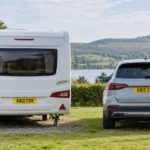
One of the most frequent questions we get asked is whether the caravan needs its own sticker. The short answer is no. Because a caravan is a non-motorised trailer, it does not have an engine and therefore does not produce emissions in the eyes of the French authorities. However, the car you use to tow it must have a sticker.
On the flip side, if you are touring in a motorhome, the rules are different. A motorhome is a self-propelled vehicle and must always display its own Crit’Air sticker. We have seen a few confused faces at campsites where motorhome owners thought they were exempt because they were “camping vehicles.” Sadly, the French police don’t see it that way. If it has an engine and you’re driving it into a ZFE, it needs a sticker. You can see more of our setup and our travels over on our Gallery page.
How to Apply and What it Costs
We cannot stress this enough: only use the official government website to buy your sticker. Do not use the “copycat” sites that charge €20 or €30 for the same service. The official site is certificat-air.gouv.fr.
The process is relatively simple. Upload a scan or a clear photo of your vehicle’s V5C registration document. Keep the file size sensible because the French government site can be a bit picky. UK-registered vehicles currently cost around €4.61, and that includes postage to your home address in the UK. Your sticker usually arrives in 10 to 14 days, although we have had them turn up in less than a week. Once you have it, it stays valid for the life of the vehicle, so you do not need to renew it every year. That is one reason a solid Crit’Air UK travellers guide can save a lot of last-minute stress before crossing the Channel.

Planning Ahead for ZFE Travel
If your route takes you into the heart of a restricted zone, double-check your tow car’s sticker well before you leave. It can feel like extra admin, but once you sort it, travelling through the affected cities becomes much more straightforward. If you are planning a trip that includes Paris, Lyon, or another ZFE city, get your Crit’Air sticker now. If your route sticks to smaller towns, villages, and the countryside, you may not need one at all. That is really the key takeaway from the French Crit’Air sticker 2026 changes: check your route first, then decide whether the sticker is actually necessary for your trip. If you’re looking for more tips on driving in France, check out our French Tolls Guide to help you budget for your trip.
The landscape of European travel is changing, and stricter ZFE rules now shape touring in certain parts of France rather than the whole country. With a bit of preparation and a clear idea of which cities are on your route, we can still enjoy the incredible sights and sounds of the French countryside without any unwanted surprises on the road.
Related Guides
- French Tolls Guide: Everything You Need to Know Before You Tow
- EU Entry Exit System Guide
- The Ultimate Cotswold 14 Day Tour
- First Caravan Trip Checklist
- What to Pack for a Caravan Holiday
Suggest a Campsite for Review
Have you stayed at a campsite that deserves more attention?
We’re always looking for new campsites to feature on Caravan Adventuring. Whether it’s a hidden gem, a family favourite, or a site with outstanding facilities, we’d love to hear about it.