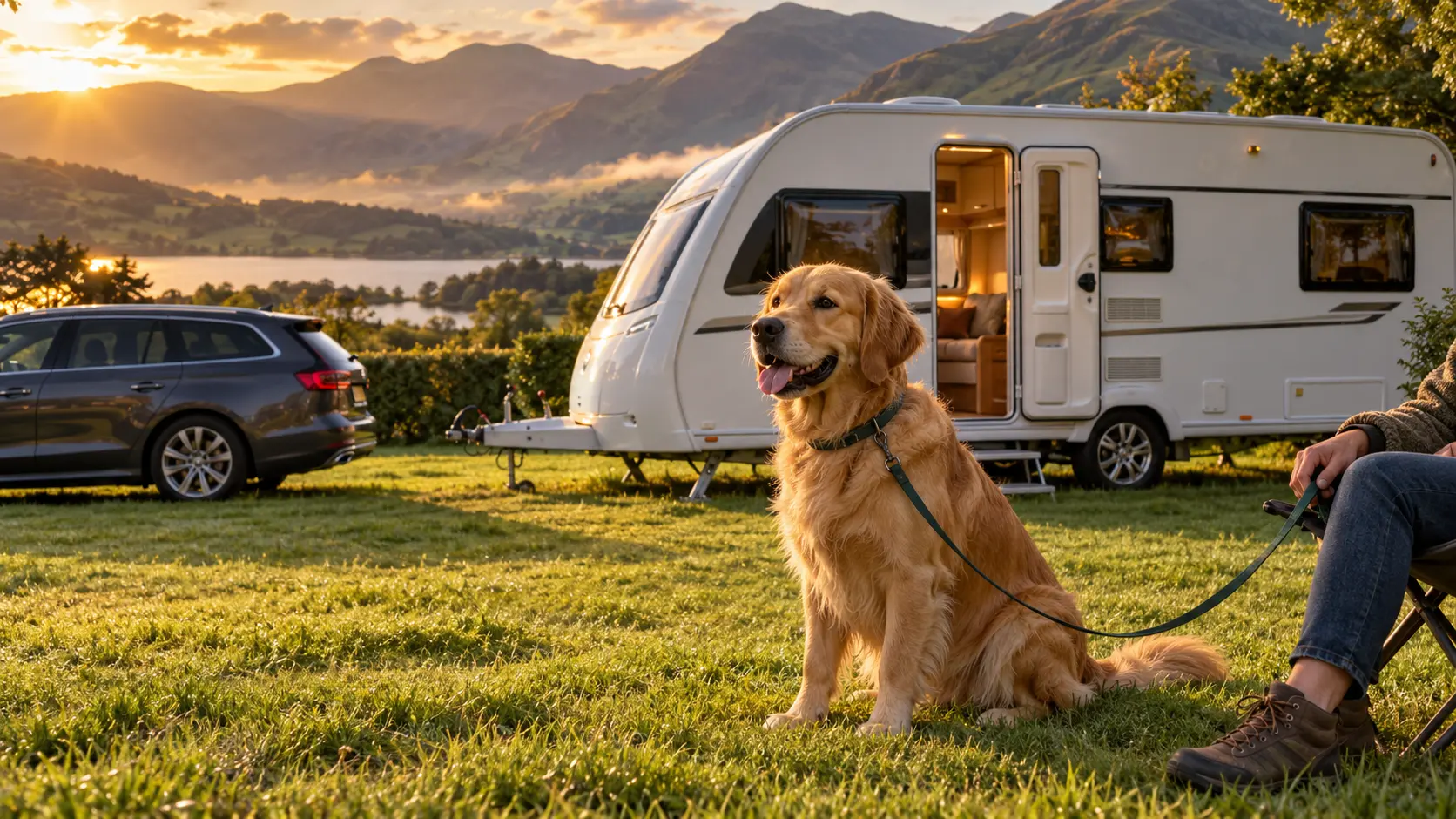
Planning to travel with dogs in a caravan is straightforward once you know the rules and routines. This guide covers car safety, site rules, hot weather, UK dog law and EU paperwork, so your first trip with a dog goes smoothly.
Check the Site Welcomes Dogs Before You Book
Not every site accepts dogs, and the rules differ from one to the next. So ask before you book, not when you arrive at the gate.
The two big clubs set clear standards. The Caravan and Motorhome Club says guests are responsible for their pets and must keep them on a lead of no more than 2 metres. The Camping and Caravanning Club asks for the same lead length. It also keeps pets out of toilet blocks, apart from assistance dogs.
Neither club allows breeds listed under the Dangerous Dogs Act 1991 on its sites. Independent parks set their own rules, so check the details with them directly.
When you ring or email, ask these questions:
- How many dogs are allowed on one pitch?
- Is there an extra charge for dogs?
- Where is the dog-walking area?
- Are there any breed restrictions?
- Are there rules about leaving a dog alone in the caravan?
Travel With Dogs in a Caravan Safely: Tow Car Rules
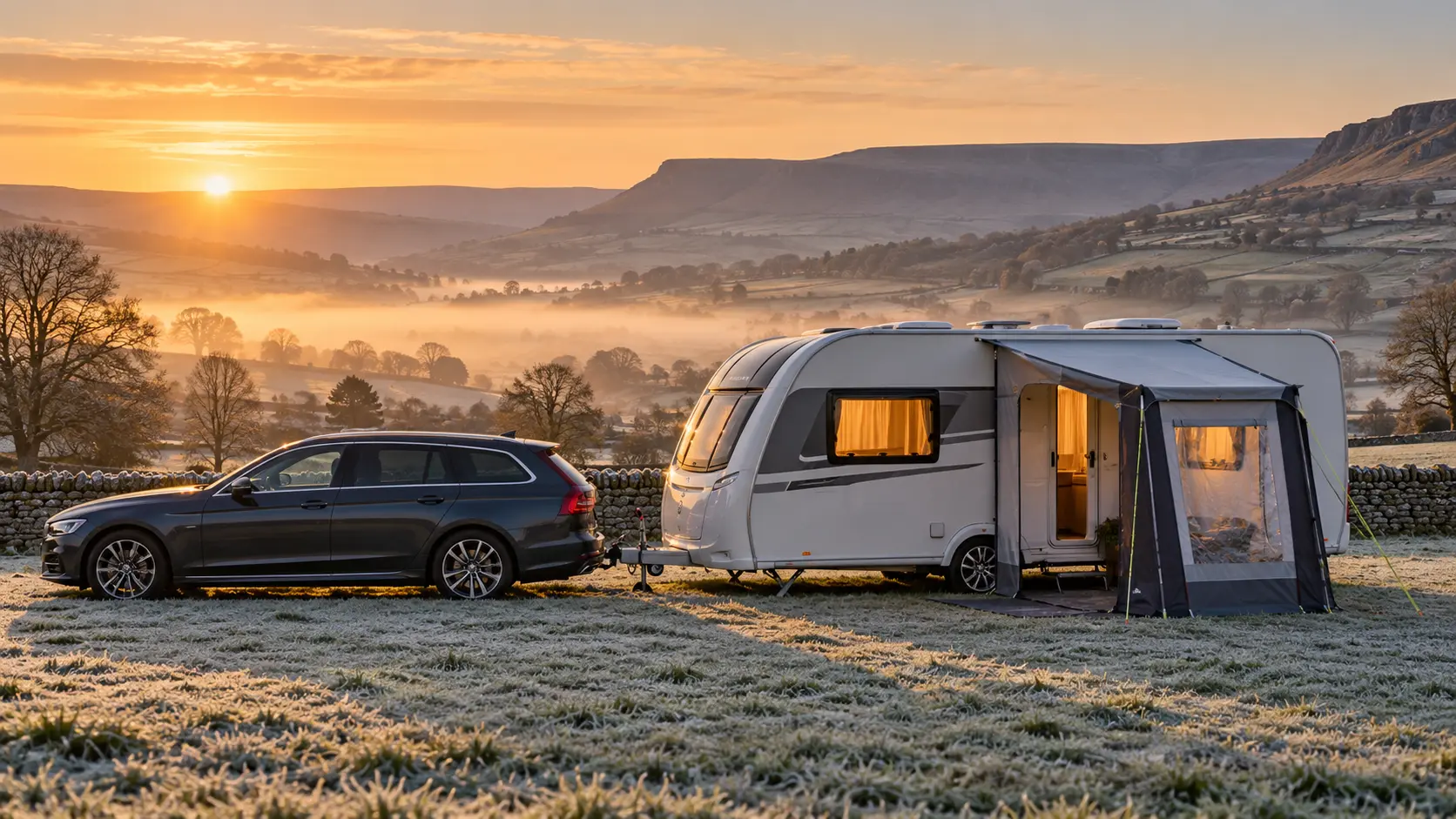
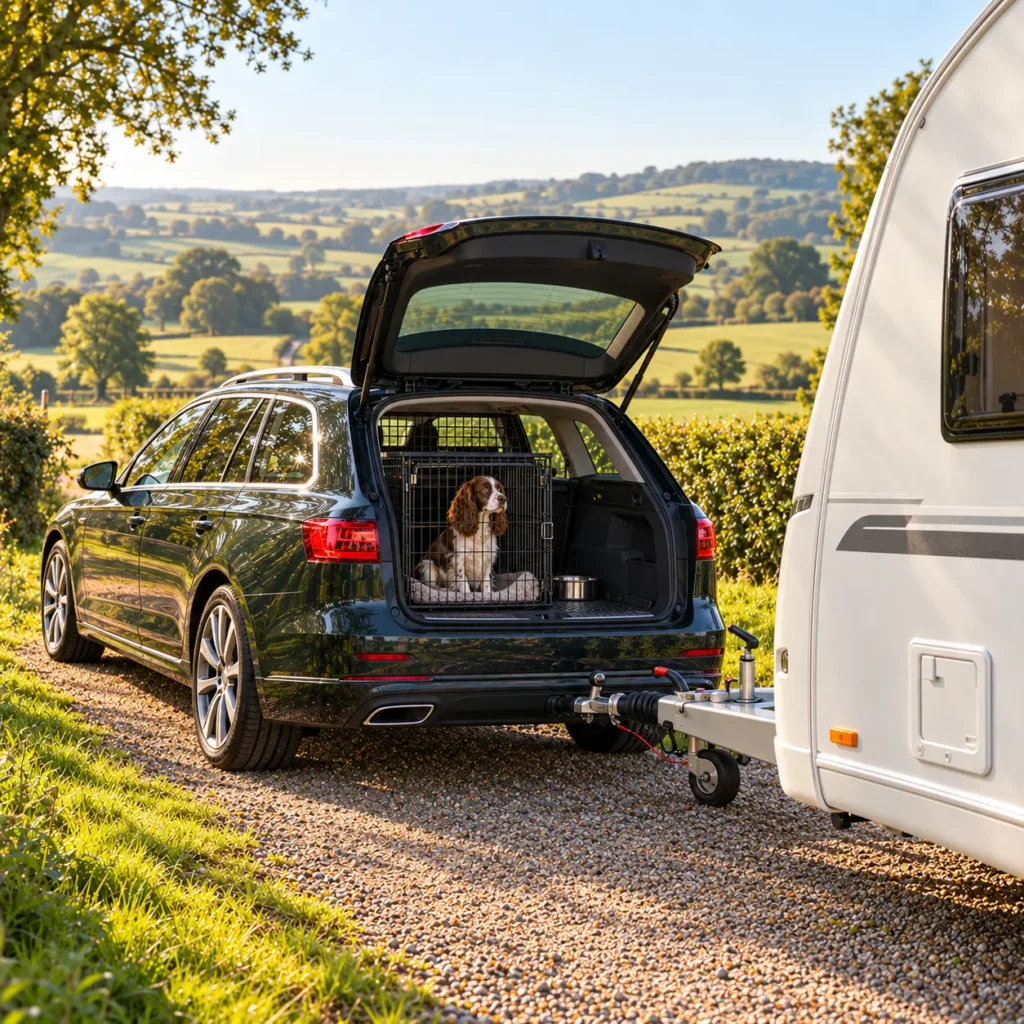
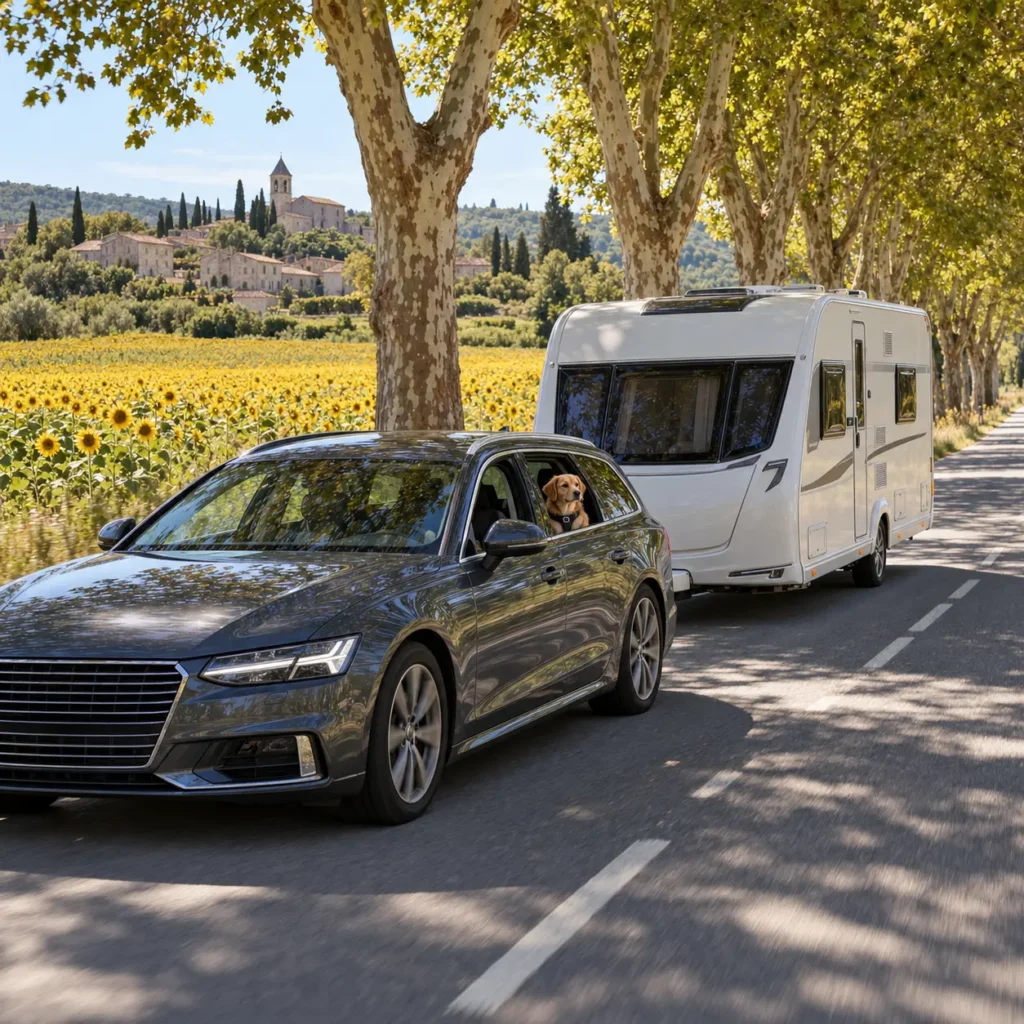
Dogs should travel in the tow car, not in the caravan. A caravan is no place for a loose animal while you are towing, and you cannot keep an eye on the dog from the driving seat.
Rule 57 of the Highway Code says dogs must be “suitably restrained”. That means they cannot distract you, or hurt themselves, if you stop quickly. The Code lists a seat belt harness, pet carrier, dog cage or dog guard as ways to do it.
Breaching rule 57 carries no direct penalty by itself. However, a loose dog could support a charge of driving without due care and attention. It may also cause problems with an insurance claim, so check your policy wording.
A crate adds weight to the car. Check it against your tow car’s payload before you load it.
Plan Regular Stops on the Tow
Plan breaks so your dog can drink and stretch its legs. Choose services where the caravan is easy to park and there is a grass area close by. Offer water at every stop.
Keep the lead on before you open any door. A dog that bolts beside a busy road is a real danger. Also never leave the dog alone in the car while you go inside. If there are two of you, take turns.
Keep Dogs Cool in Hot Weather
Heat is the biggest risk when you travel with dogs in a caravan. The RSPCA says never to leave dogs in cars, caravans or other vehicles in warm weather, even for a short while. When it is 22°C outside, temperatures in these places can quickly reach 47°C, which can be fatal.
Shade and fresh water must always be available. The RSPCA also suggests walking early in the morning or late in the evening. Damp towels to lie on can help too. Our caravan heat tips cover keeping the whole caravan cooler.
Learn the signs of heatstroke and call a vet at once if you see them:
- Heavy panting
- Excessive drooling
- Lethargy or drowsiness
- Uncoordinated movement
- Collapse or vomiting
Choose a Pitch That Suits Your Dog
Pick a pitch away from the site entrance, busy roads and play areas where you can. A quieter spot means fewer things to set off barking. Our guide to choosing a pitch on a caravan site explains what to look for.
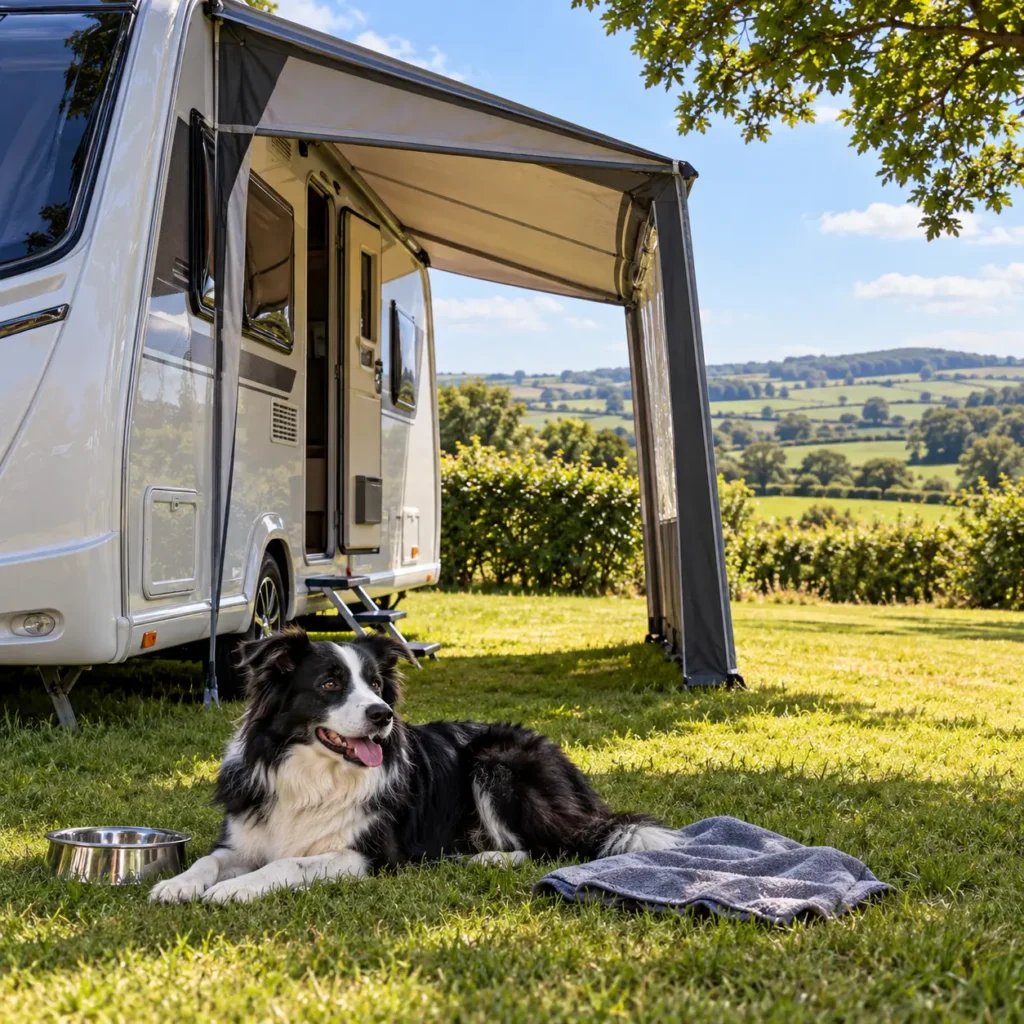
Keep your dog on its lead while you unhitch and level, because moving caravans and open doors are hazards. Then put a familiar bed in the shade and set the water bowl where it will not tip.
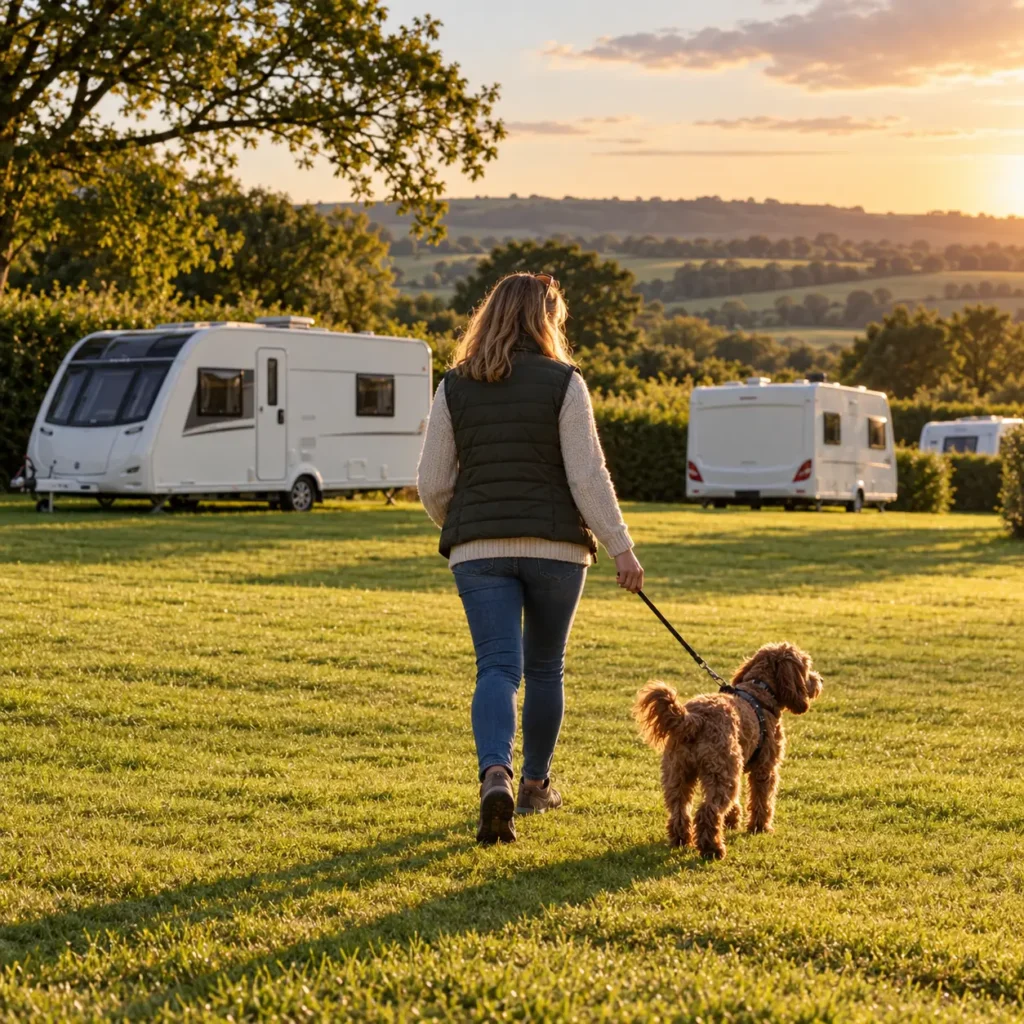
The Caravan and Motorhome Club asks guests to clean up after their dogs. It also asks them to try to stop pets toileting on the pitch. Carry bags and use the dog-walking area where one is provided.
Think Before Leaving a Dog Alone
Leaving a dog alone in the caravan needs care. A dog that barks can upset neighbours, and the Camping and Caravanning Club may ask you to remove a pet that causes a nuisance. Our caravan site etiquette guide covers the wider unwritten rules.
Practise short absences at home first. Never leave a dog in the caravan in warm weather. If your plans do not suit your dog, choose dog-friendly attractions instead.
Microchip, ID and Vet Checks
UK law says dogs over eight weeks old must be microchipped and registered on an approved database. You must also keep your contact details up to date, and owners can be fined up to £500 if the details are missing. A dog should wear a collar and ID tag in public too. The GOV.UK microchipping page lists the rules.
Before a long trip, check that vaccinations and flea and worming treatments are current. Also save the number of a vet near your site, so you are not searching in an emergency.
Taking Your Dog to Europe
GOV.UK says you need an animal health certificate from your vet to take a dog to an EU country. If you live in England, Scotland or Wales, you cannot use a pet passport to enter the EU, even one issued in the EU. Your dog may be refused entry if you try.
| Step | What to know |
|---|---|
| Microchip | Before, or at the same time as, the rabies vaccination |
| Rabies vaccination | Wait 21 days after the first vaccination before you travel |
| Animal health certificate | Valid for 10 days for entry into the EU |
| Onward travel in the EU | Valid for 6 months after issue, if the rabies vaccination stays valid |
| Return to Great Britain | Valid for 6 months. Dogs also need a vet’s tapeworm treatment 24 to 120 hours before arrival, with some exceptions |
You need a new certificate for each separate trip. Because the certificate is issued close to departure, book your vet early. Check the rules for your route and your ferry or tunnel operator on GOV.UK, then see our European caravan documents checklist.
Dog Caravan Checklist
Use this list before you travel with dogs in a caravan.
- Site confirmed as dog-friendly, with the number of dogs agreed
- Harness, crate or dog guard fitted in the tow car
- Lead of no more than 2 metres, plus a spare
- Collar with ID tag, and microchip details up to date
- Water bowl and a drinking bottle for the journey
- Familiar bed or blanket
- Food, treats and any medication
- Poo bags and a towel for muddy paws
- Vet contact details and vaccination records
- Shade for the pitch and damp towels for hot days
- For Europe: animal health certificate and proof of microchip and rabies vaccination
Official guidance checked on 22 October 2026. Rules can change, so check the latest guidance before you travel.