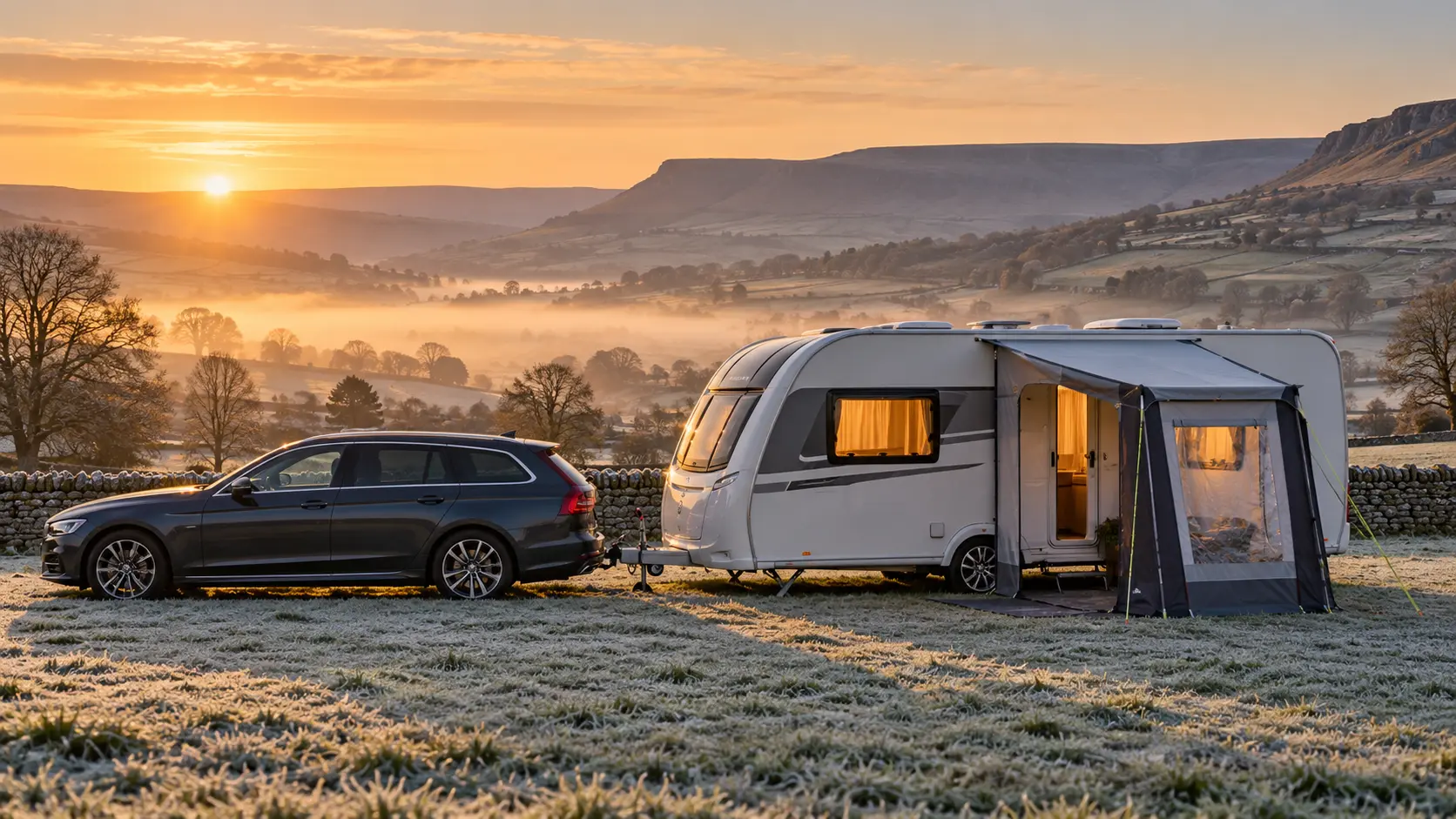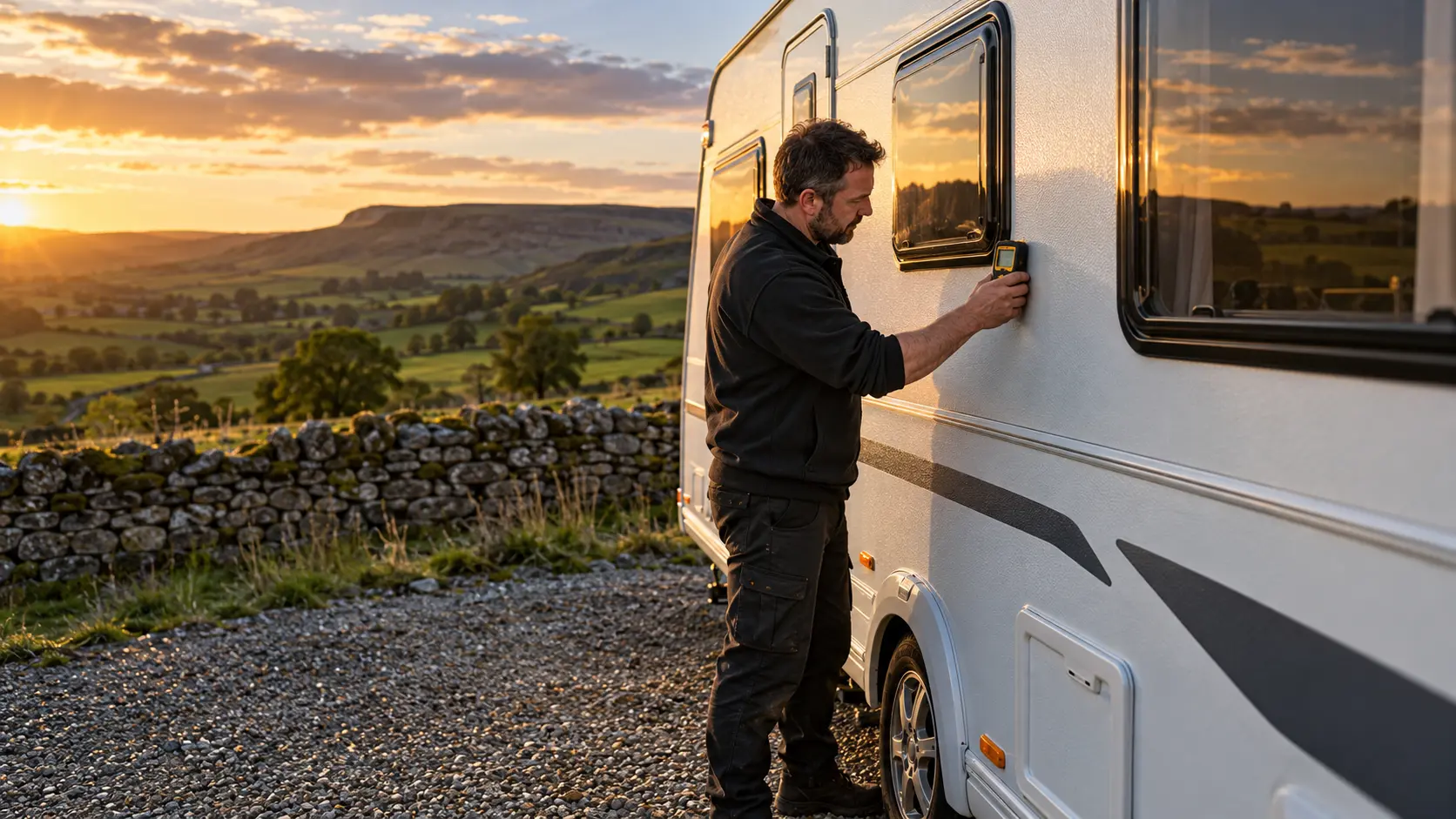

Driving in France with a caravan is one of the easiest ways to begin touring Europe from the UK. France has an excellent road network, thousands of caravan-friendly campsites and plenty of places to stop during a longer journey.
However, towing in France is not exactly the same as towing at home. Different speed limits, toll roads, low-emission zones and compulsory equipment rules mean it is important to prepare before leaving the UK.
This guide explains the main rules for driving in France with a caravan, what documents and equipment you should carry and the practical differences UK caravanners are likely to notice.
Is Driving in France With a Caravan Difficult?
For most UK caravanners, towing in France is relatively straightforward once you become comfortable driving on the right-hand side of the road.
Many French motorways are wide, well maintained and less congested than major UK routes. Service areas are generally spacious, although not every parking area is designed with long caravan outfits in mind.
The biggest adjustment usually comes immediately after leaving the ferry terminal or LeShuttle terminal. Roundabouts, junctions and quiet roads require extra concentration because it is easy to return to familiar UK driving habits.
Before choosing your crossing, read our guide comparing the ferry and Eurotunnel when travelling with a caravan.
Which Side of the Road Do You Drive On in France?
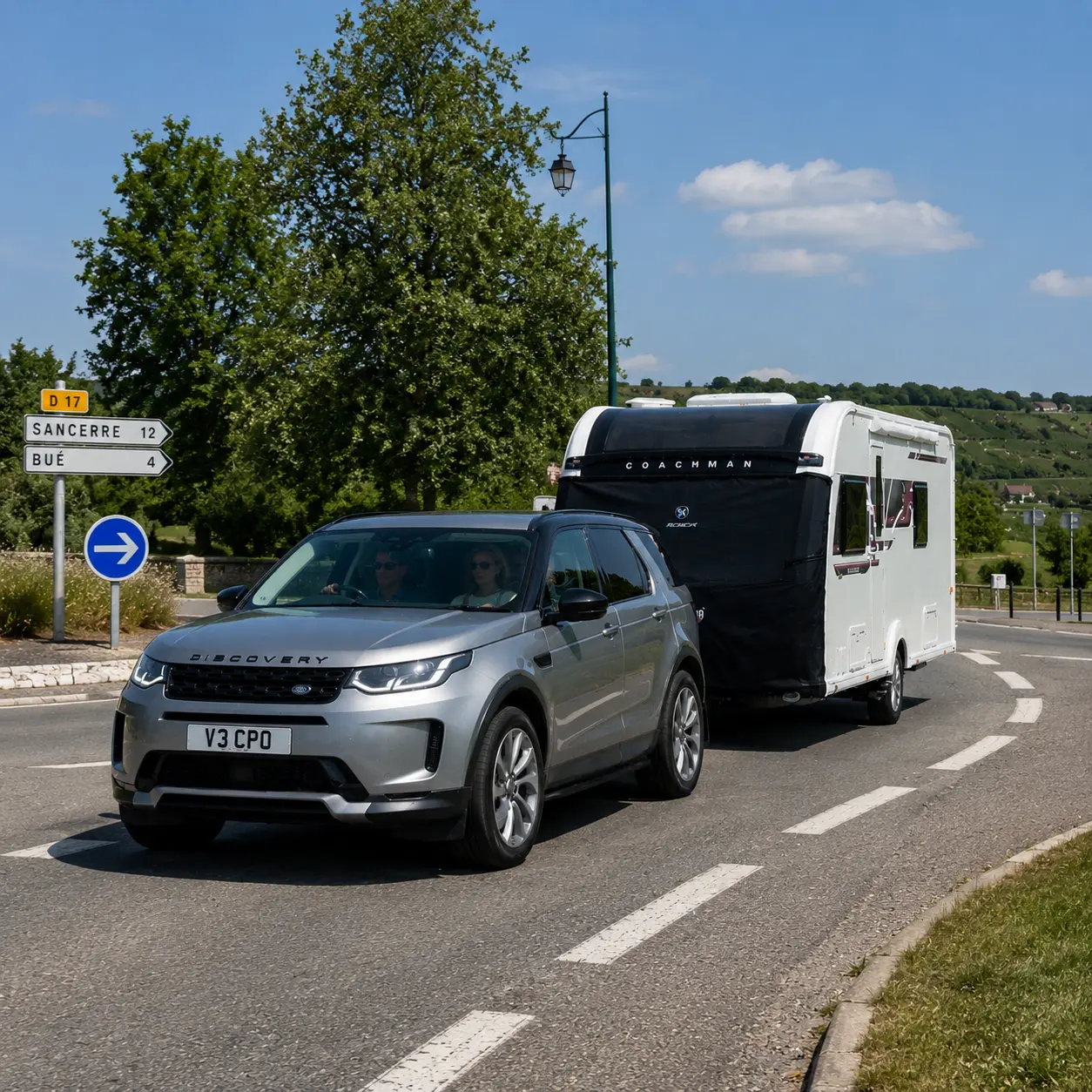
Vehicles drive on the right-hand side of the road in France and normally overtake on the left.
This means UK drivers sit nearest the edge of the road rather than the centre line. Allow additional clearance around parked vehicles, cyclists, roadside barriers and narrow village streets.
At roundabouts, traffic normally travels anticlockwise. Give way to vehicles already on the roundabout unless signs or road markings indicate otherwise.
Caravan Adventuring Tip: Take particular care after stopping for fuel, food or an overnight stay. Restarting a journey is one of the easiest times to accidentally move onto the wrong side of a quiet road.
Documents Needed for Driving in France
UK visitors should carry the original documents for both the tow car and caravan. Digital copies can be useful as backups, but they may not be accepted in place of the originals.
- Your full UK driving licence
- Your passport
- The tow car’s V5C registration document
- A VE103 certificate if the vehicle is hired, leased or not registered in your name
- Valid vehicle insurance details
- Caravan insurance documents
- Breakdown cover valid in France and Europe
- Campsite and crossing confirmations
- Any required trailer registration documents
Most visitors holding a valid UK photocard driving licence do not need an International Driving Permit for a holiday in France. Different requirements can apply to some paper licences and licences issued in Gibraltar, Jersey, Guernsey or the Isle of Man.
UK vehicle insurance provides the minimum third-party cover required for driving in the EU, but this does not necessarily mean you have the same comprehensive protection that applies in the UK. Check the territorial limits and duration of your policy before travelling.
You can confirm the latest requirements through the official UK government guidance for driving in the EU.
Do You Need a UK Sticker in France?
Your tow car and caravan must display the correct UK identifier while travelling in France.
If the number plate already includes the letters UK alongside the Union flag, a separate UK sticker is normally unnecessary. You will need a separate UK sticker if the number plate displays:
- A GB identifier
- A Euro symbol
- An English, Scottish or Welsh national flag
- No national identifier
The identifier must be clearly visible at the rear. Check both the car and caravan before departure rather than assuming the caravan number plate is already compliant.
Caravan Towing Licence Requirements
Your UK licence must give you the correct entitlement for the combined maximum authorised mass of your tow car and caravan.
Do not calculate this using the outfit’s actual loaded weight on the day. Licence entitlement is normally based on the plated maximum weights of the vehicle and caravan.
Our separate guide explains what licence you need to tow a caravan and how the different weight limits apply.
Speed Limits When Towing a Caravan in France
French speed limits vary according to the road, weather conditions, local restrictions and the gross train weight of the towing combination.
For many caravan outfits with a permitted combined weight above 3,500kg, the usual maximum limits are:
- Motorways: 90km/h
- Dual carriageways separated by a central reservation: 90km/h
- Other roads: 80km/h
- Built-up areas: normally 50km/h unless signs show a different limit
Lighter combinations may be permitted to follow the higher limits applying to cars, but caravanners should check the plated gross train weight of their outfit rather than relying on its actual travelling weight.
Local signs always take priority. Lower limits may apply around towns, roadworks, tunnels, schools, mountain roads and areas with environmental restrictions.
Important: French limits are displayed in kilometres per hour. Make sure your sat-nav is using kilometres and become familiar with the kilometre markings on your speedometer.
Speed Limits in Wet Weather
France reduces certain maximum speed limits during rain and other wet conditions. This applies even when the rain appears light and the road still feels manageable.
Drivers should also reduce speed further whenever visibility, traffic or road conditions make the posted limit unsafe.
If visibility falls below 50 metres, the maximum speed is generally restricted to 50km/h on all roads, including motorways.
French Autoroutes and Toll Roads
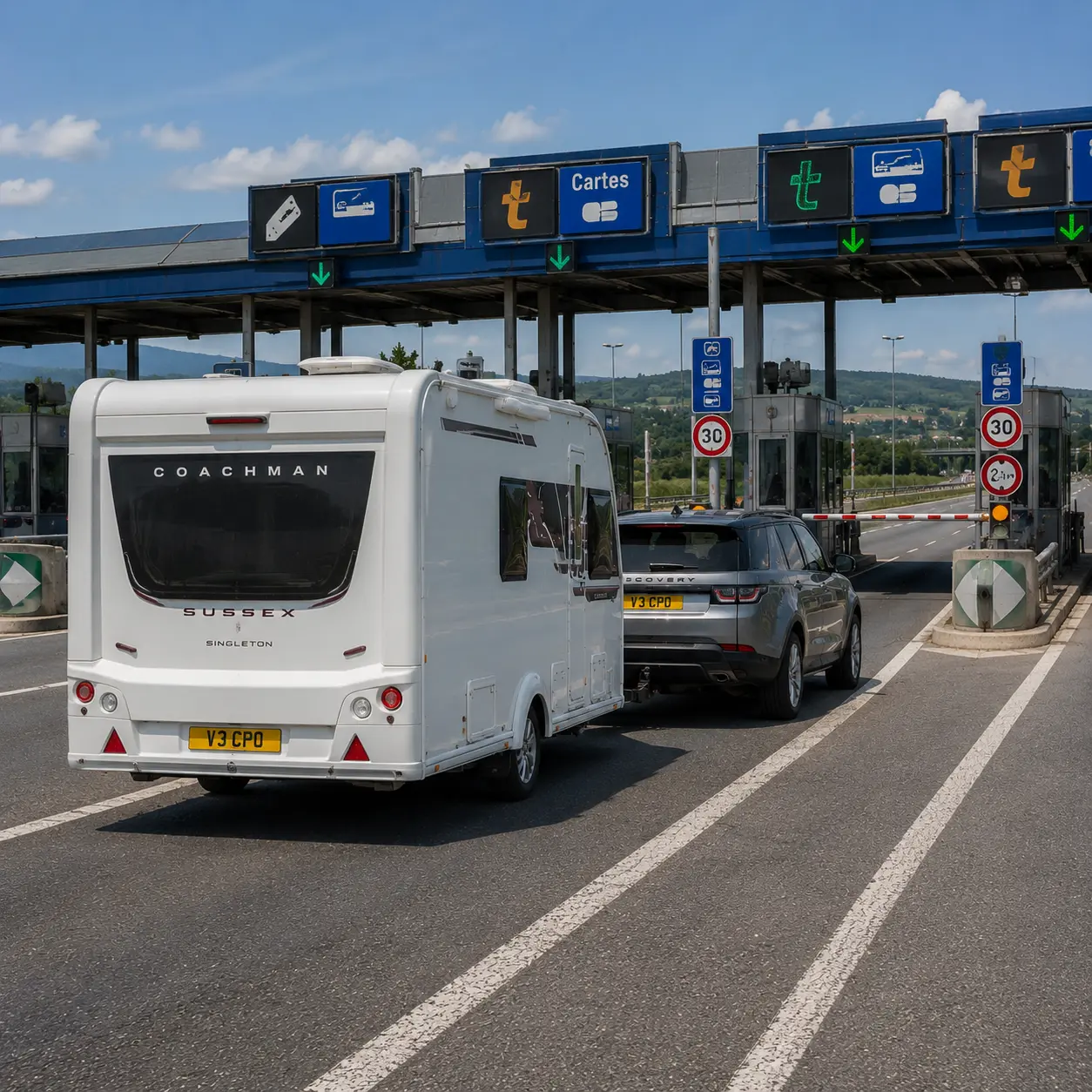
Many major French motorways are autoroutes and a large number charge tolls. Toll roads are usually smooth, direct and well suited to long-distance caravan journeys, but charges can add considerably to the cost of a holiday.
Your toll category depends on the height and characteristics of the complete outfit. A car towing a caravan is commonly charged more than a solo car.
At staffed or card-payment toll booths:
- Approach slowly and select a suitable lane early
- Avoid lanes restricted to vehicles below a displayed height
- Leave enough room to straighten the caravan before the barrier
- Keep a payment card somewhere accessible
- Check the displayed vehicle class before paying
Some French roads use free-flow tolling without traditional barriers. Cameras record the registration number and payment must be made through the relevant toll operator within the stated period.
Route planning and current traffic information are available from Bison Futé, the official French road-information service.
Do You Need a Crit’Air Sticker?
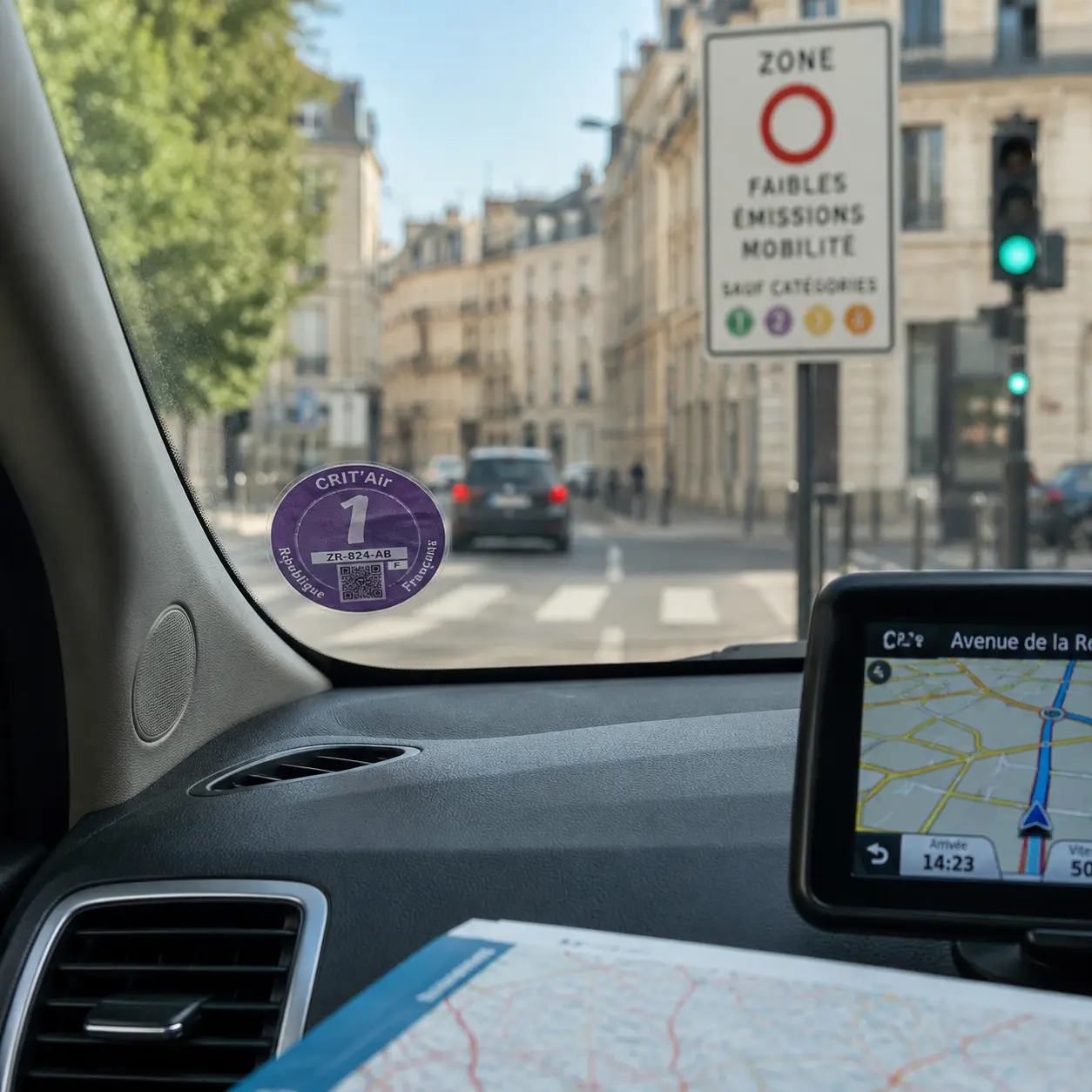
A Crit’Air sticker is a French air-quality certificate placed inside the windscreen of the tow car. It identifies the vehicle’s emissions category.
Crit’Air requirements apply in designated low-emission zones and may also be introduced temporarily during periods of severe pollution. Restrictions vary between cities and can change over time.
The caravan does not normally need its own Crit’Air sticker, but the towing vehicle may require one before entering a regulated zone.
Order the sticker only through the official French Crit’Air website. Unofficial websites often charge significantly more for the same certificate.
For the full application process, eligible vehicles and affected areas, read our dedicated Crit’Air sticker guide for UK caravanners.
Compulsory Equipment for Driving in France
Requirements can change, but UK drivers should normally carry the following equipment when travelling in France:
- A warning triangle
- A reflective high-visibility vest for each occupant
- Headlamp beam converters or adjustable headlights set for continental driving
- A spare set of bulbs where the vehicle allows roadside replacement
- Suitable towing mirrors
- A compliant breakaway cable
- A correctly rated spare wheel or puncture solution
Keep high-visibility vests inside the tow car where they can be reached before anyone exits the vehicle. Storing them beneath luggage in the boot defeats their purpose.
A warning triangle should not be placed where doing so would put you or other road users in danger, particularly on a motorway.
Headlight Beam Adjustment
UK headlights can dazzle drivers when used on the opposite side of the road. Depending on the tow car, you may need adhesive beam converters or a setting within the vehicle’s lighting menu.
Check the handbook for your exact vehicle before fitting universal converters. Modern LED or adaptive headlights often require a specific tourist or travel mode rather than an adhesive deflector.
Towing Mirrors in France
You must have a clear view along both sides of the caravan and behind the outfit. Standard car mirrors rarely provide sufficient visibility when towing a full-width caravan.
Use correctly fitted extension mirrors that do not extend unnecessarily beyond the caravan. Remove them when you are no longer towing.
Check the attachments during fuel and rest stops because vibration, crosswinds and passing large vehicles can gradually loosen some mirror designs.
Caravan Breakaway Cables
The caravan’s breakaway cable must be attached correctly to the tow car. Where the towbar has a dedicated attachment point, use it rather than looping the cable around the towball unless the equipment manufacturer specifically permits that method.
The cable should be able to operate the caravan’s brakes if the coupling separates, but it must not drag on the road or become so tight that it activates during normal turning.
Caravan Weight and Loading
Overloading can affect stability, braking performance and tyre temperatures. It can also create legal and insurance problems if the caravan exceeds its plated maximum technically permissible laden mass.
Before travelling:
- Confirm the caravan’s payload allowance
- Check the tow car’s maximum towing limit
- Check the gross train weight
- Measure the noseweight
- Keep heavy items low and close to the axle
- Avoid loading heavy equipment at the rear
- Secure everything that could move
If the caravan begins to snake, remain calm and avoid sudden steering or harsh braking. Our guide explains how to stop caravan snaking and reduce the risk before a journey.
Driving Through French Towns and Villages
Historic towns and villages can have narrow streets, tight corners, overhanging balconies and limited space around parked vehicles.
Do not blindly follow a sat-nav through a village simply because it shows the shortest route. Check road widths, weight restrictions and access signs before committing the caravan to a narrow road.
Signs displaying interdit aux caravanes prohibit caravans. Other restrictions may use vehicle symbols rather than English wording, so it is worth learning the most common continental signs before travelling.
See our guide to european road signs caravan owners should know before setting off.
Priority From the Right
France still uses the priorité à droite rule in some locations. This means vehicles approaching from the right can have priority even when they appear to be joining from a smaller road.
Look for signs showing whether you have priority. A yellow diamond normally indicates a priority road, while a crossed version shows that the priority route is ending.
Do not assume the larger or straighter road automatically has priority.
Overtaking and Lane Discipline
Keep to the right when you are not overtaking. On motorways with several lanes, avoid remaining in the middle lane after completing an overtake.
Allow extra distance when passing slower vehicles because the caravan takes longer to clear them. Check both towing mirrors carefully before returning to the right-hand lane.
Some sections of road restrict overtaking by vehicles or combinations above a certain weight. Obey signs showing a lorry or weight restriction even if the road ahead appears clear.
Fuel Stations With a Caravan
Motorway service stations are generally the easiest places to refuel while towing. Smaller supermarket and town-centre fuel stations can have tight entrances, low canopies or awkward exits.
Before entering, check:
- Canopy height
- Turning space beyond the pumps
- Whether you can leave without reversing
- Position of kerbs, posts and payment machines
Do not wait until the fuel level is extremely low. The next convenient caravan-accessible station may be much farther away than the sat-nav suggests.
French Motorway Service Areas
French autoroutes have two main types of stopping area:
- Aires de service: larger service areas with fuel, toilets and often food
- Aires de repos: simpler rest areas normally providing parking, toilets and picnic facilities
Parking layouts vary considerably. Some provide long spaces for caravans, while others mix caravans with coaches and heavy goods vehicles.
Lock the car and caravan whenever you leave the outfit unattended. Do not leave passports, wallets, phones or other valuables visible.
Can Caravans Stay Overnight on French Aires?
Motorhome aires are generally intended for self-contained motorhomes rather than caravans. Some explicitly prohibit caravans, while others may not provide enough room to remain hitched safely.
Caravanners are usually better using a campsite, municipal campsite or specifically designated overnight stop that clearly accepts caravans.
Our guide to aires versus campsites in europe explains the practical differences.
Alcohol Limits in France
The legal alcohol limit in France is lower than in most of the UK. A stricter limit applies to certain inexperienced and professional drivers.
The safest approach when towing is not to drink alcohol at all before driving. Alcohol can remain in the body the following morning, particularly after a late evening or stronger drinks.
Using a Mobile Phone
Using a handheld mobile phone while driving is illegal. French rules can also restrict the use of headphones, headsets and earpieces while driving.
Set the sat-nav before moving and stop somewhere safe if the route needs significant changes. Do not stop on the hard shoulder except in an emergency.
Speed Camera Warnings
Devices or software designed specifically to identify the exact location of French speed cameras are restricted.
Many mainstream navigation services use legally compliant danger-zone warnings instead of displaying precise camera positions. Check that your sat-nav is configured for use in France before travelling.
Emergency Numbers in France
- 112: European emergency number
- 15: Medical emergency service
- 17: Police
- 18: Fire and rescue service
On a motorway, use an emergency telephone where possible because it helps the operator identify your exact location.
What to Do After a Breakdown
If the outfit develops a problem, move as far away from moving traffic as safely possible. Switch on the hazard warning lights, put on high-visibility clothing and move occupants behind a safety barrier where one is available.
On French toll motorways, recovery is controlled by authorised operators. Your breakdown provider may not be allowed to send its own recovery truck directly to your location.
Contact the motorway operator using an emergency telephone or an official motorway emergency service. Keep receipts and contact your insurer or breakdown provider as soon as possible.
Planning Your Route Through France
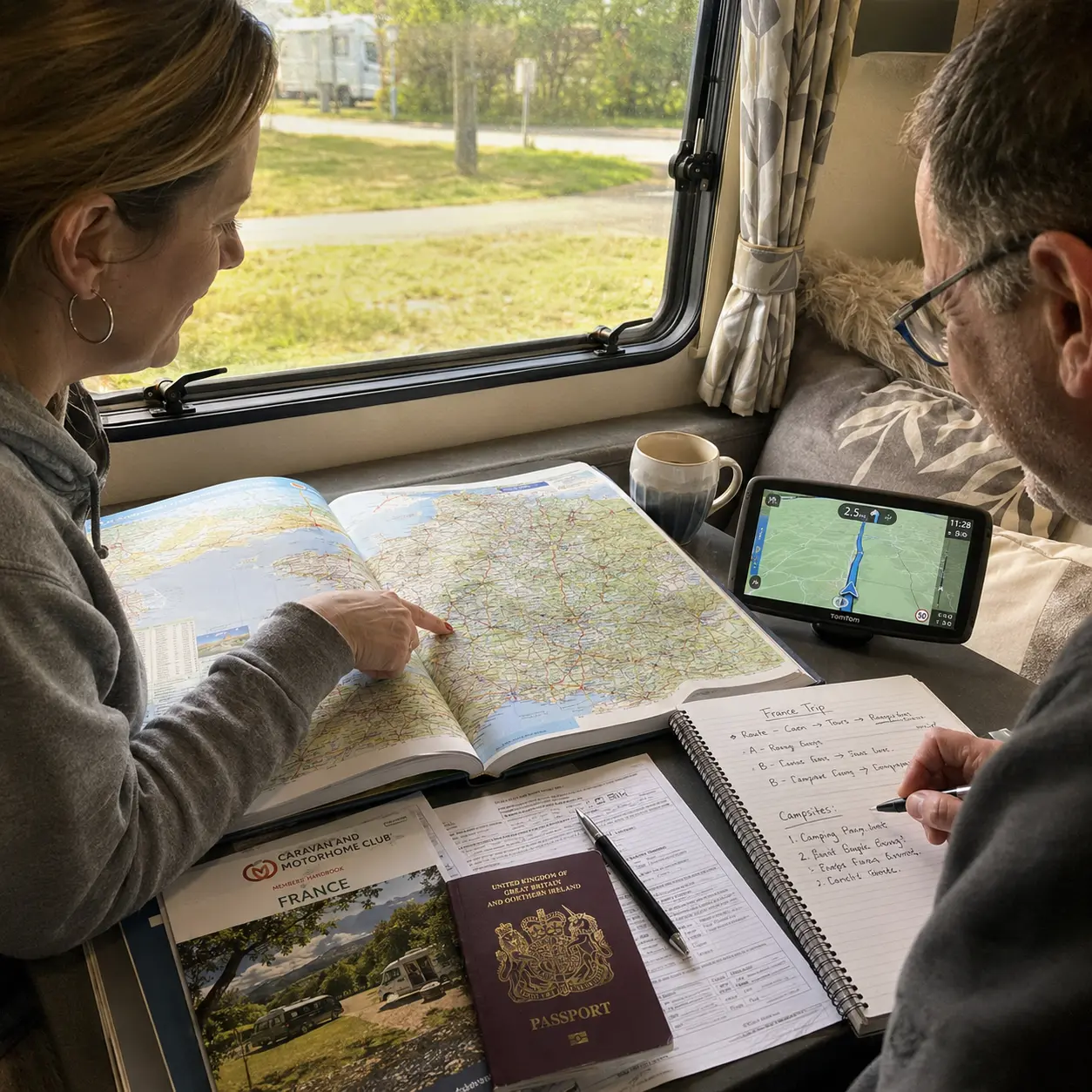
When towing, the fastest solo-car route is not always the best caravan route. Consider:
- Total journey time rather than distance alone
- Toll costs
- Fuel stops with suitable access
- Low-emission zones
- Mountain passes and steep gradients
- Overnight campsites
- Expected summer traffic
- Your arrival time at the campsite
French holiday traffic can be extremely heavy on peak summer weekends. Build flexibility into the journey and avoid planning long towing days simply because the mileage appears manageable.
Arriving at a French Campsite
Many French campsites close reception for part of the afternoon and may have barriers that prevent access outside published arrival times.
Check the campsite’s:
- Reception hours
- Latest arrival time
- Pitch size
- Electric hook-up connection
- Electricity amperage
- Access instructions for long outfits
- Rules for dogs
- Requirements for swimming pools
Our European campsite booking guide explains what to check before reserving a pitch.
Driving in France With a Caravan Checklist
- Check passport validity and entry requirements
- Carry your full UK driving licence
- Carry the V5C or VE103
- Confirm car and caravan insurance
- Arrange European breakdown cover
- Display the correct UK identifier
- Order a Crit’Air sticker if required
- Pack warning triangles and high-visibility vests
- Adjust the headlights for continental driving
- Fit suitable towing mirrors
- Check tyre condition and pressures
- Check caravan loading and noseweight
- Confirm the speed limits for your outfit
- Plan fuel and overnight stops
- Download offline maps
- Check campsite arrival times
Frequently Asked Questions
Do I Need an International Driving Permit for France?
Most visitors with a valid UK photocard driving licence do not need an International Driving Permit for a short visit to France. Different rules can apply to some paper or non-GB-issued licences.
Do I Need a Green Card to Tow in France?
A green card is not normally required for a UK vehicle travelling in the EU, but you must still have valid insurance covering the tow car and caravan.
Does My Caravan Need a Crit’Air Sticker?
The Crit’Air certificate applies to the powered towing vehicle rather than the caravan. The tow car may require one when entering certain low-emission zones.
Can I Tow a Caravan Through Paris?
It may be possible on permitted routes, but congestion, low-emission restrictions, narrow roads and limited caravan-friendly stopping places make central Paris unsuitable for most touring outfits. A campsite outside the city with public transport connections is normally easier.
Can I Use French Motorway Aires With a Caravan?
You can use motorway service and rest areas during a journey. However, motorhome aires in towns and villages do not automatically accept caravans, so check the local rules before attempting to stay overnight.
Are French Toll Roads Suitable for Caravans?
Yes. French toll motorways are generally well suited to towing, although the outfit will usually be charged a higher toll category than a solo car.
Final Thoughts
Driving in France with a caravan can feel unfamiliar during the first few miles, but most UK caravanners quickly settle into the different road layout.
Good preparation makes the biggest difference. Check your documents, understand the speed limits for the plated weight of your outfit, plan for tolls and low-emission zones and avoid relying entirely on a sat-nav.
Once you become comfortable driving on the right, France offers one of the most enjoyable and accessible caravan-touring experiences in Europe.